Breast
Augmentation
Enhance size, shape, and symmetry with personalized implant selection — silicone or saline, proportionate sizing, and a natural result that complements your frame. Board-certified, with over a decade of results.




What Is Breast Augmentation?
✓ Medically reviewed by Dr. Andre Y. Levesque, MD · Board-certified plastic surgeon (ABPS) · Last reviewed August 2026
Breast augmentation (augmentation mammaplasty) uses implants to increase breast size, improve shape, and enhance symmetry. It is one of the most commonly performed plastic surgery procedures in the United States — and when performed by an experienced, board-certified surgeon, produces consistently excellent results with high patient satisfaction.
Dr. Andre Y. Levesque performs breast augmentation in Austin, TX using both silicone gel and saline implants. Silicone implants feel more natural and are the most popular choice, and are FDA-approved for breast augmentation in women 22 and older. Saline implants are FDA-approved for women 18 and older and offer the advantage of adjustable fill volume and smaller incisions. Dr. Levesque helps each patient select the implant type, size, and placement that best suits their anatomy and goals.
Implant placement options include subglandular (above the pectoral muscle) and submuscular/dual-plane (partially below the muscle). Dual-plane placement is most commonly recommended — it provides a more natural upper-pole slope, reduces the risk of visible implant rippling, and produces more natural movement. Incision options include inframammary (in the fold), periareolar, and transaxillary.
Many patients combine breast augmentation with a breast lift (mastopexy) if there is significant ptosis (sagging). Dr. Levesque evaluates both at consultation and recommends the approach that will produce the most natural, lasting result for your specific anatomy.
Personalized Sizing. Natural-Looking Results.
The most important decision in breast augmentation is implant size — and the most common regret is going too small or too large. Dr. Levesque uses a systematic approach to sizing: measuring chest width, existing breast tissue, and skin characteristics, then using implant sizers during consultation to align on a size that feels right for your proportions.
His goal is always a result that looks proportionate and natural — enhancing the figure without appearing overdone. He presents realistic imaging at consultation so patients can visualize the projected result before committing.
What to Expect
From your first consultation to your final result, here's how the process works at Levesque Plastic Surgery.
Consultation
Dr. Levesque evaluates your breast anatomy, discusses implant type, size, profile, and placement, and reviews digital imaging of projected results. You will try sizers to align on the right size before surgery.
Surgery Day
Breast augmentation takes 1–2 hours under general anesthesia. Implants are placed through your chosen incision site. You go home the same day with a surgical bra and detailed care instructions.
Recovery & Results
Most patients take 5–7 days off work. Upper body exercise is restricted for 4–6 weeks. Implants settle into final position over 3–4 months. Scars mature and fade over 12 months.
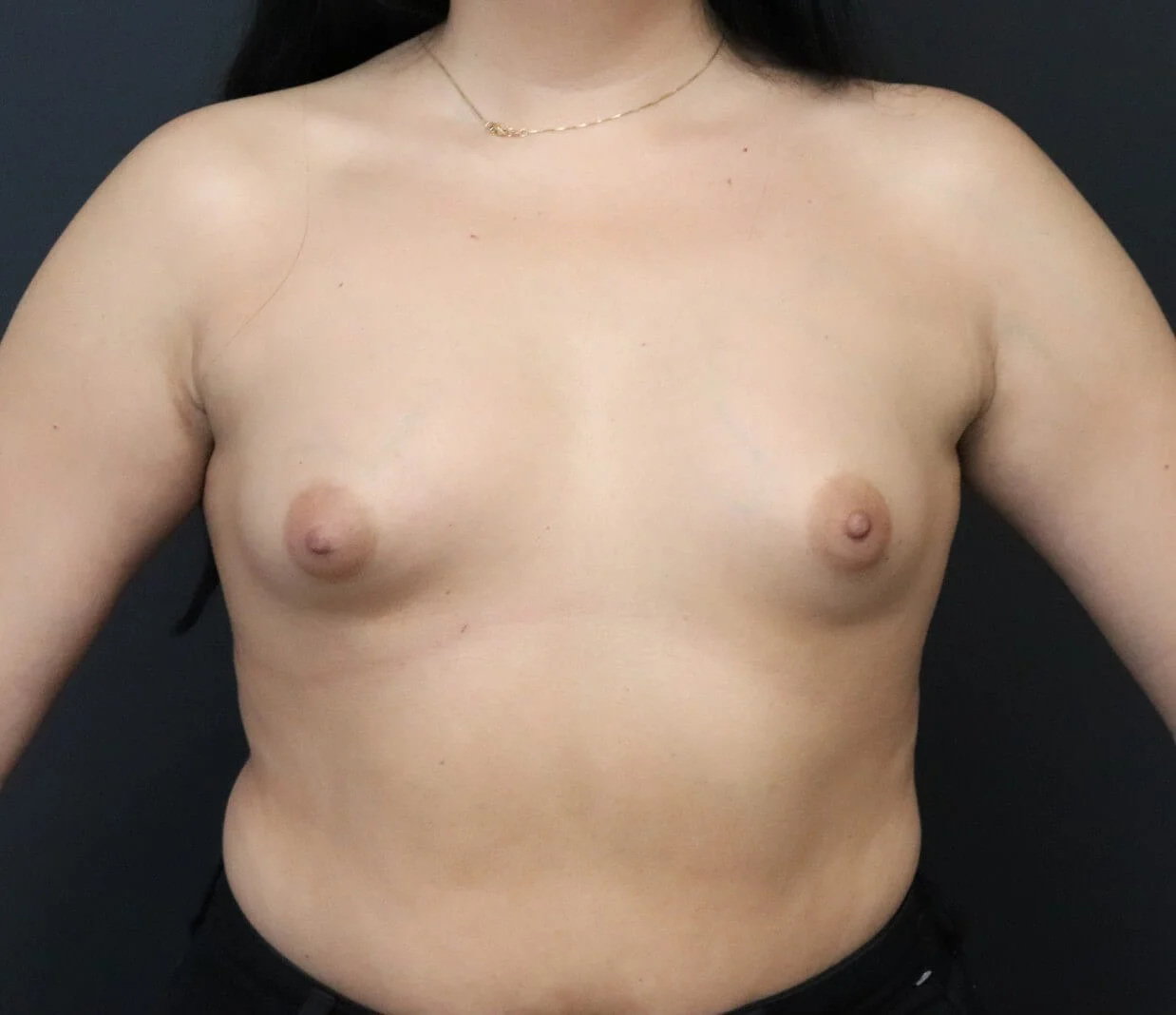
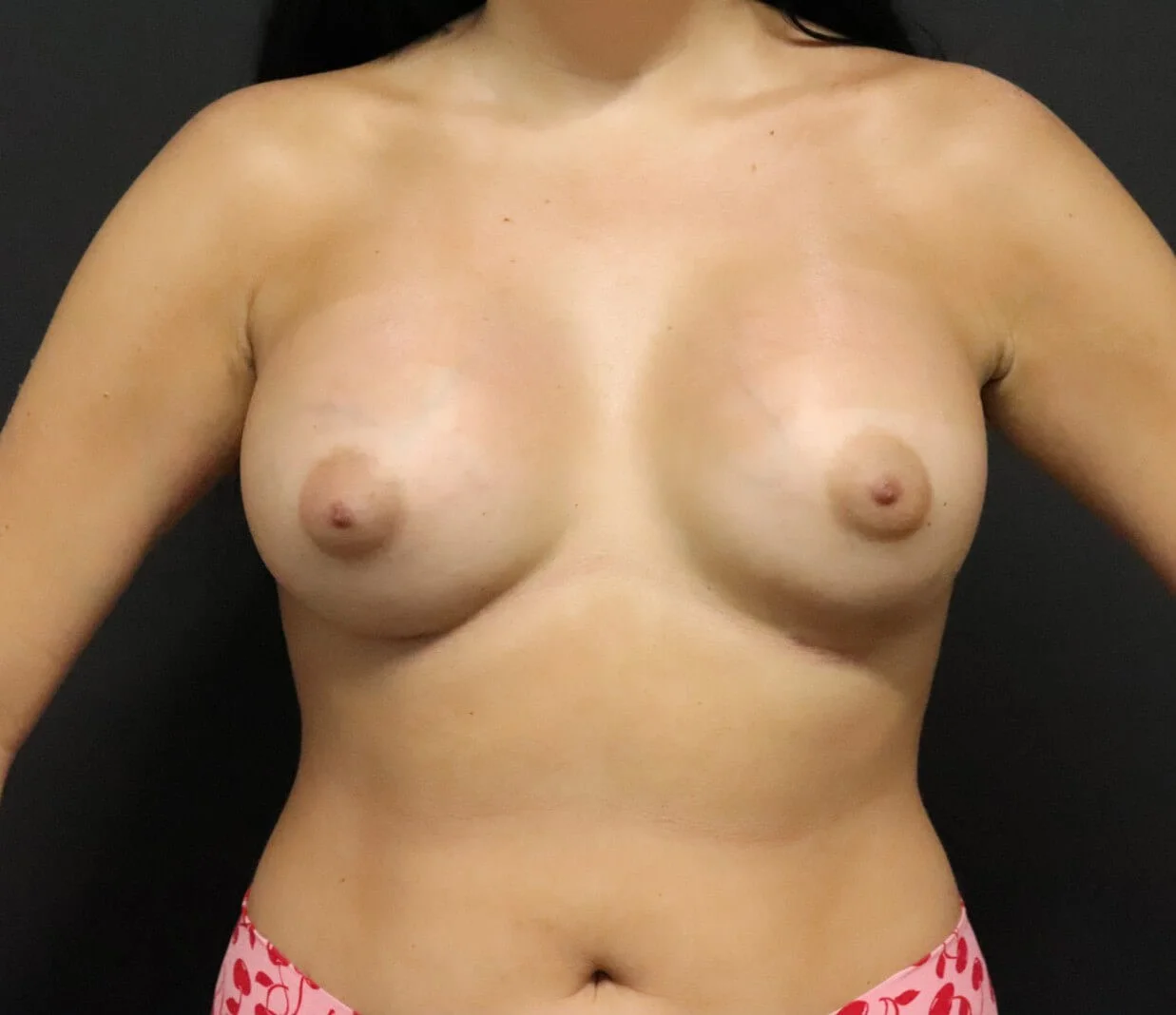
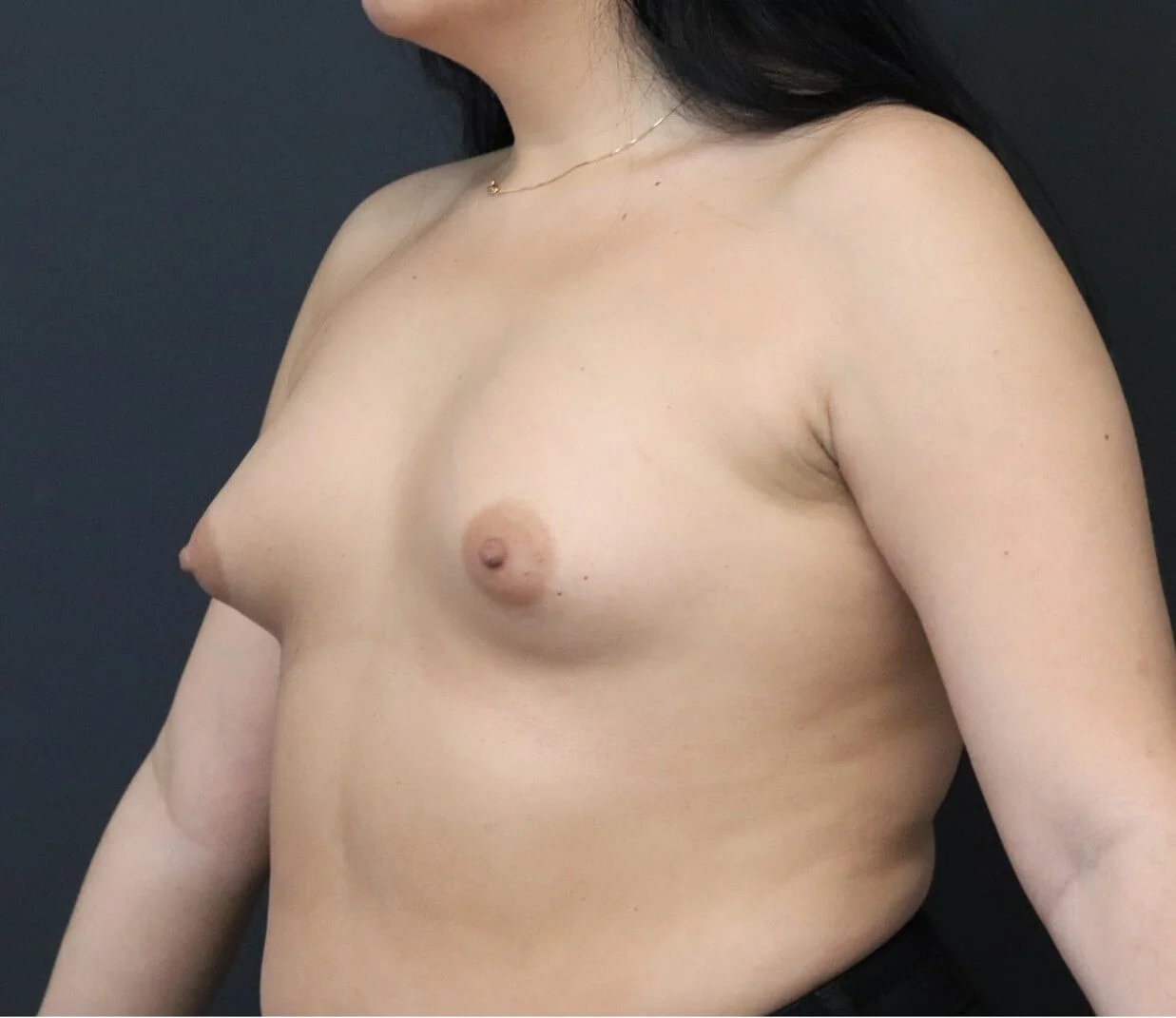
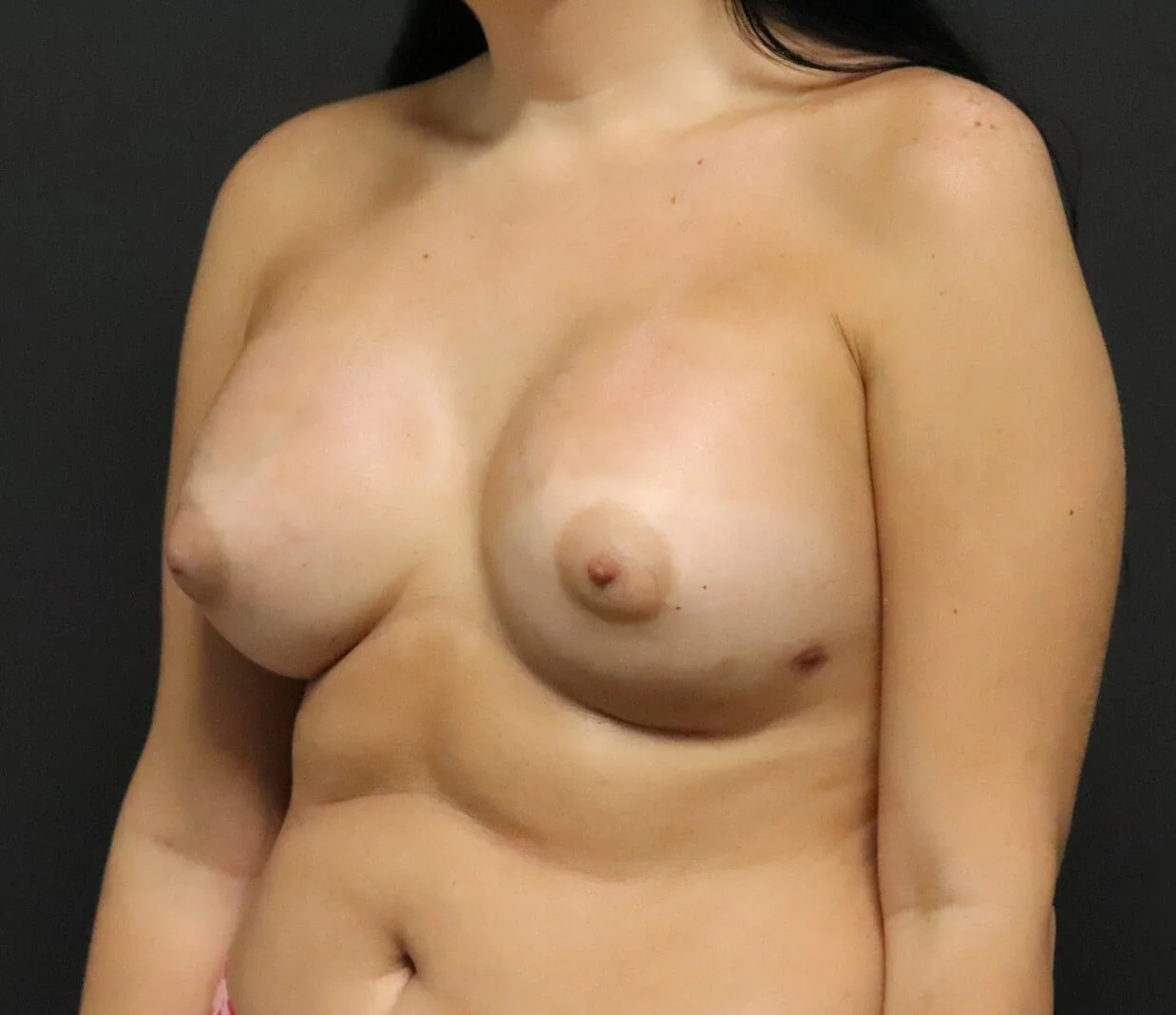
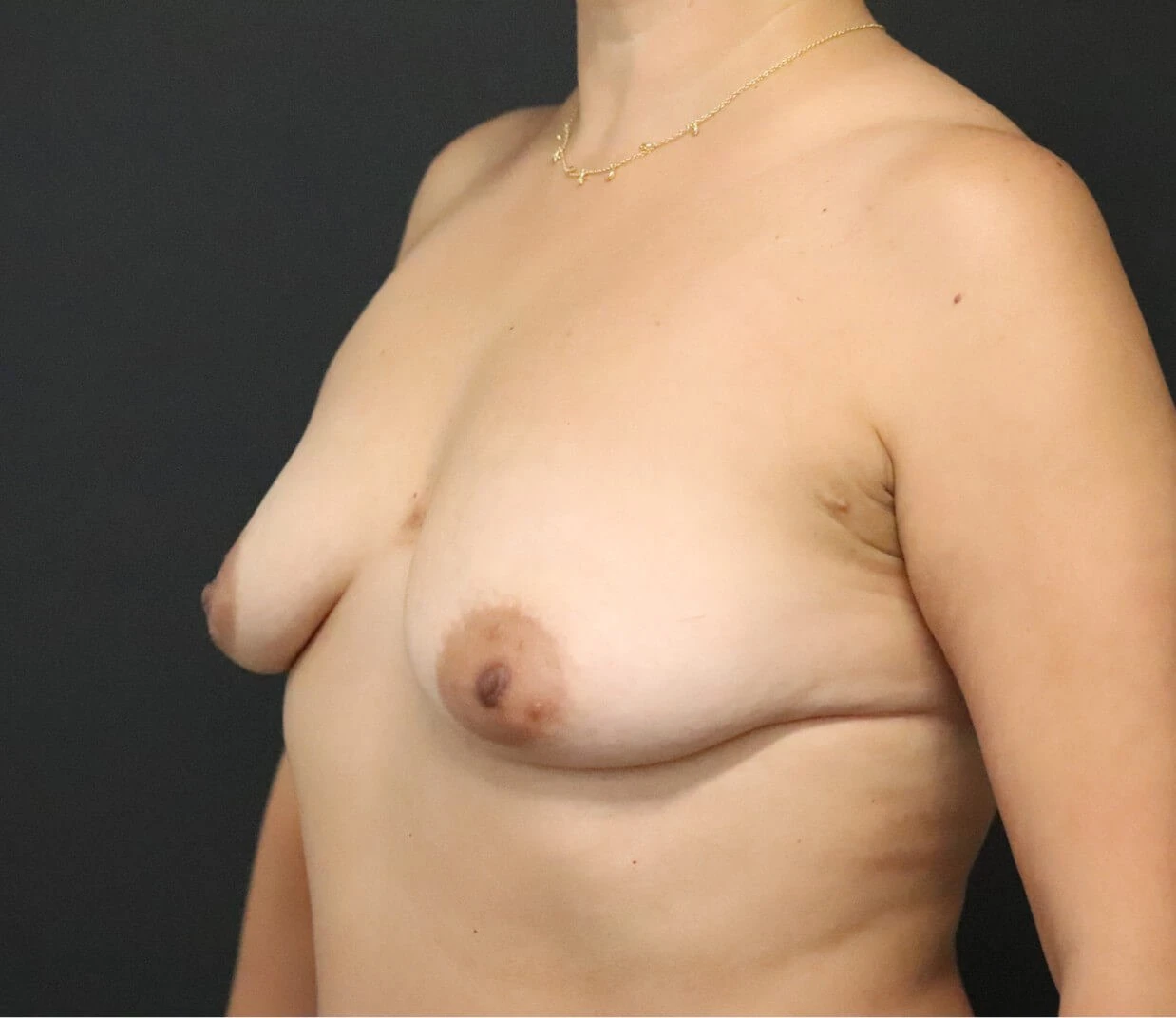
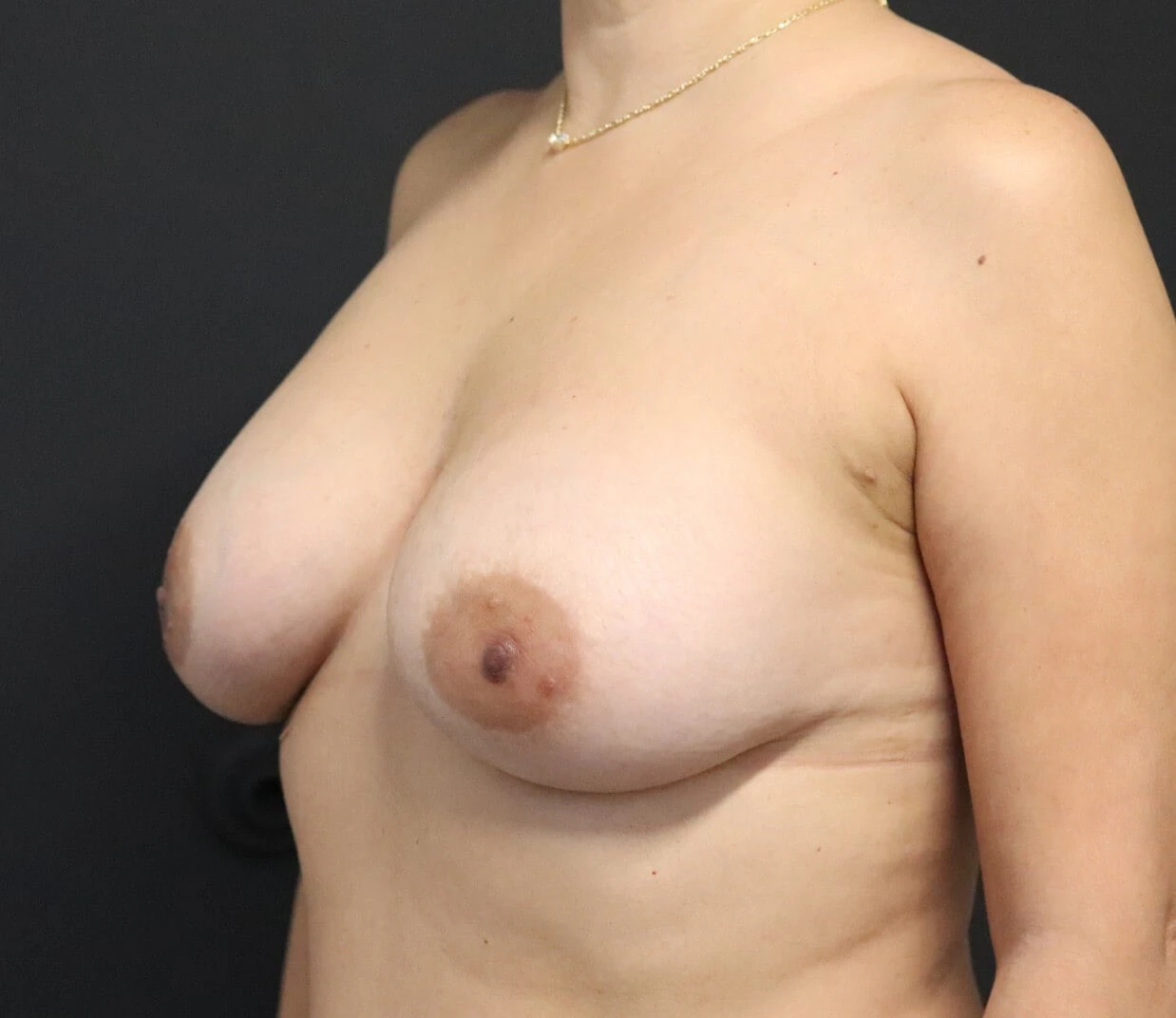
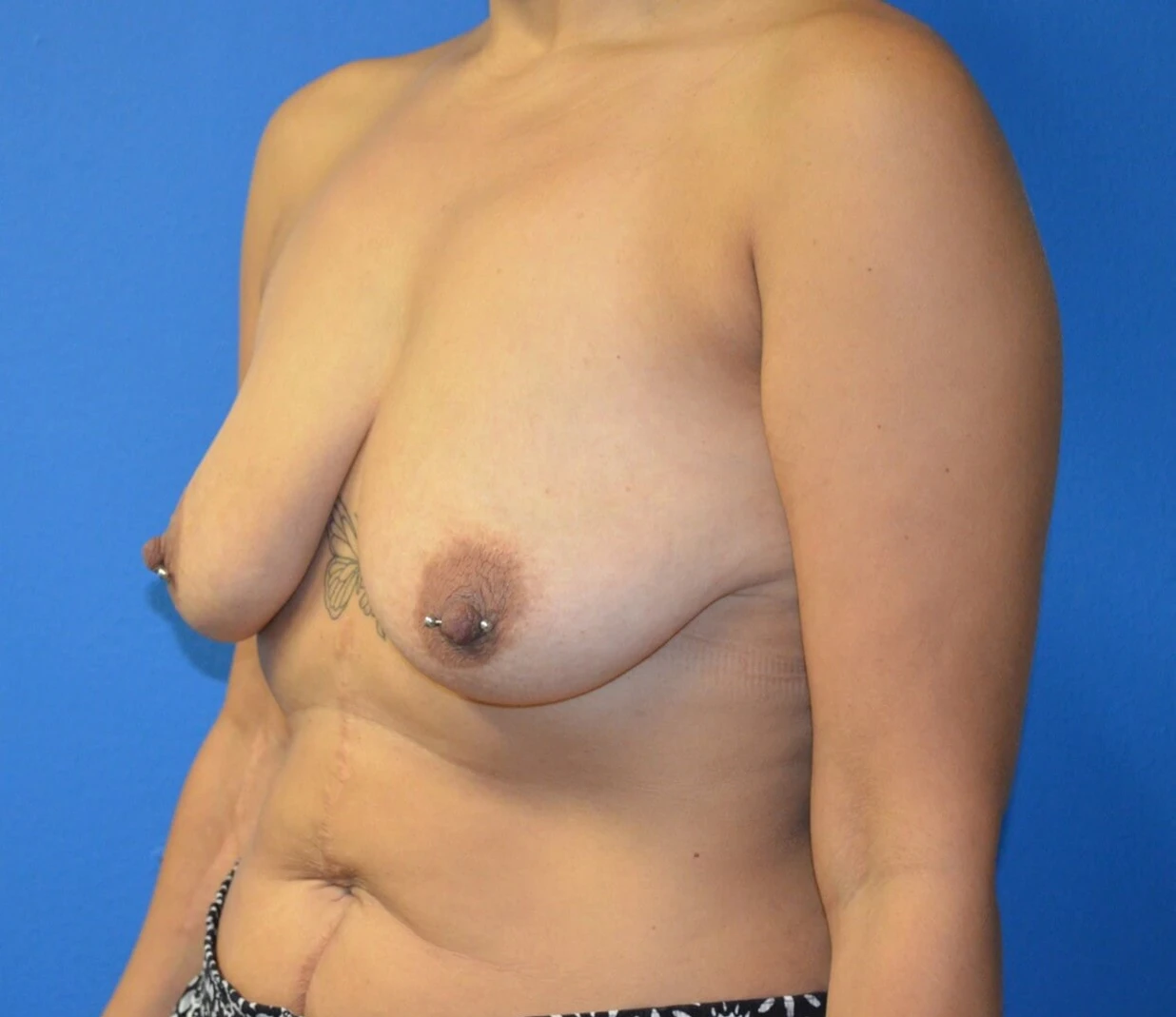
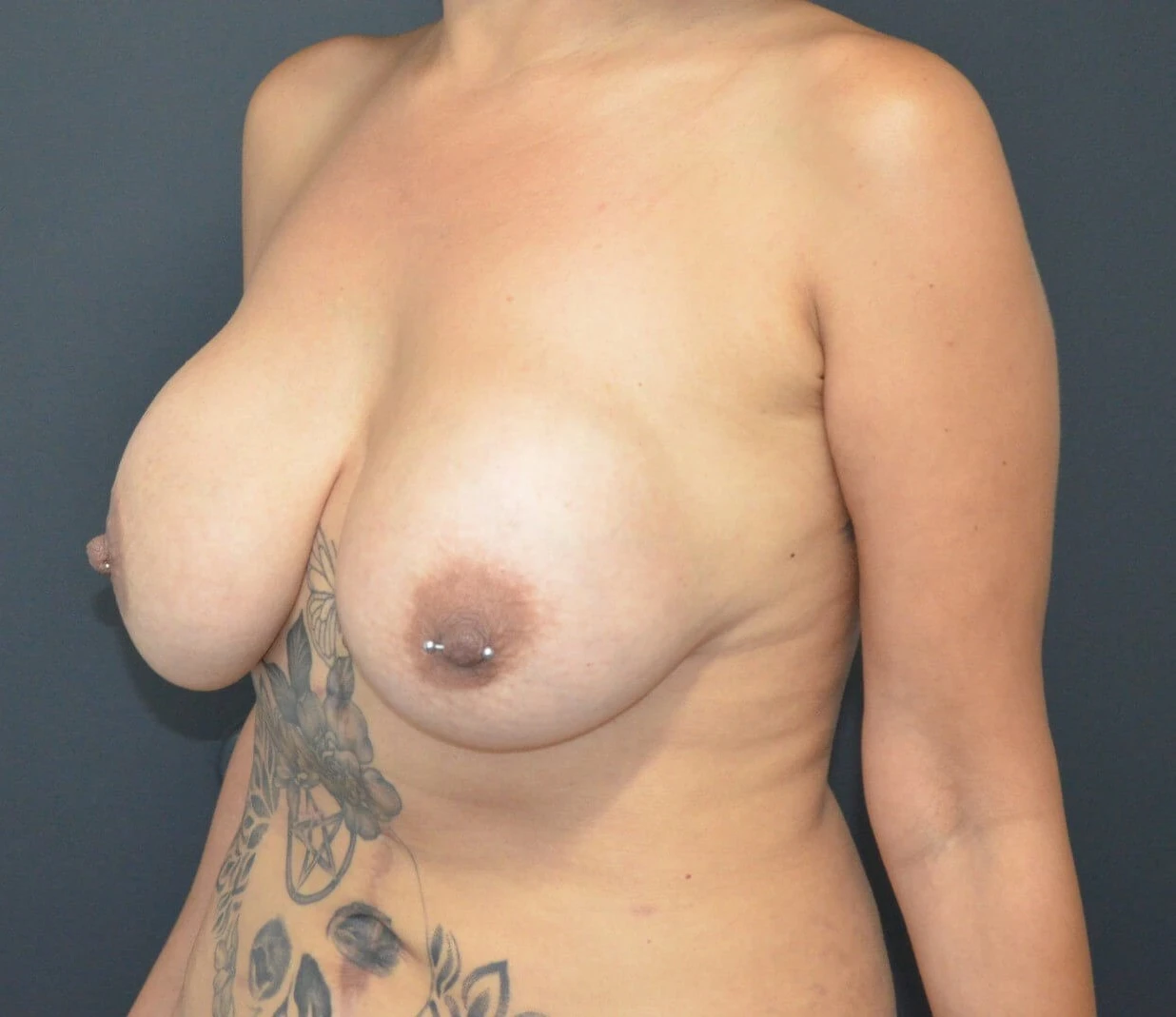
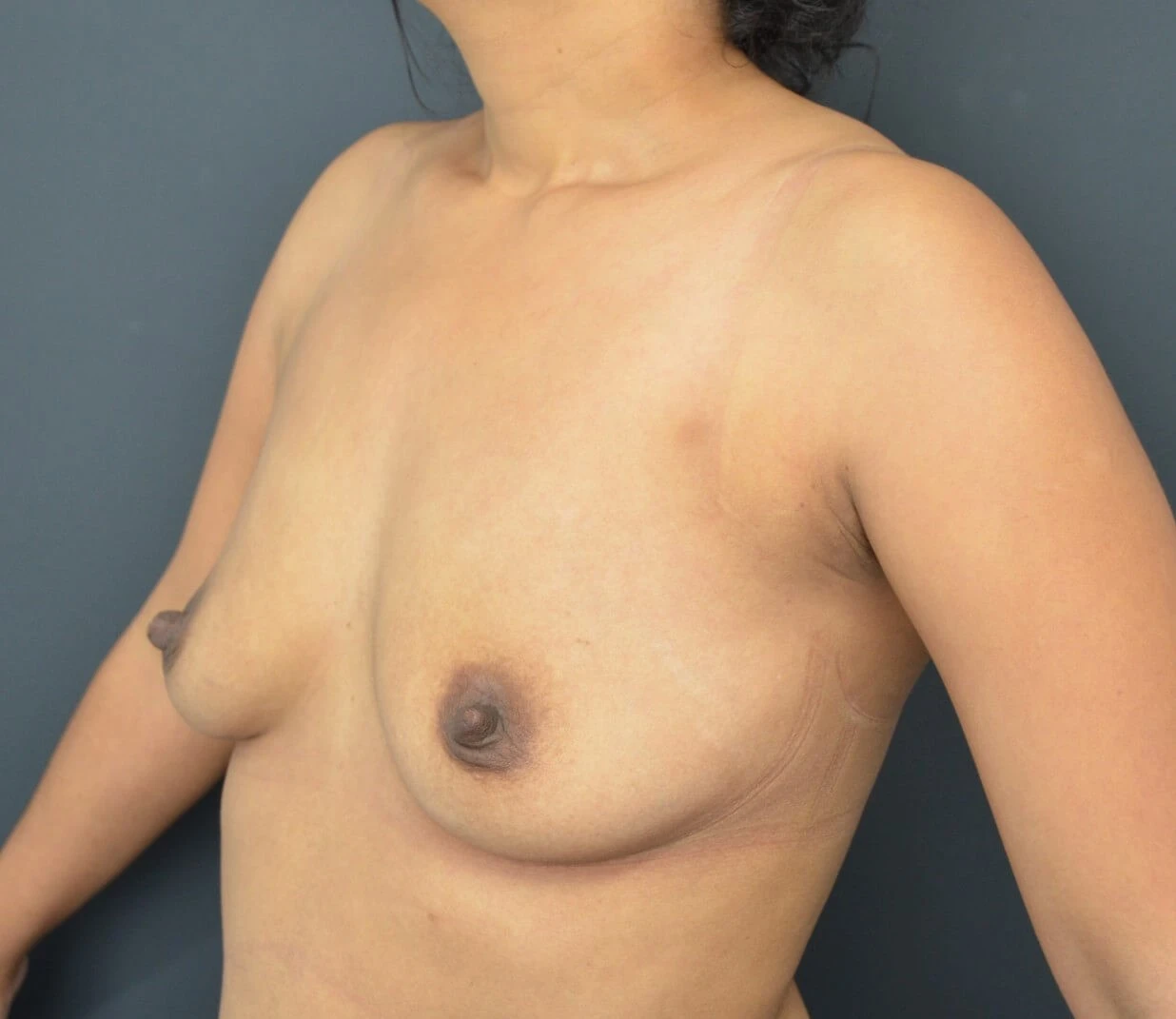
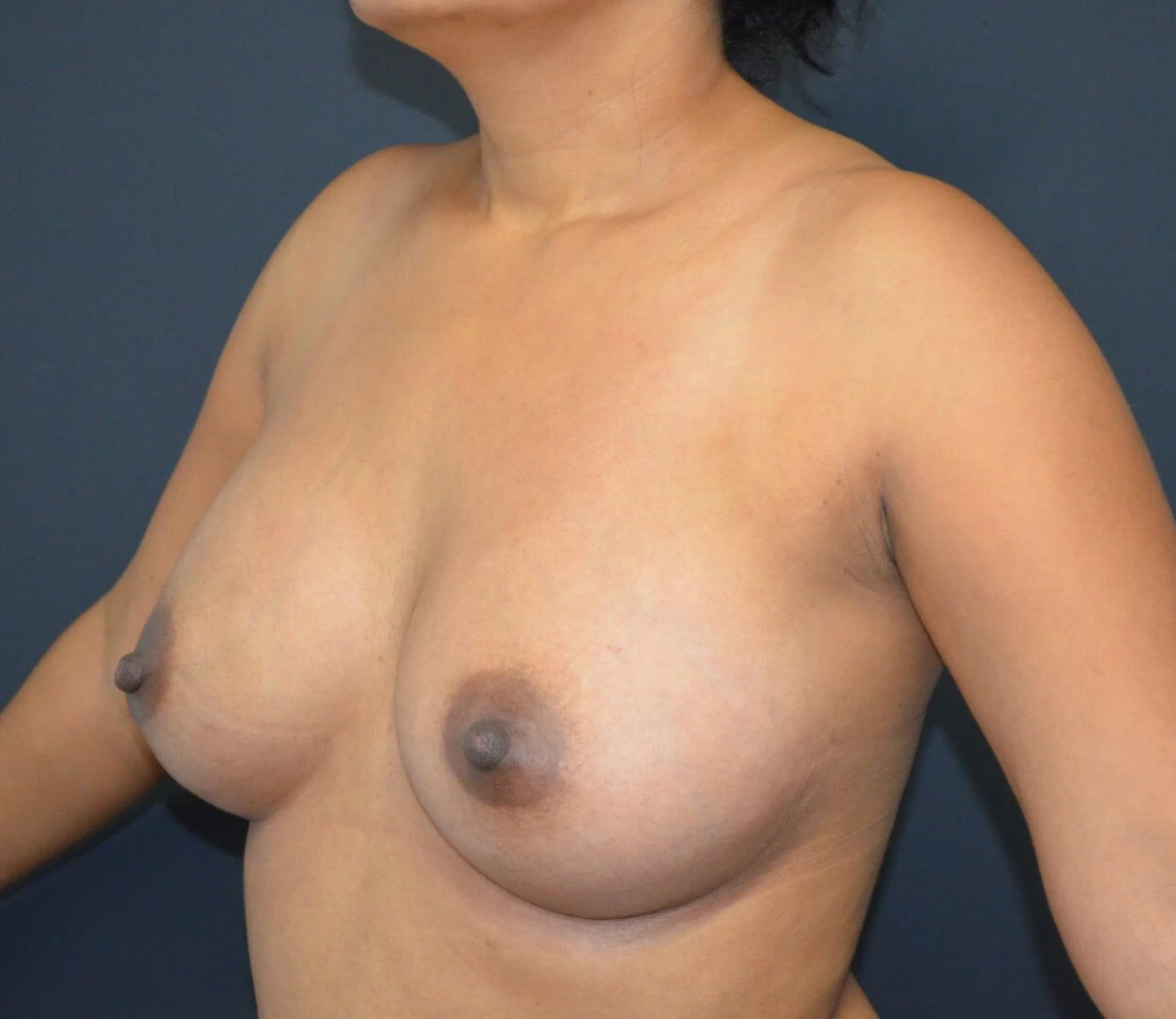
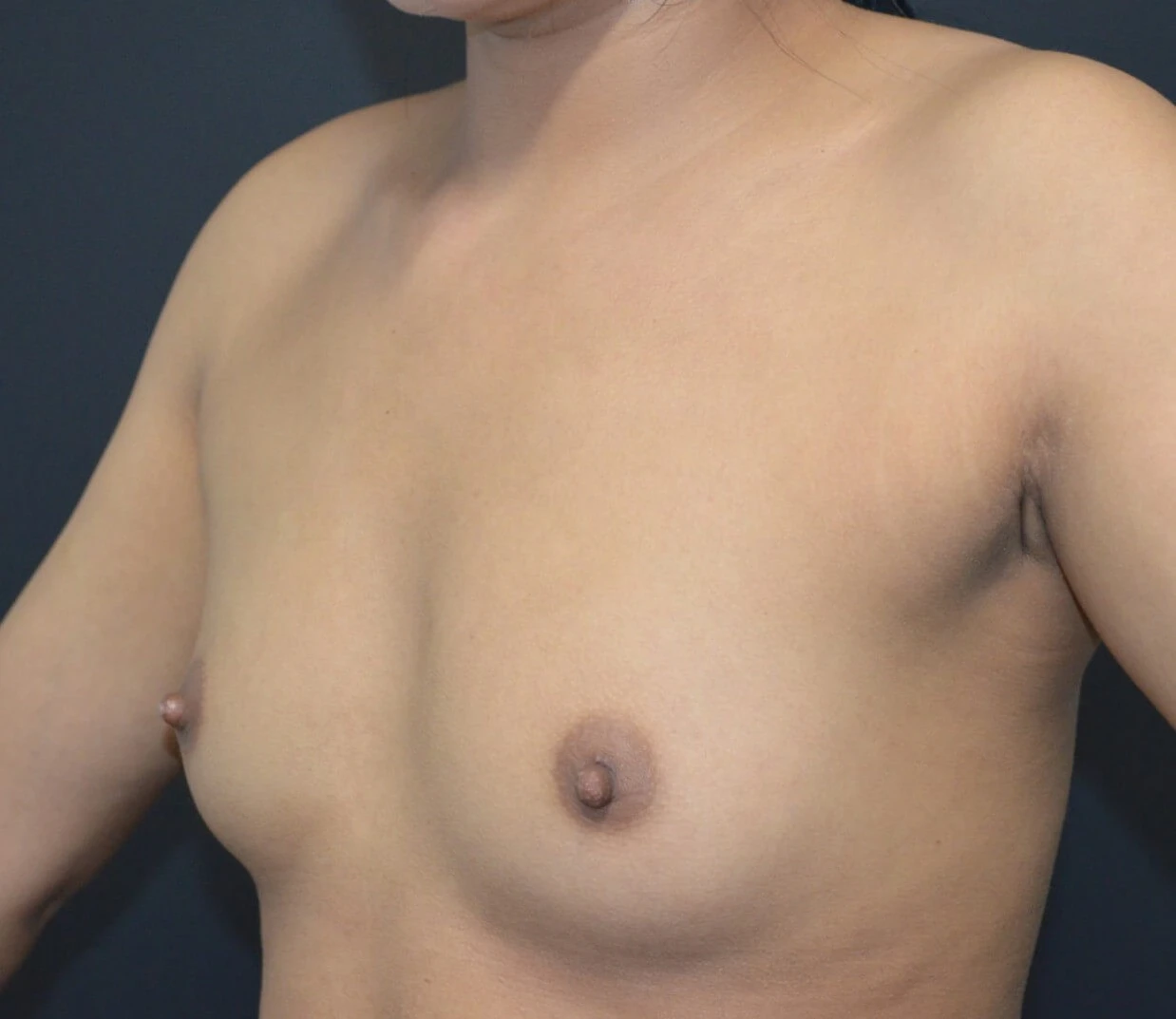
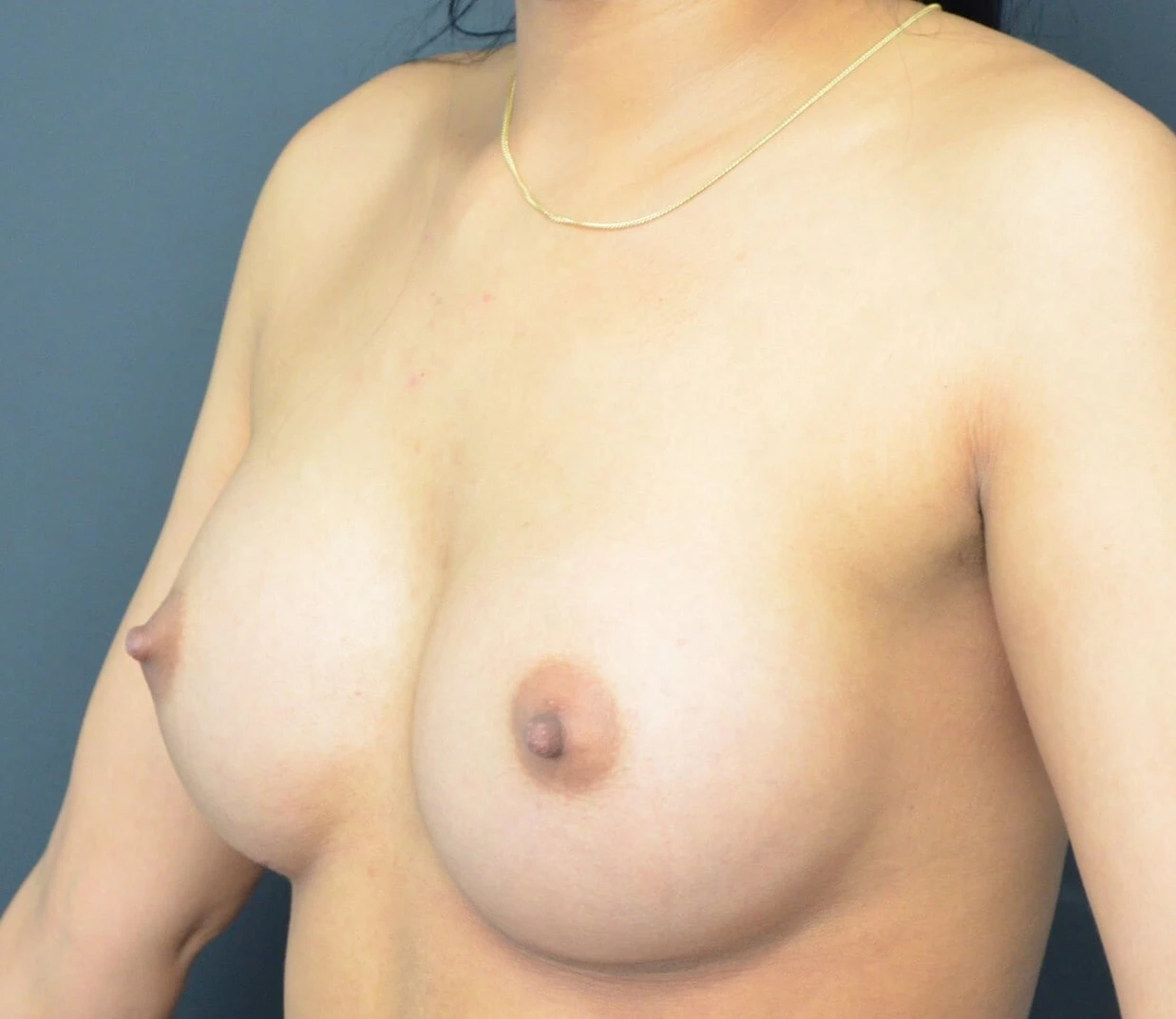
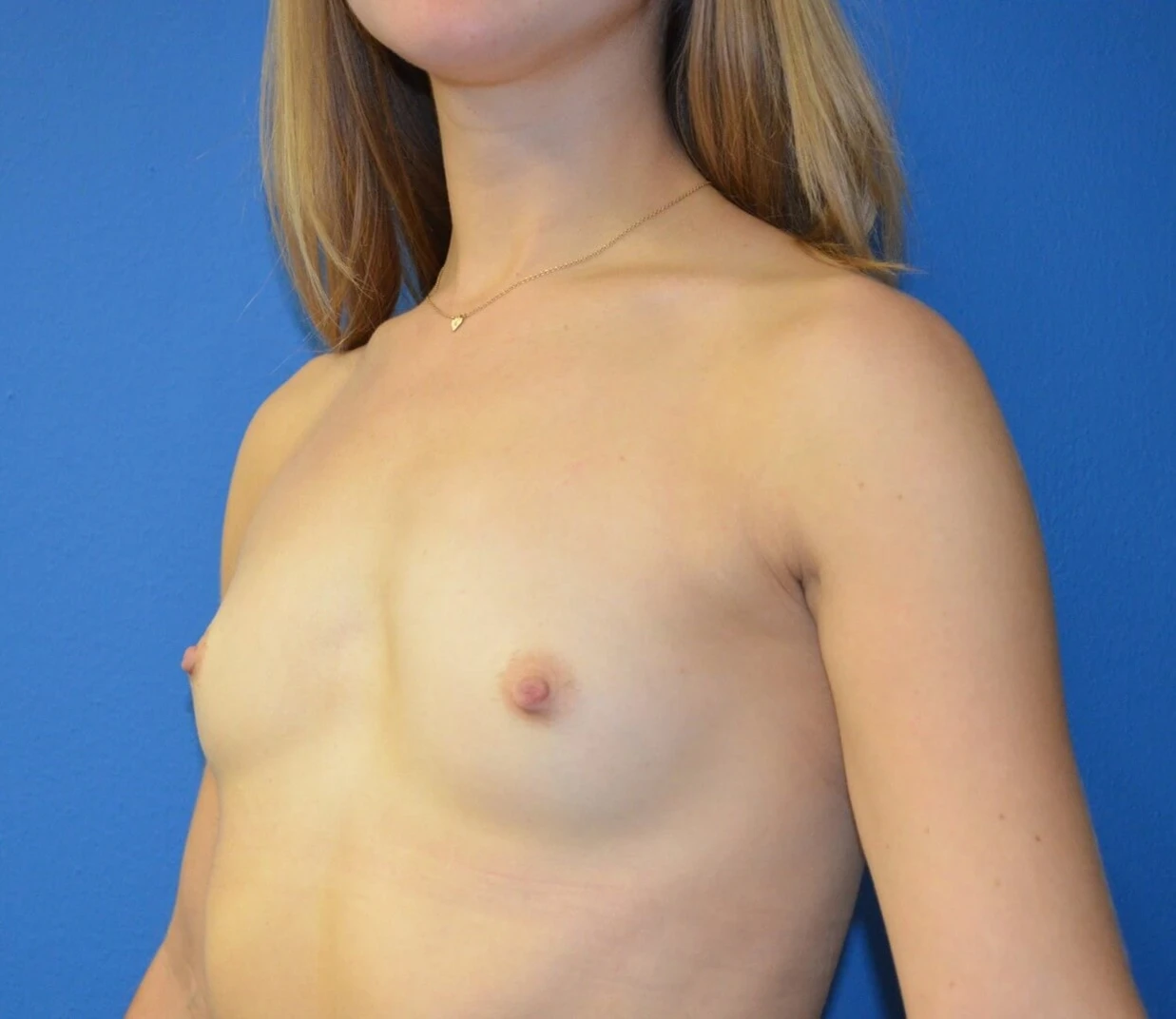
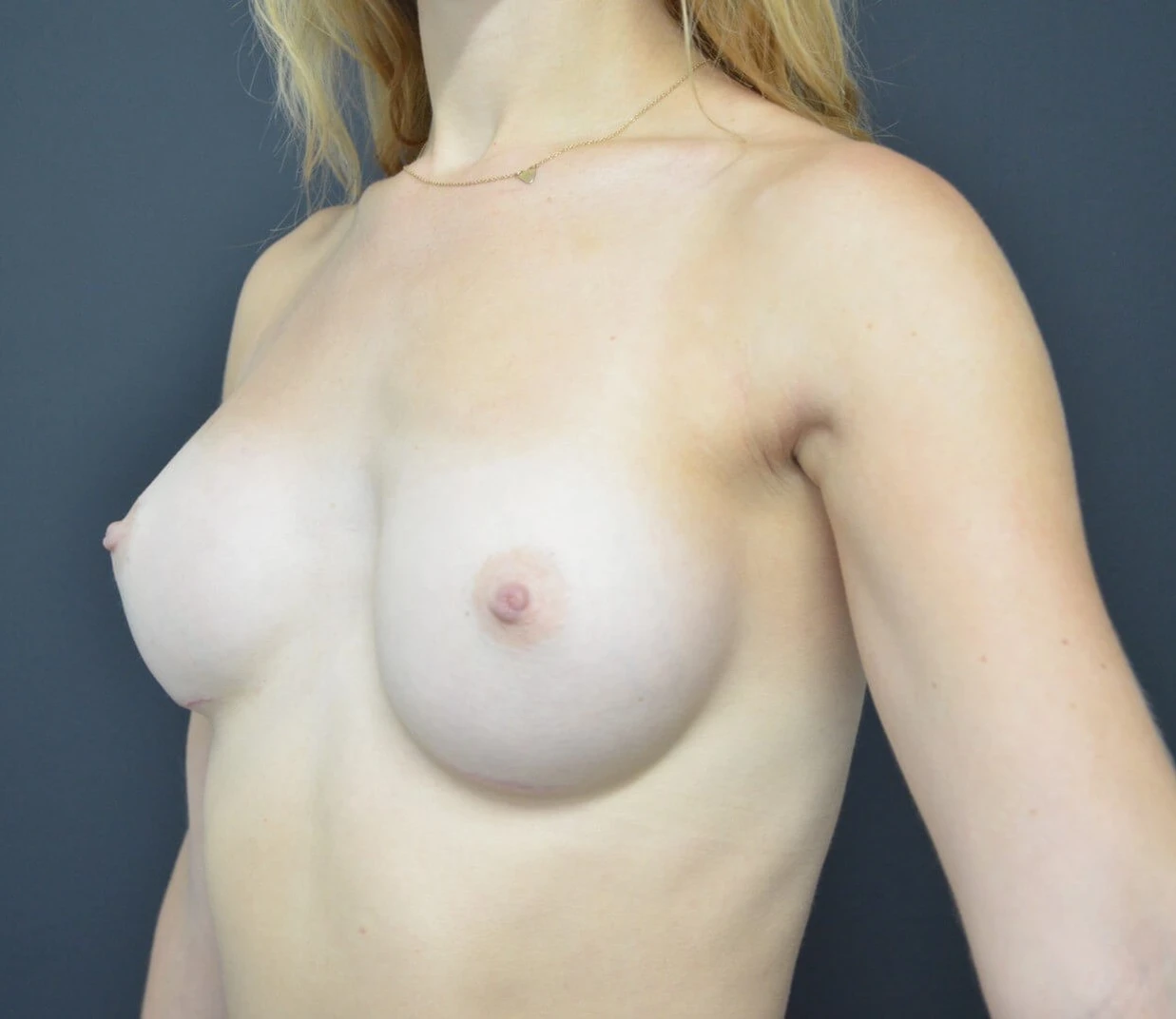
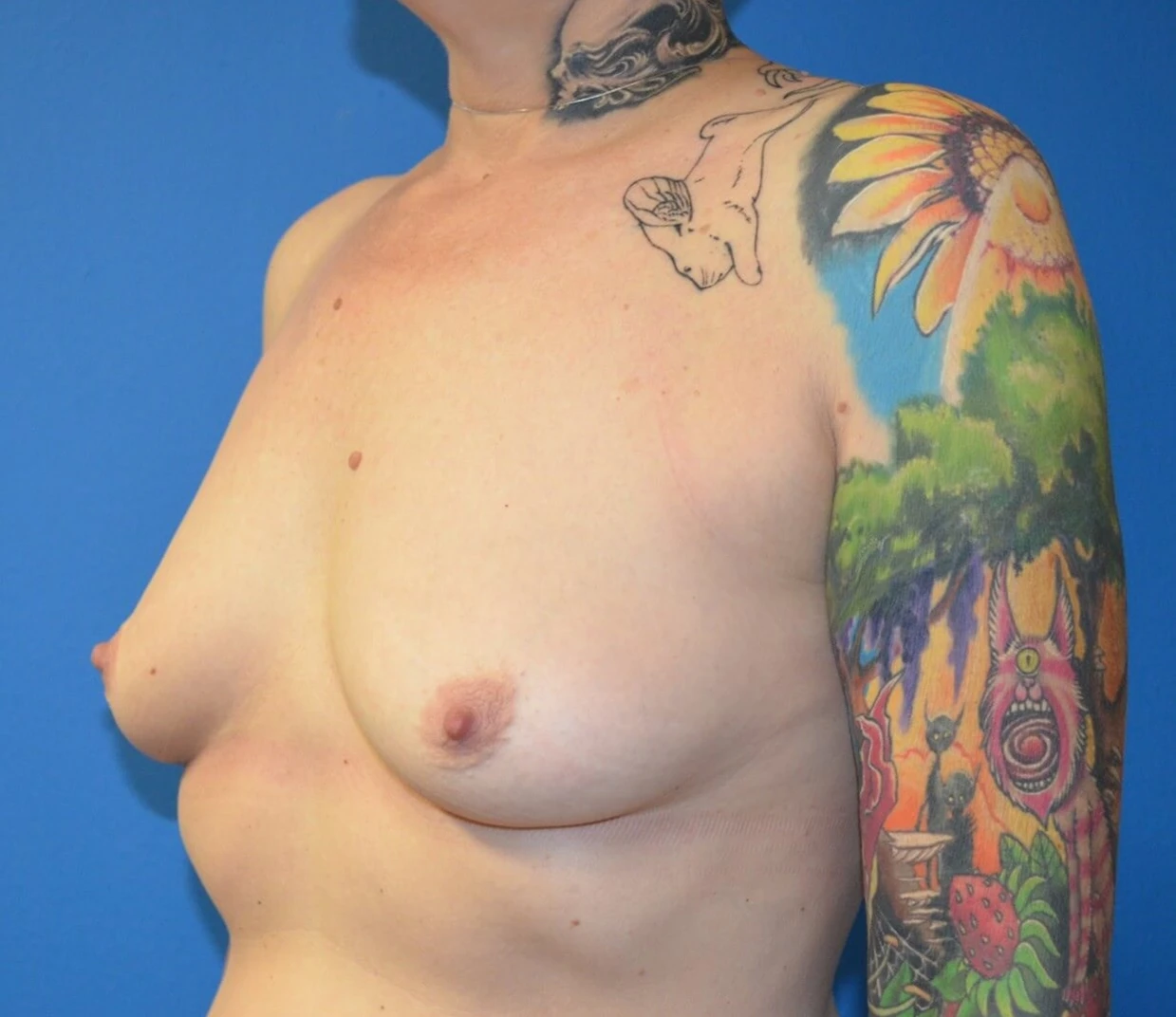
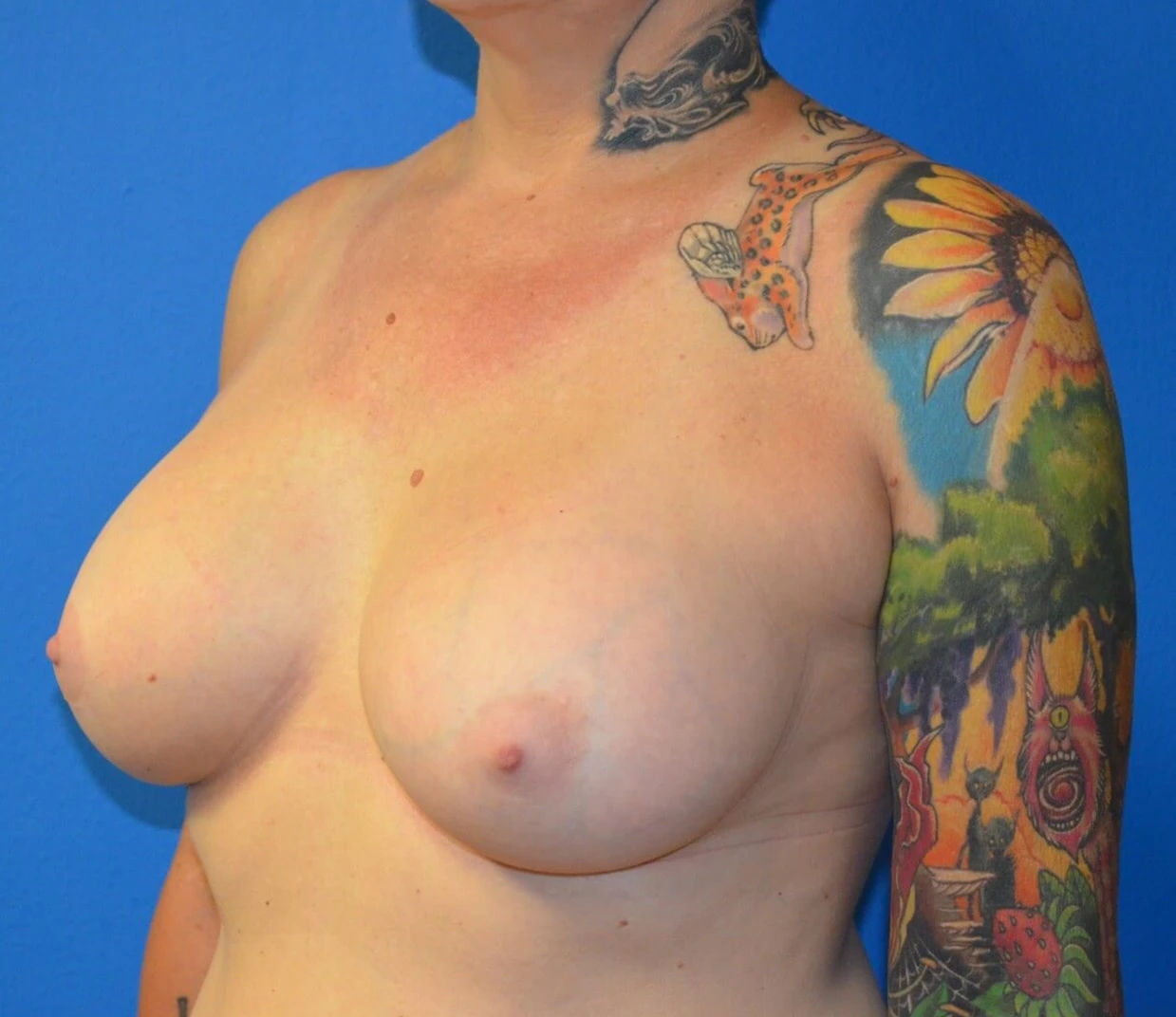
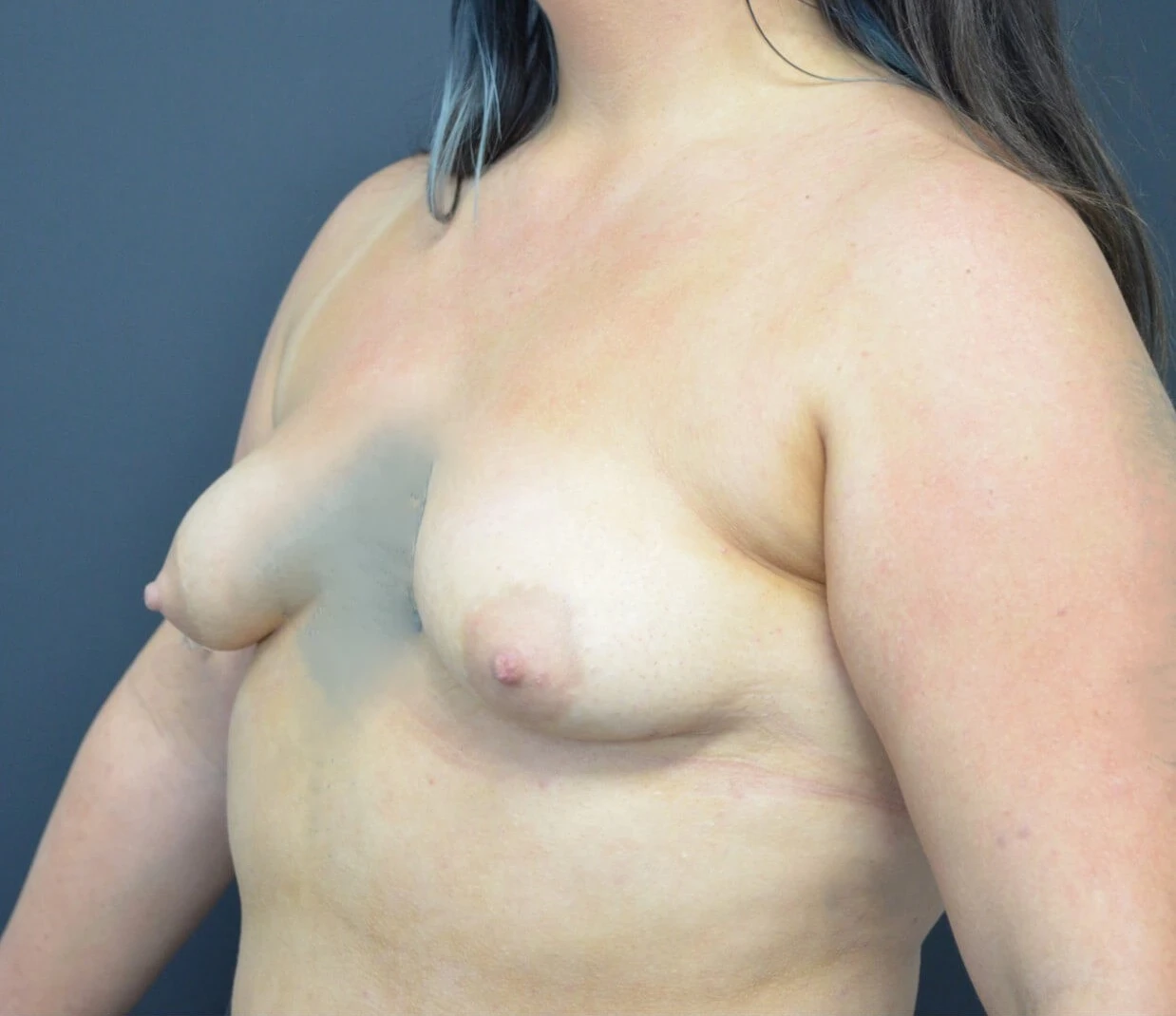
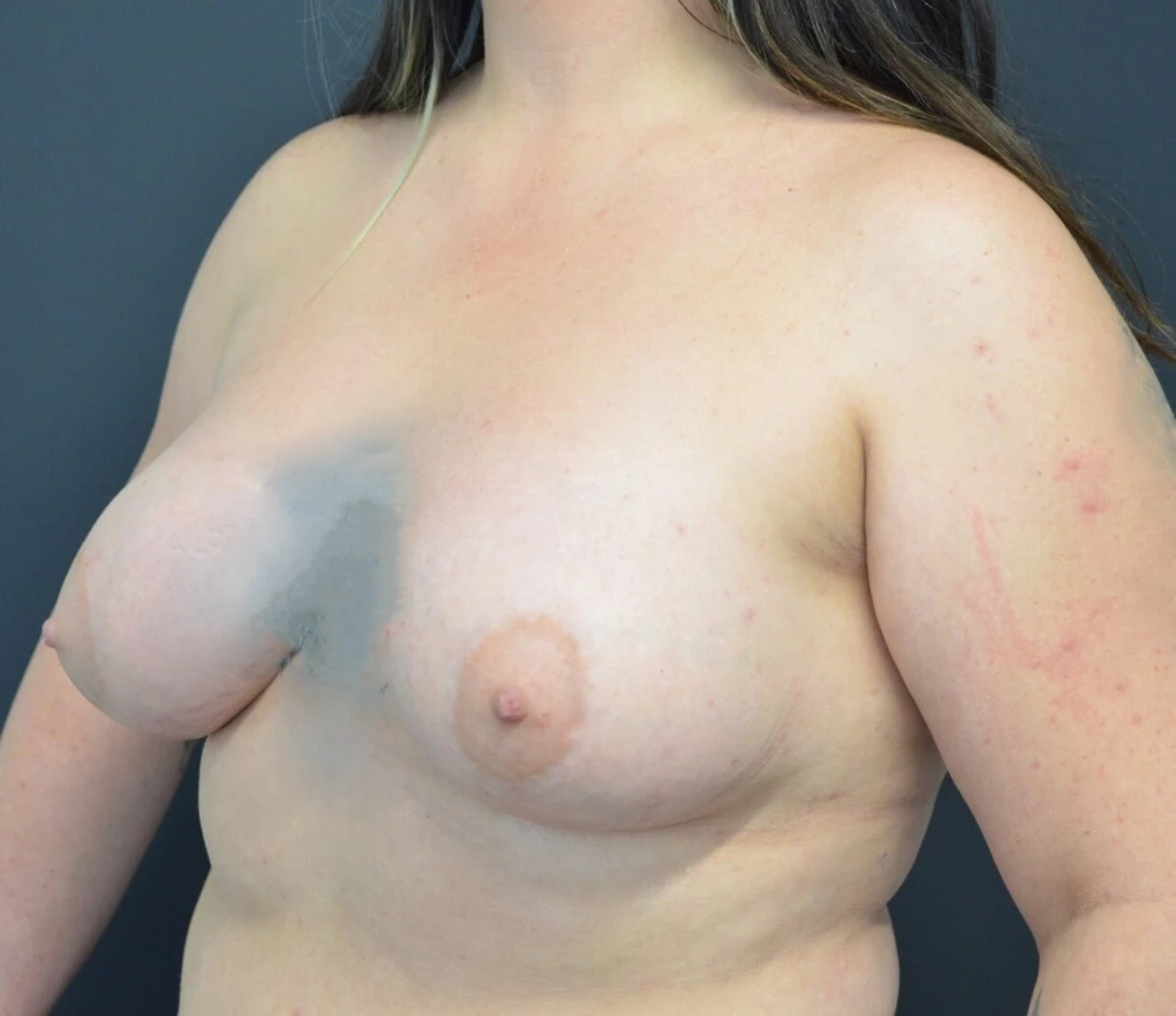
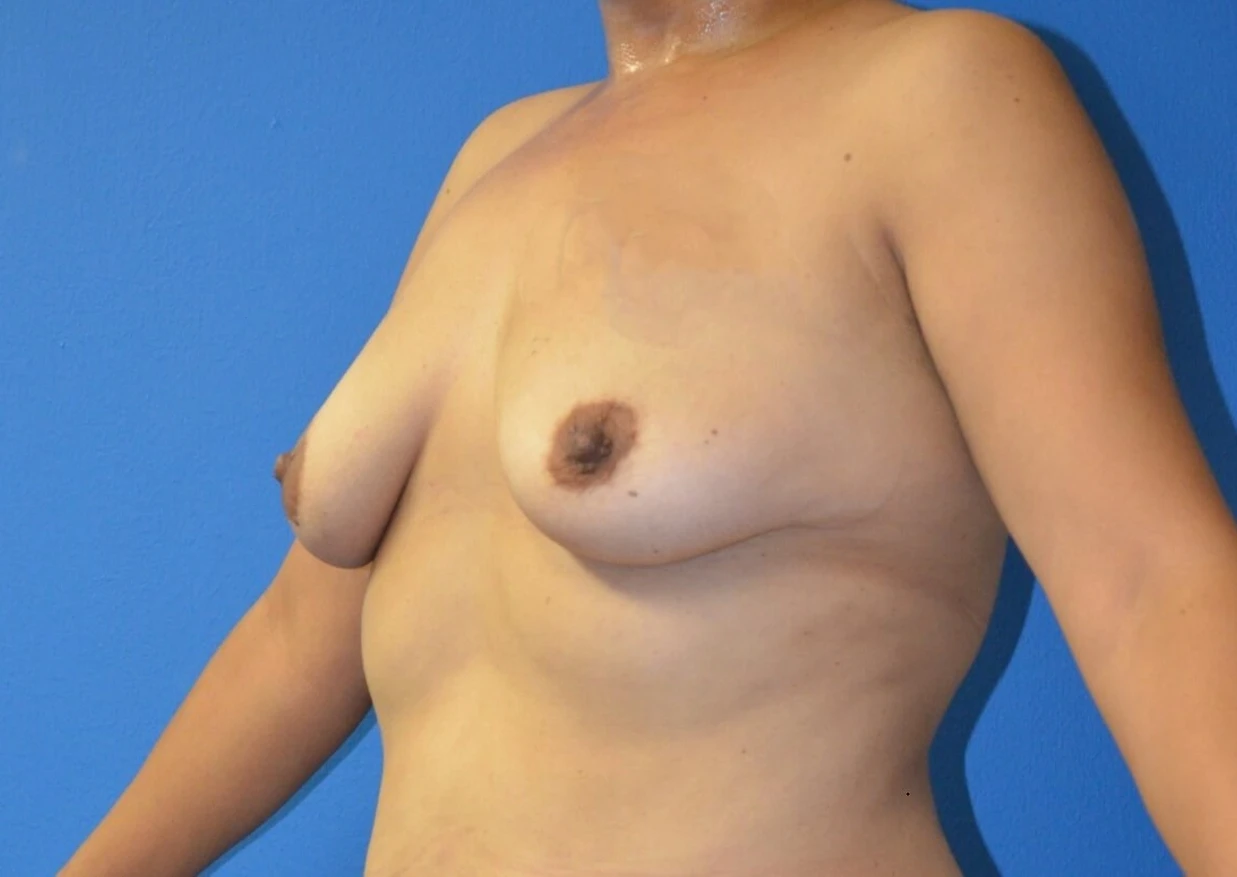
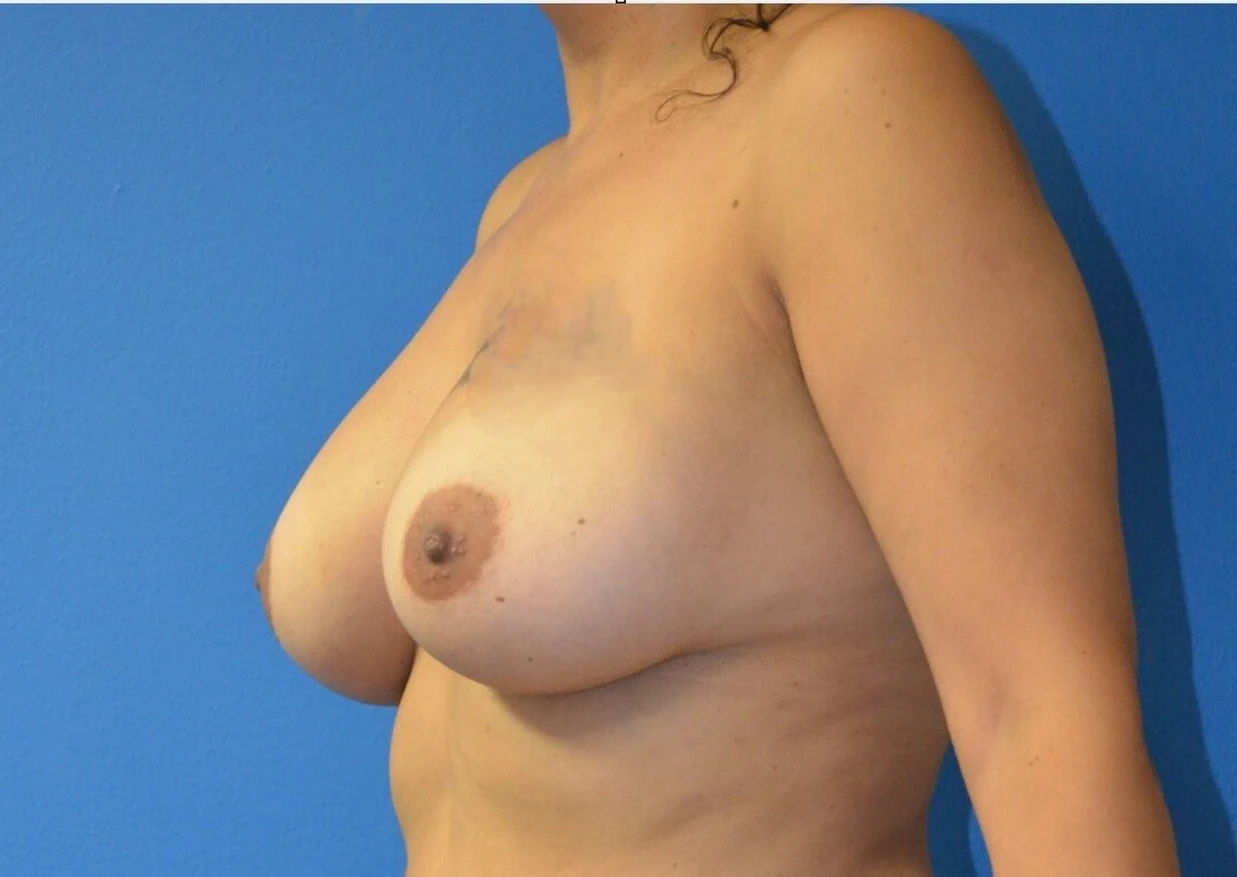
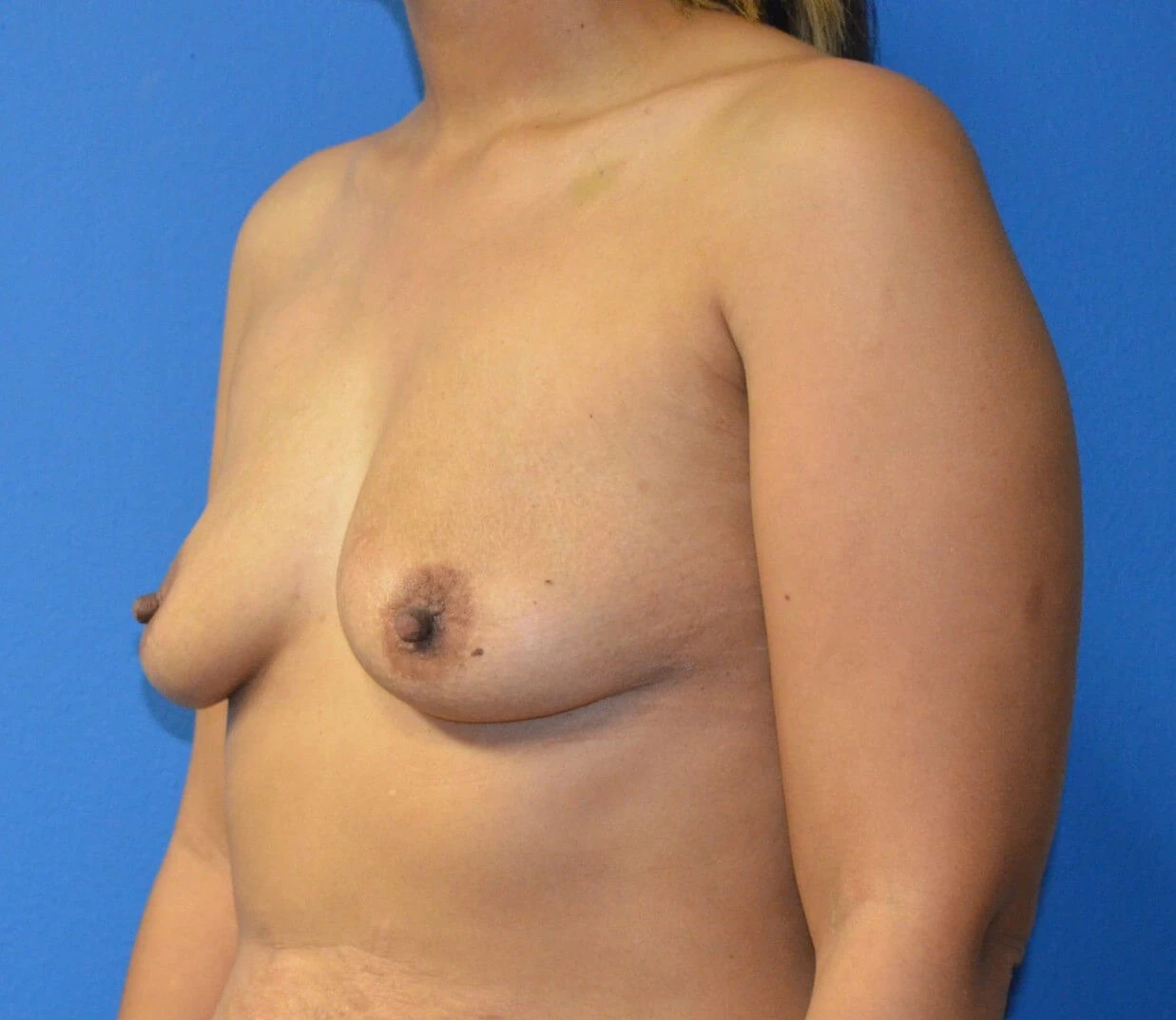
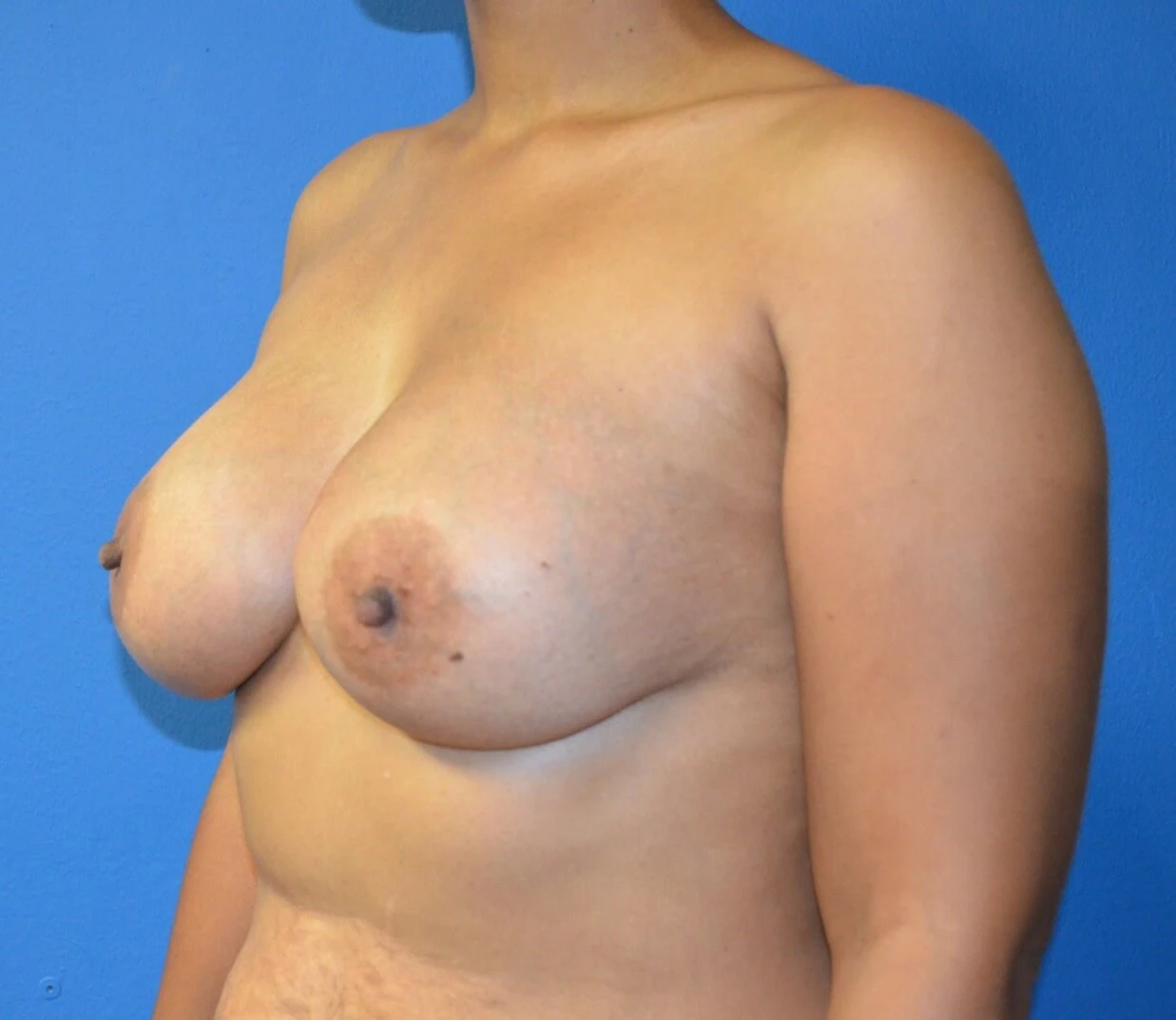
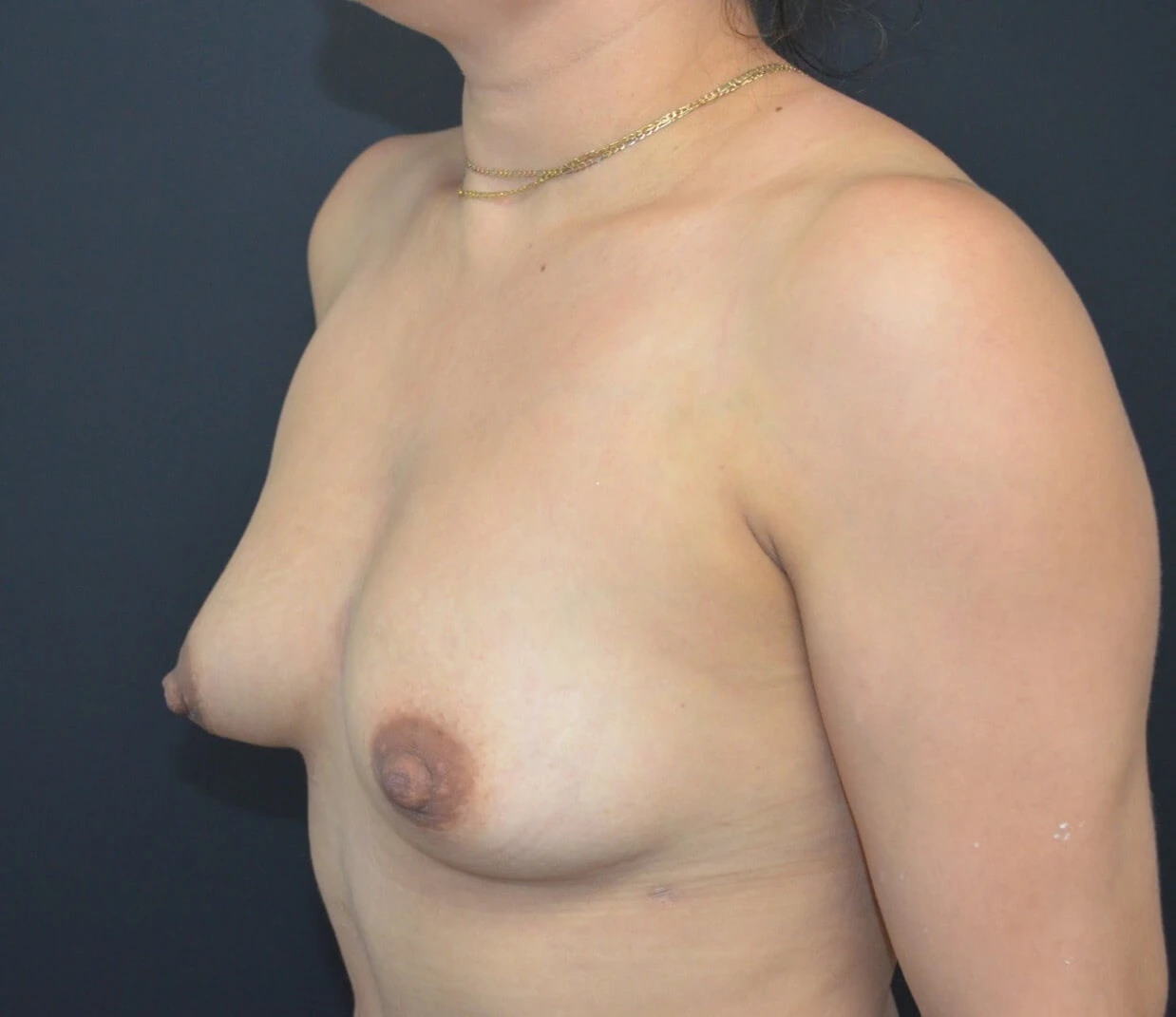
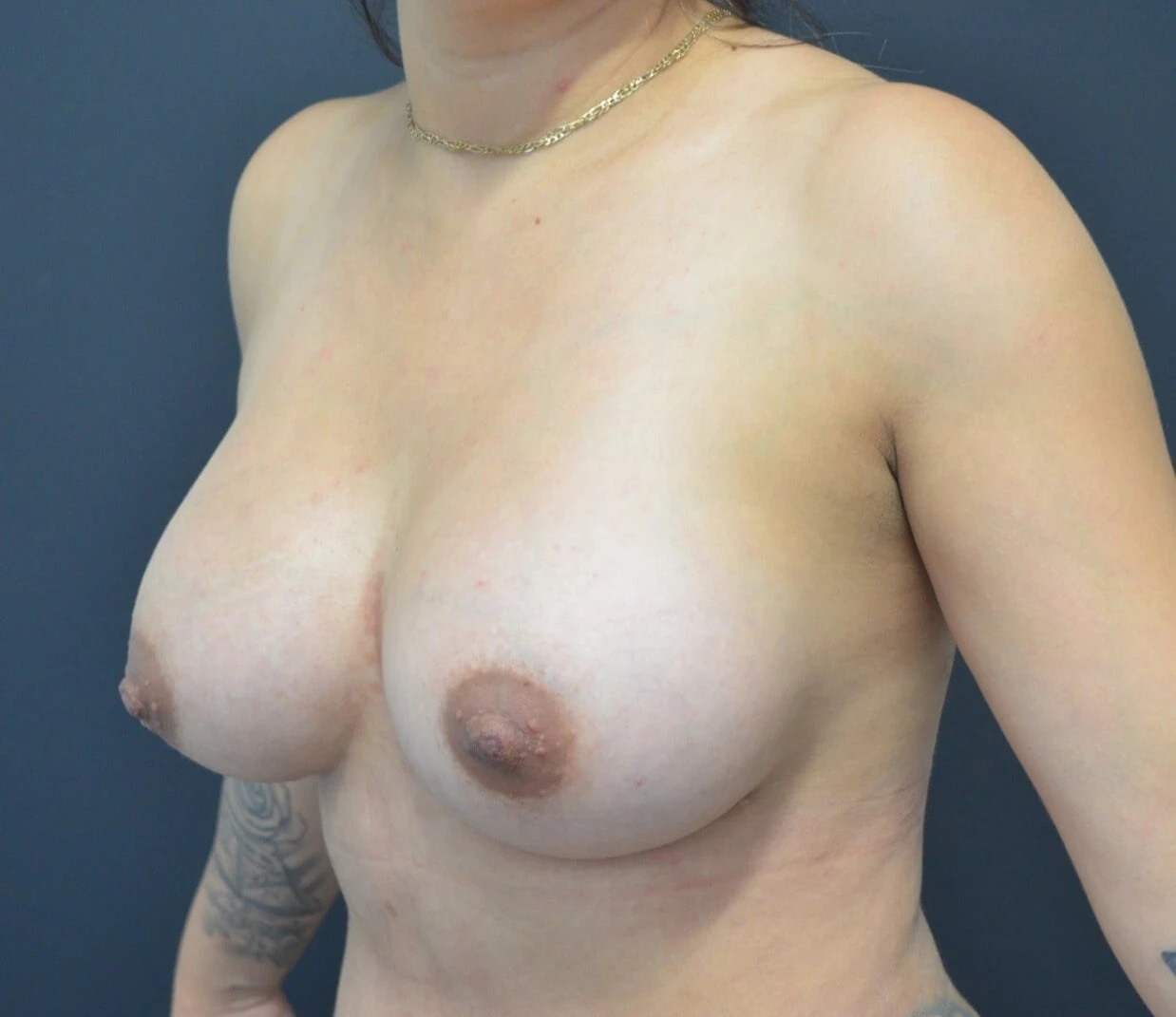
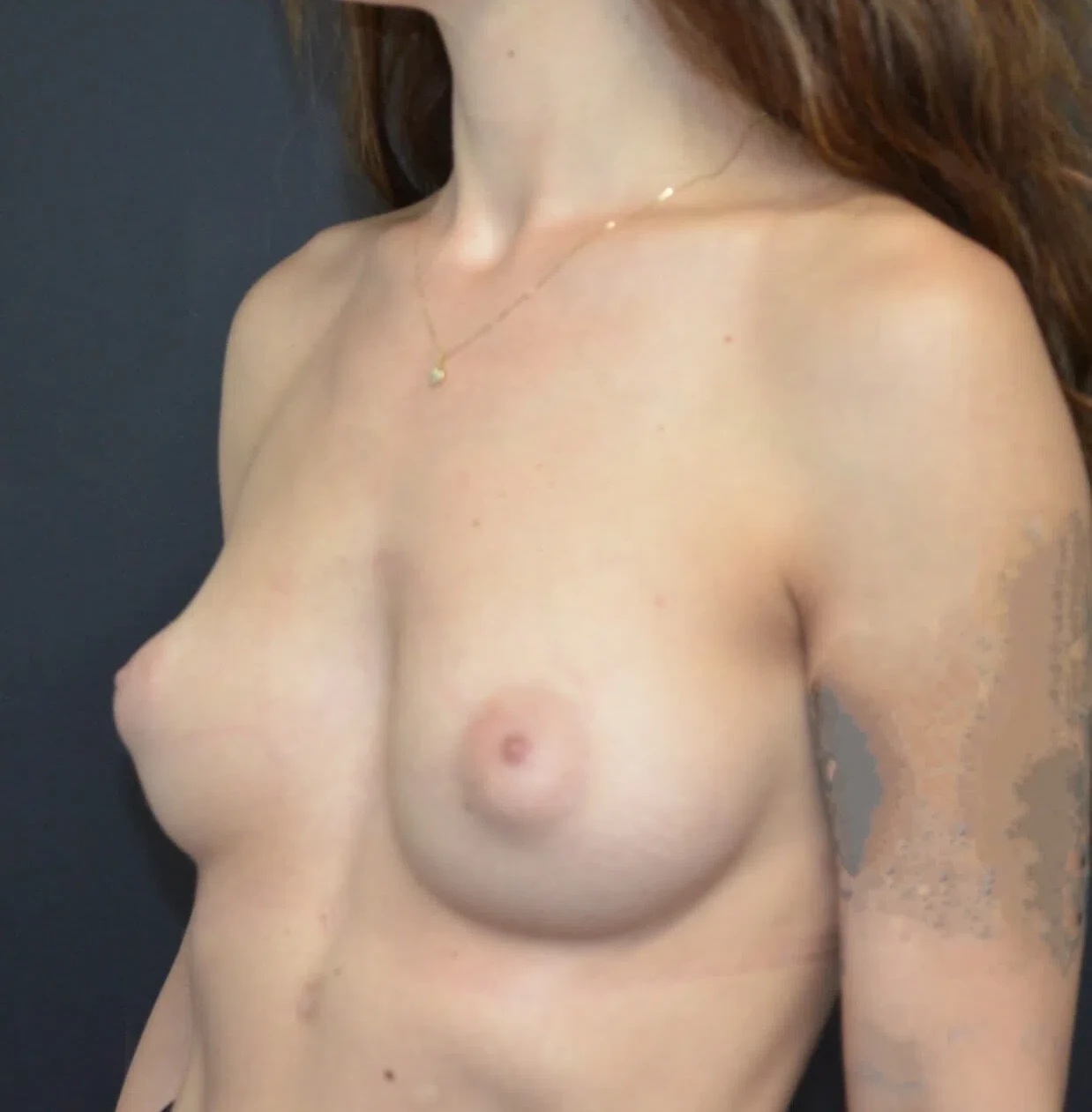
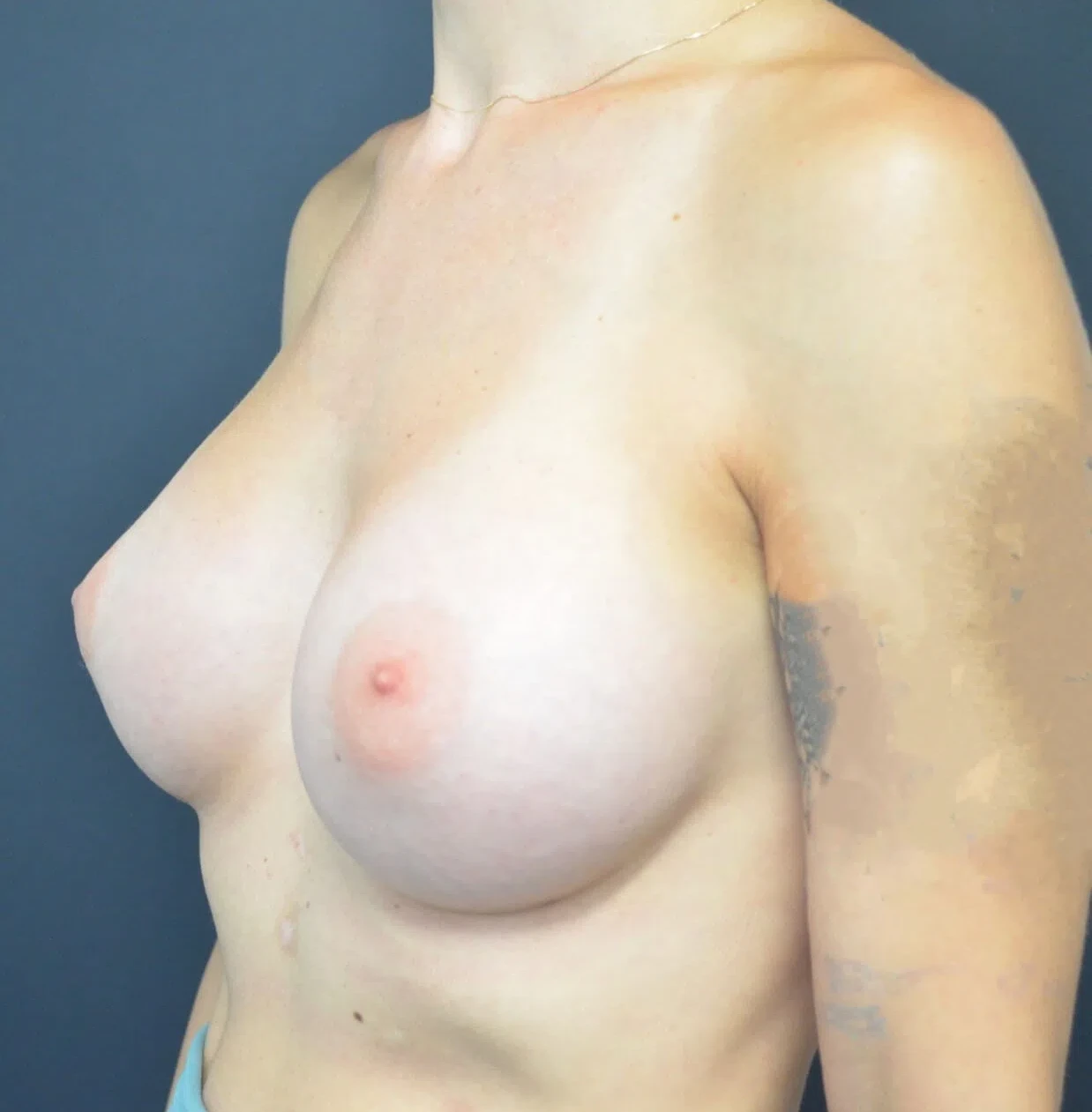
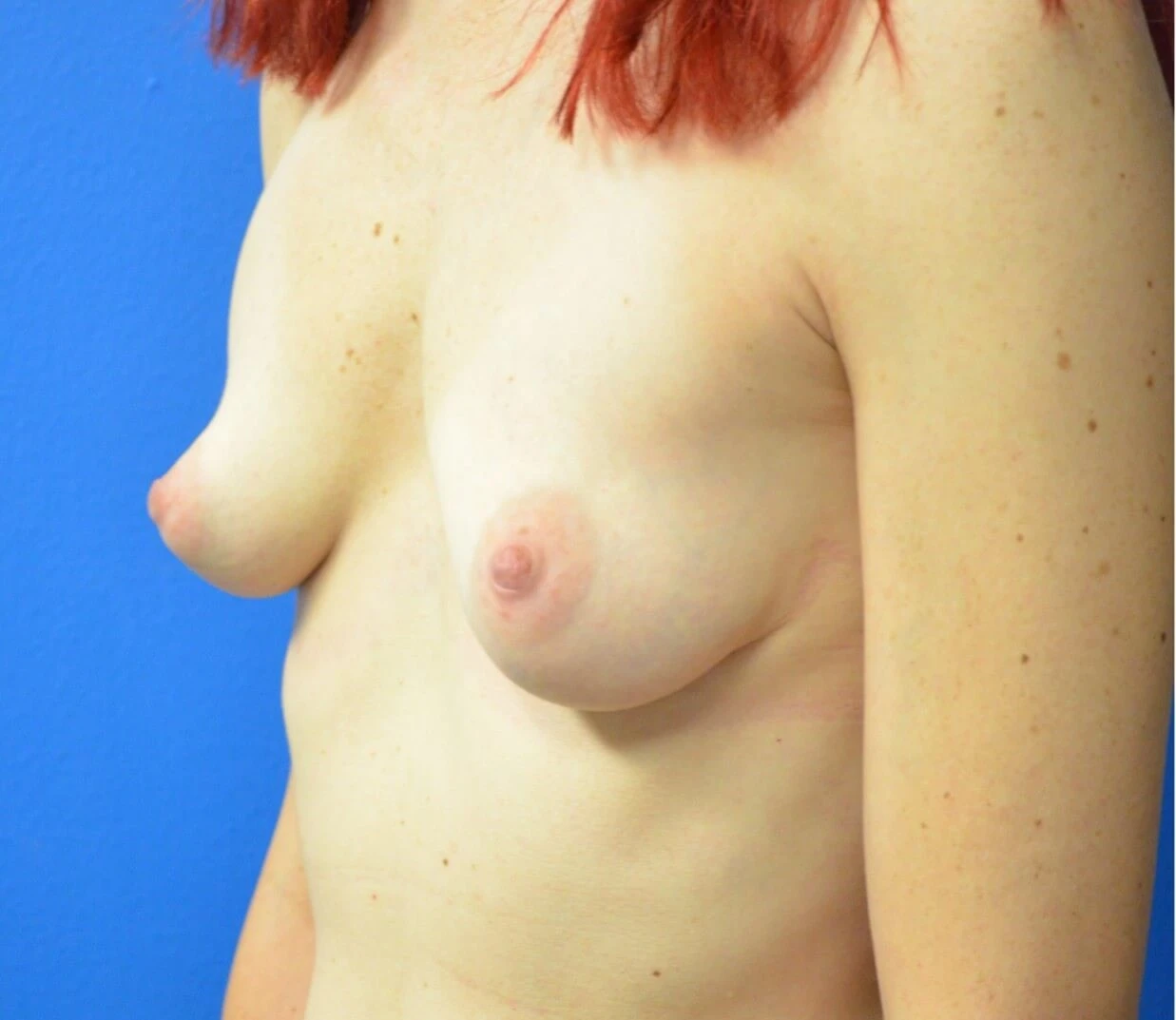
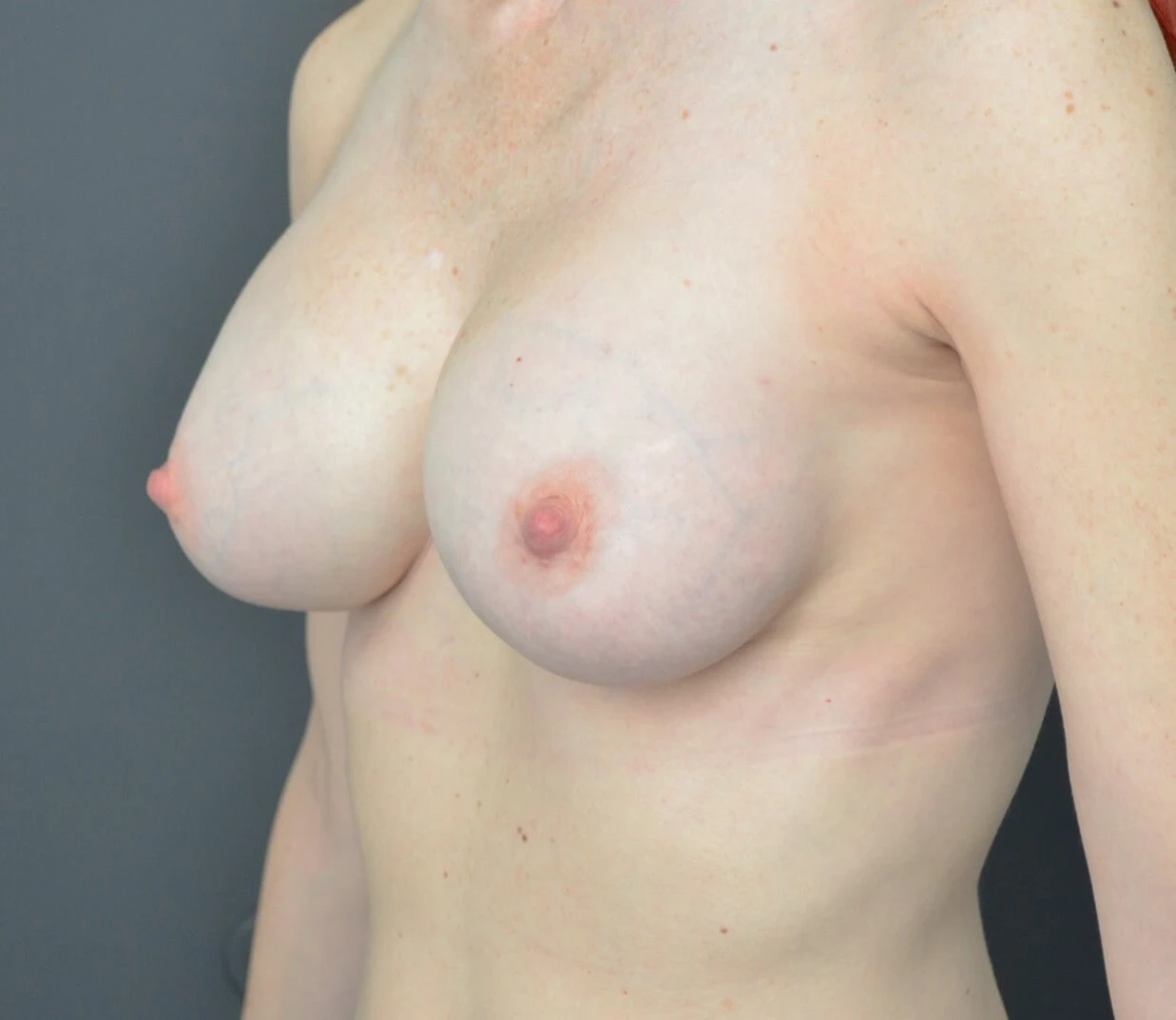
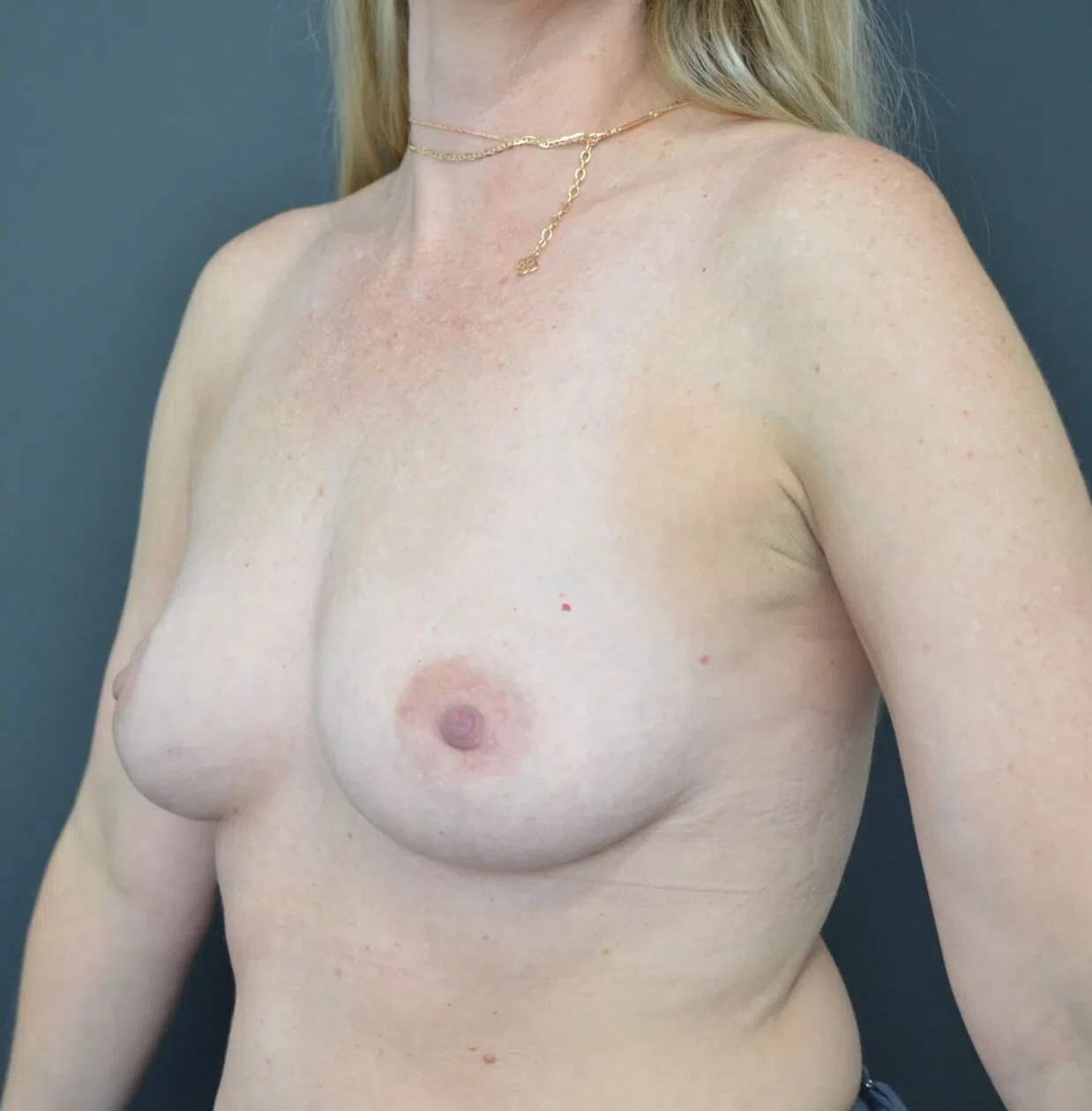
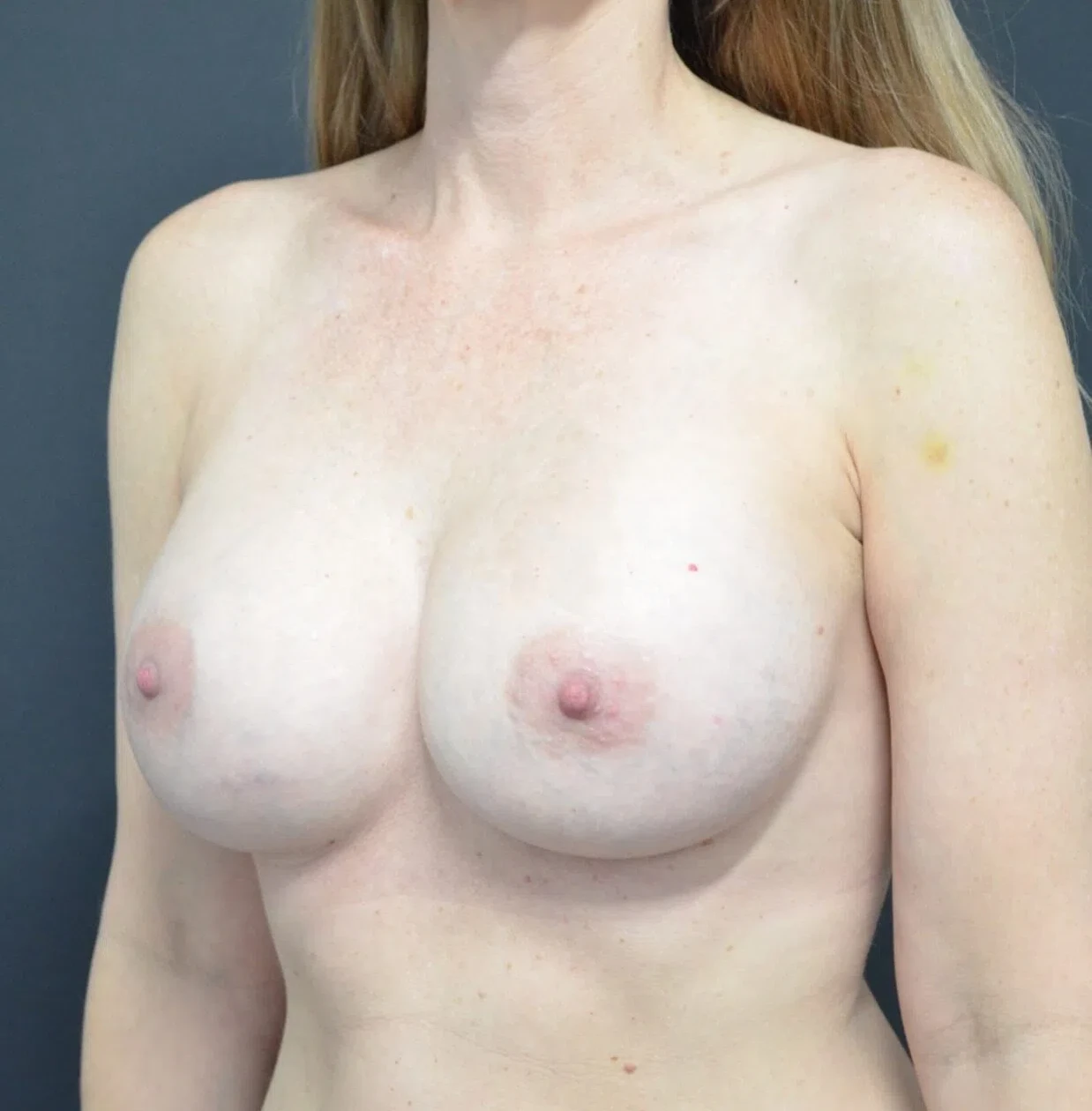
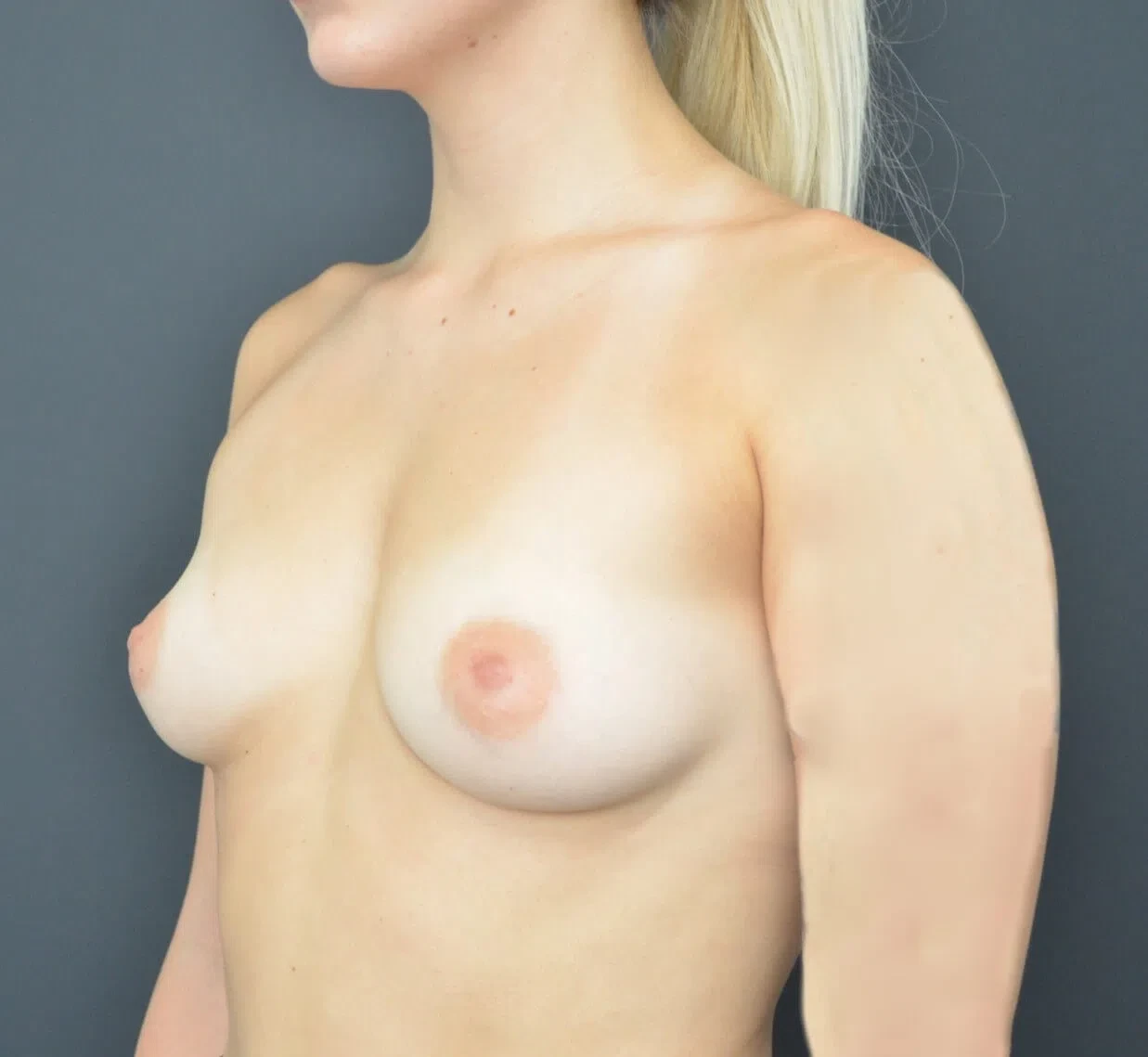
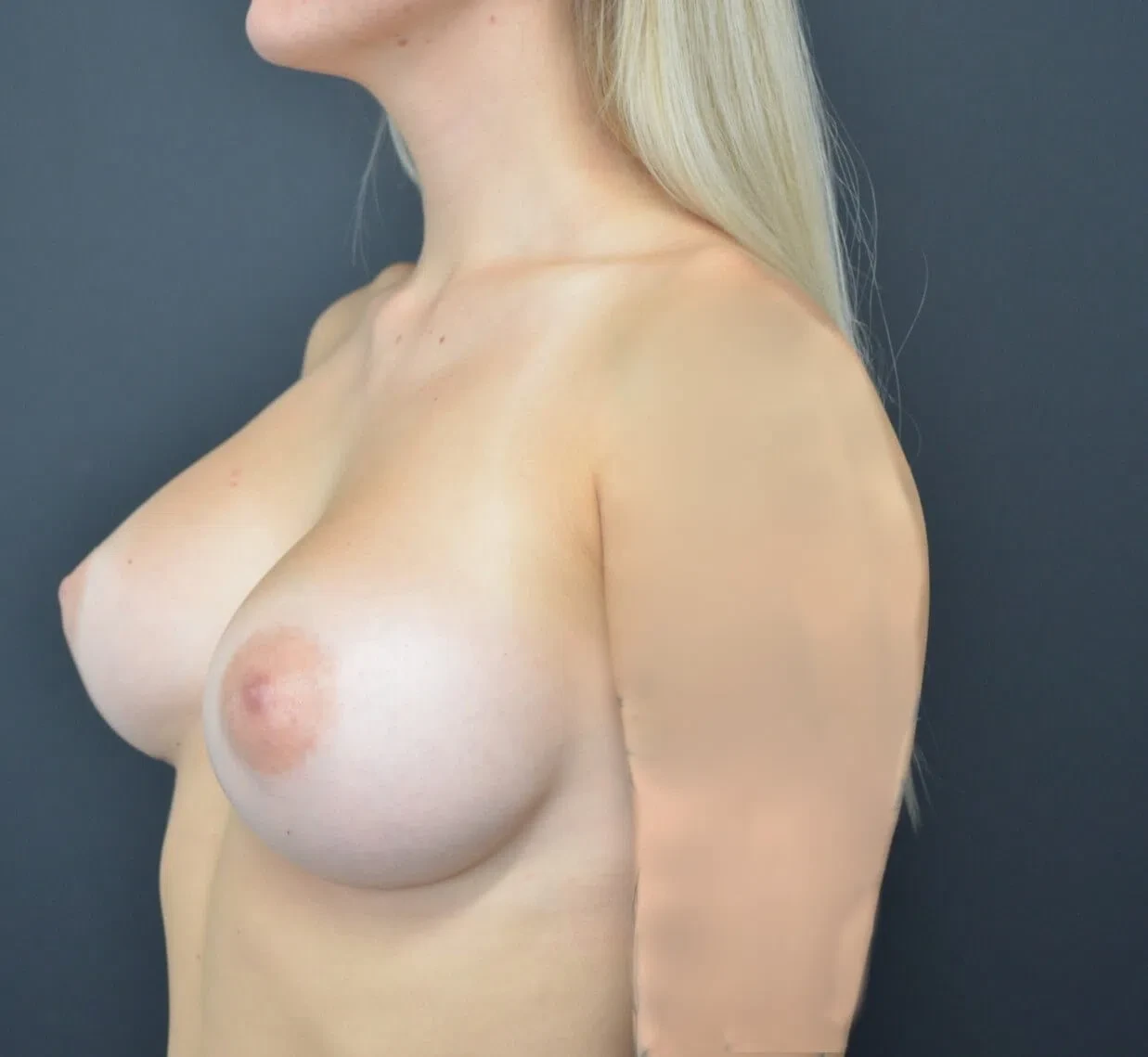
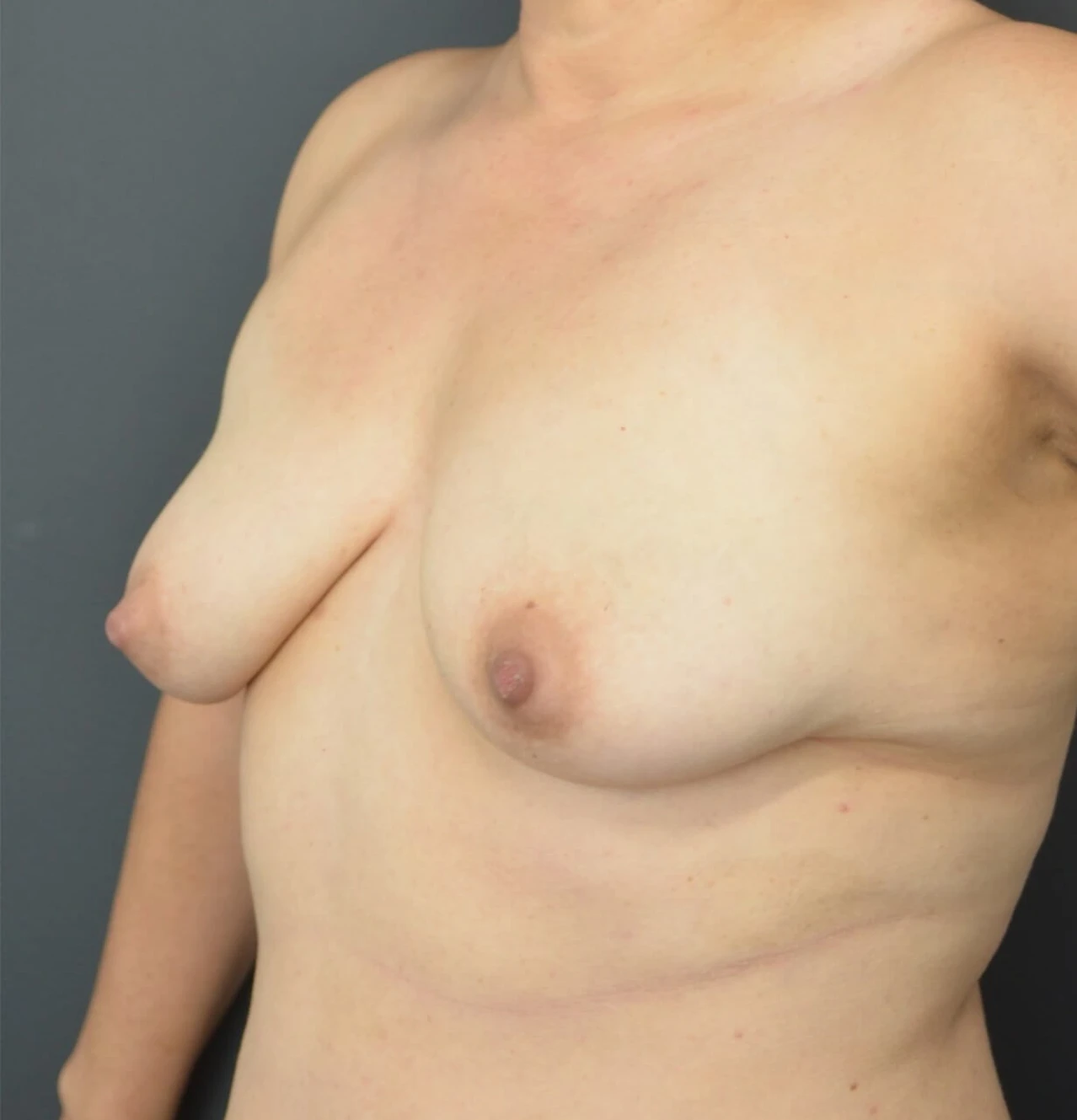
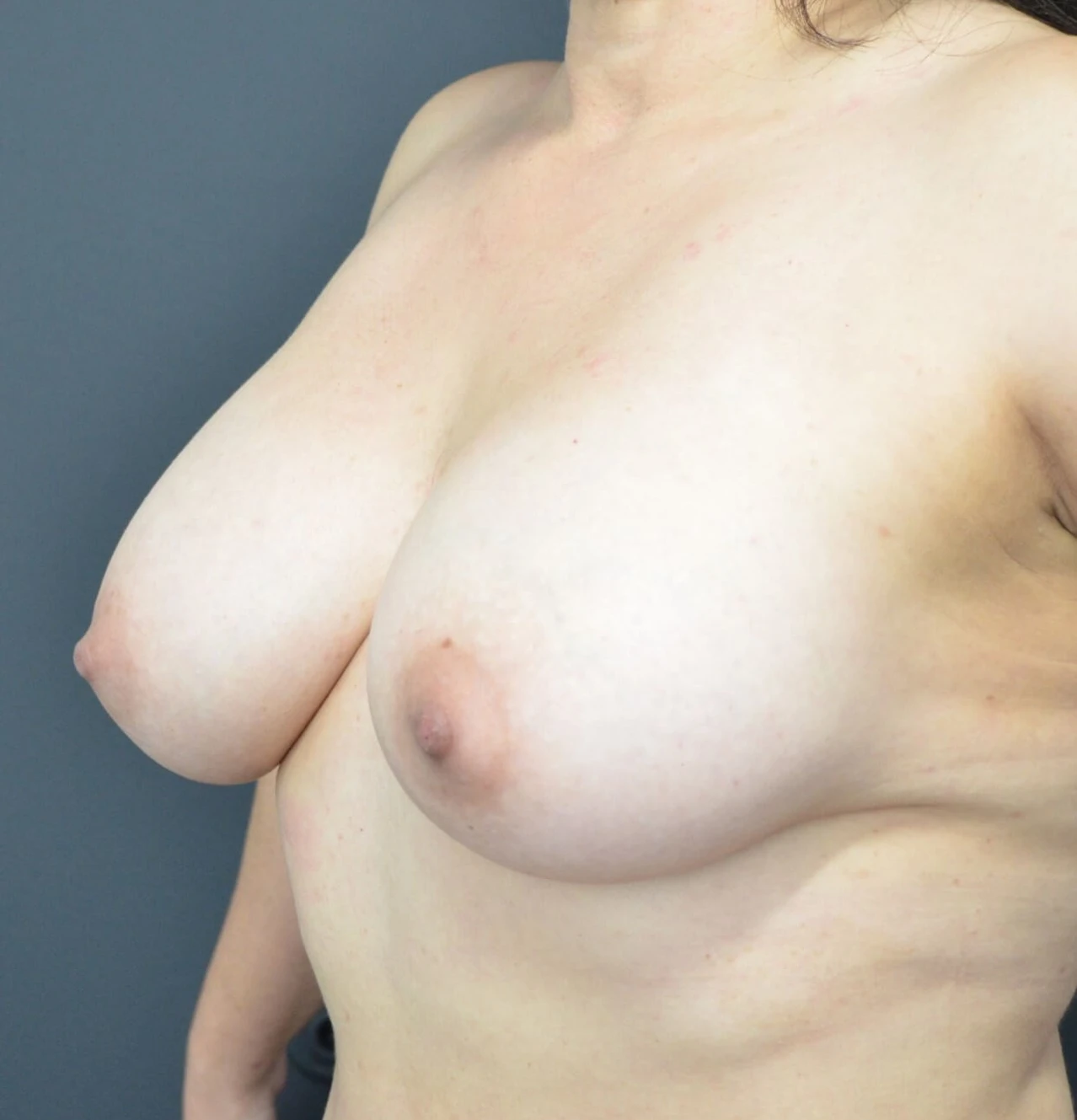
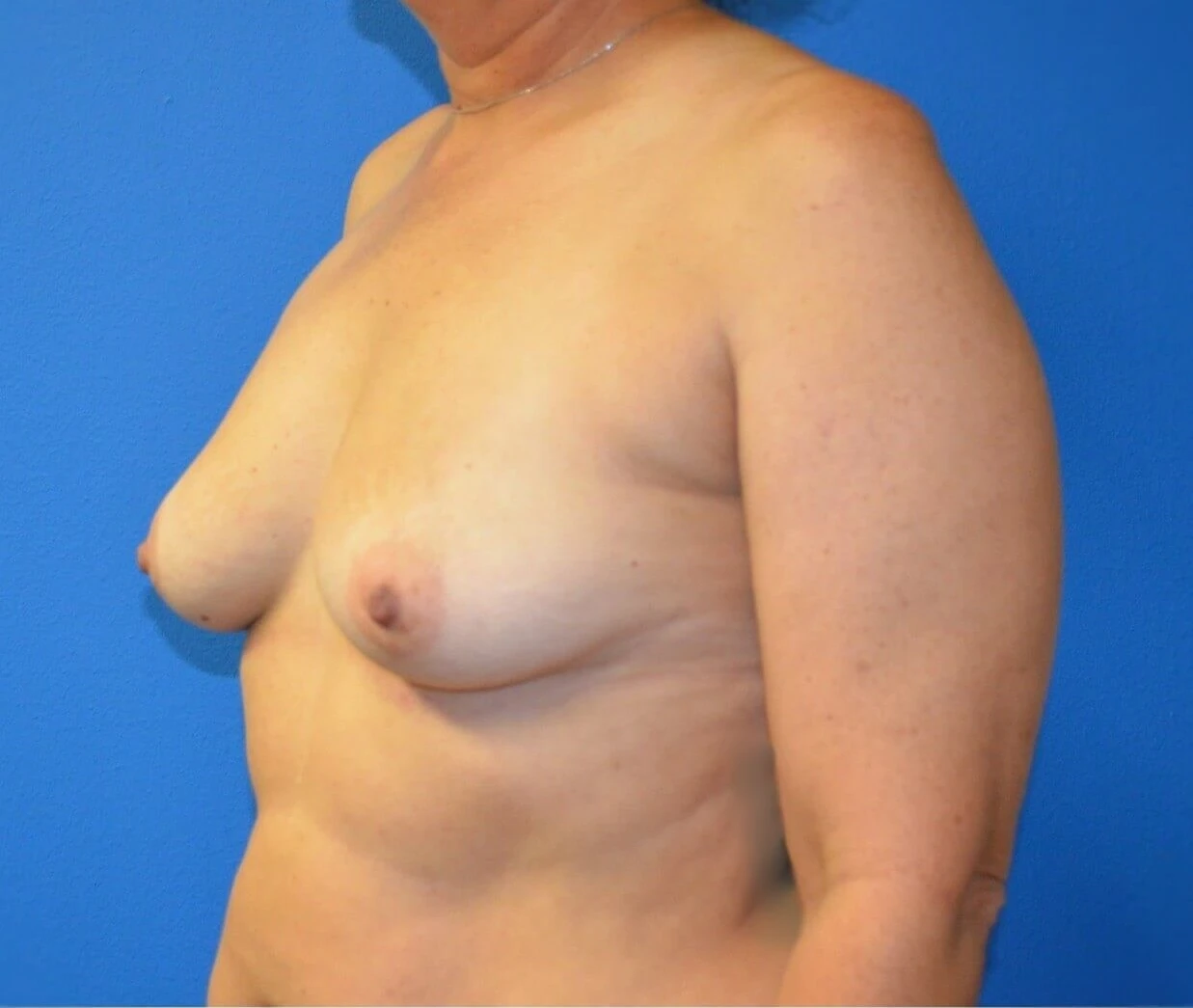
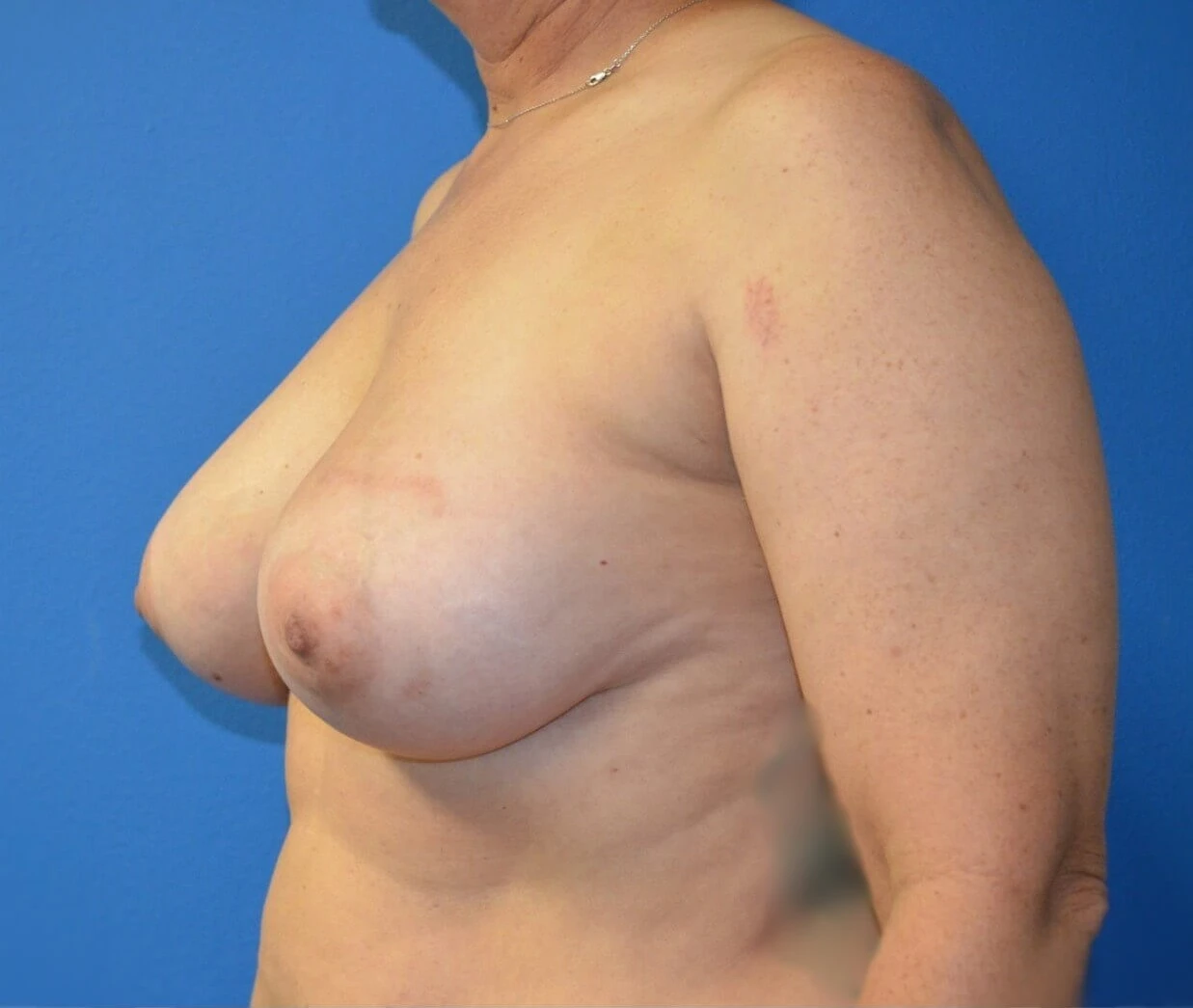
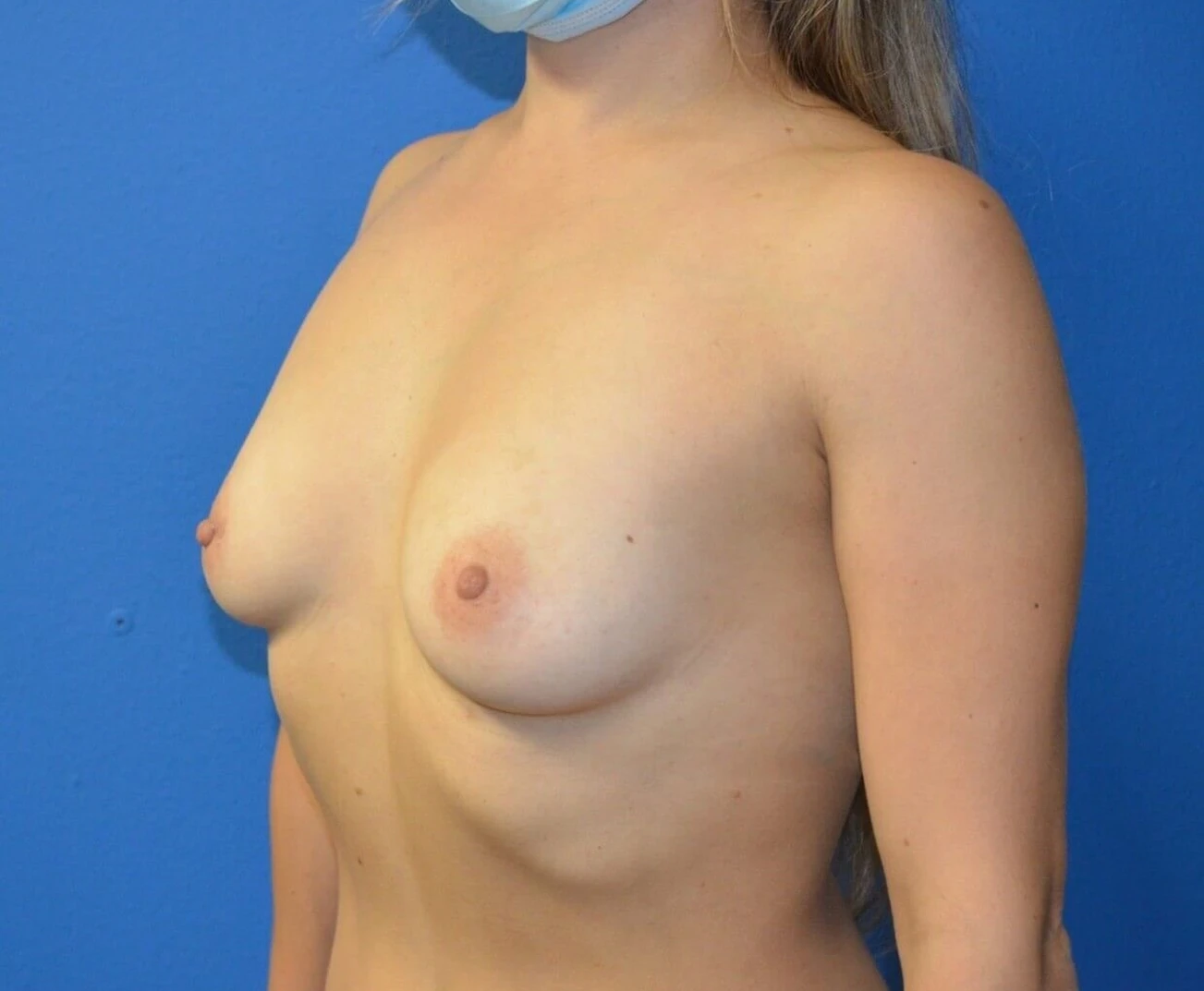
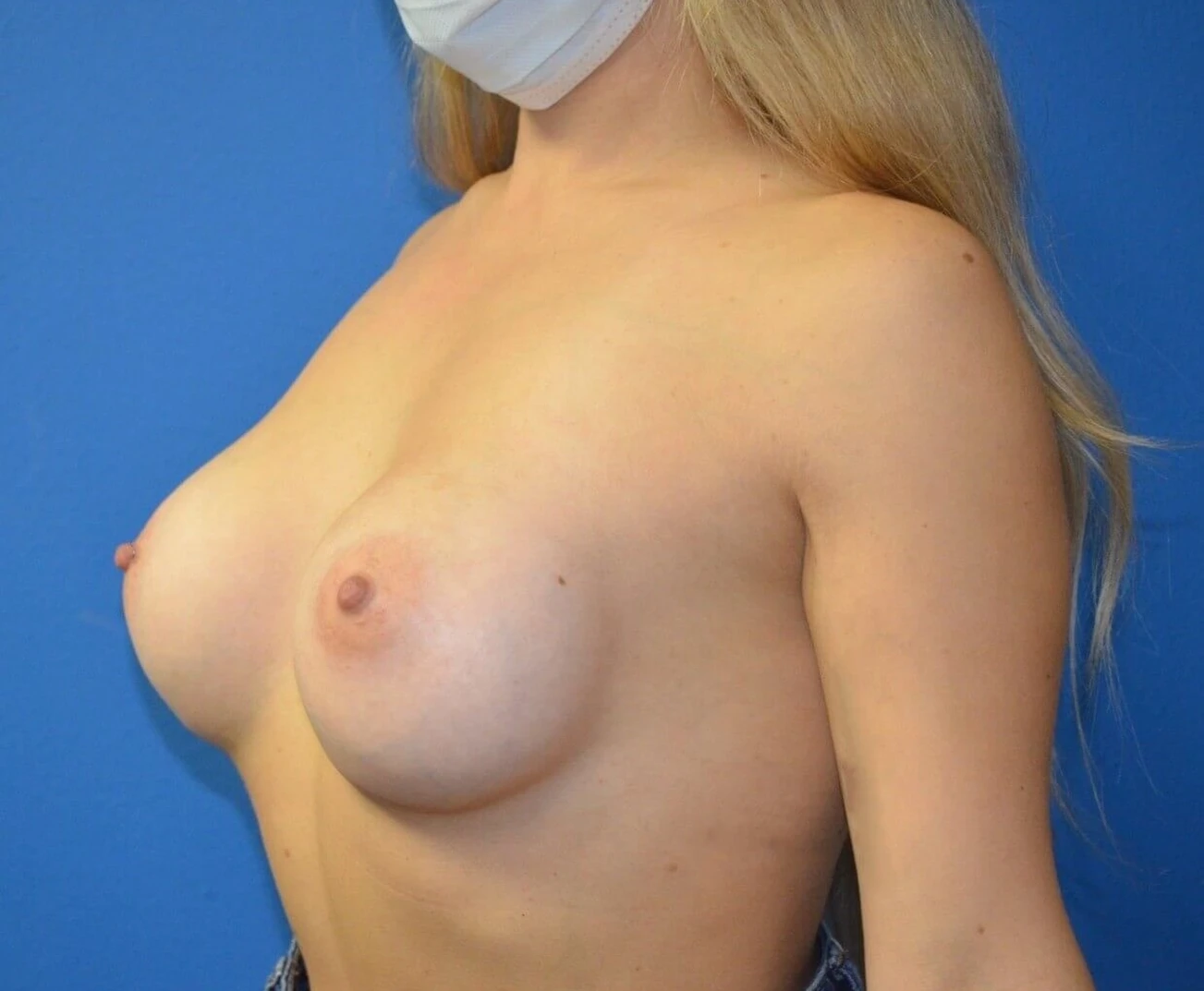
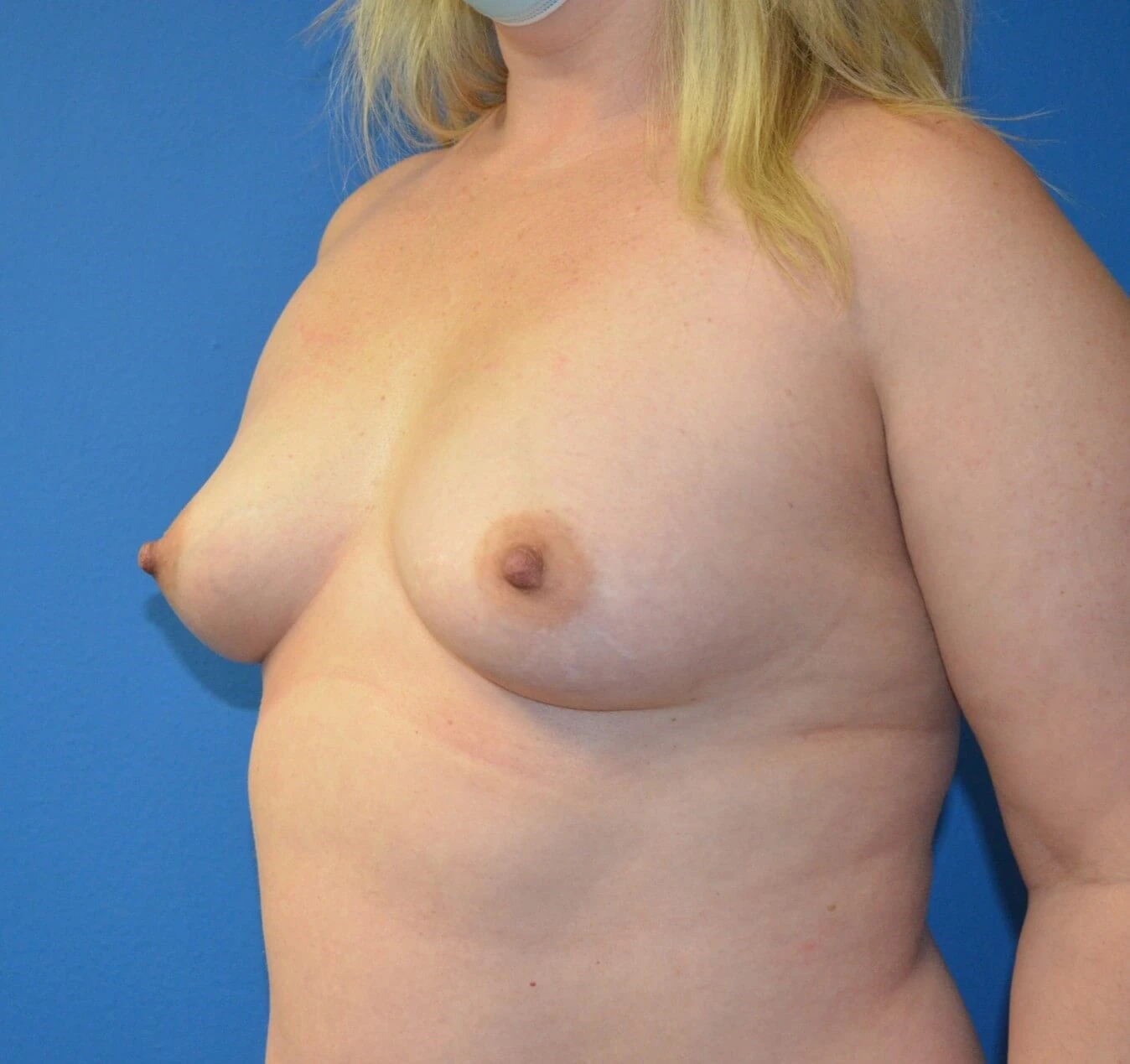
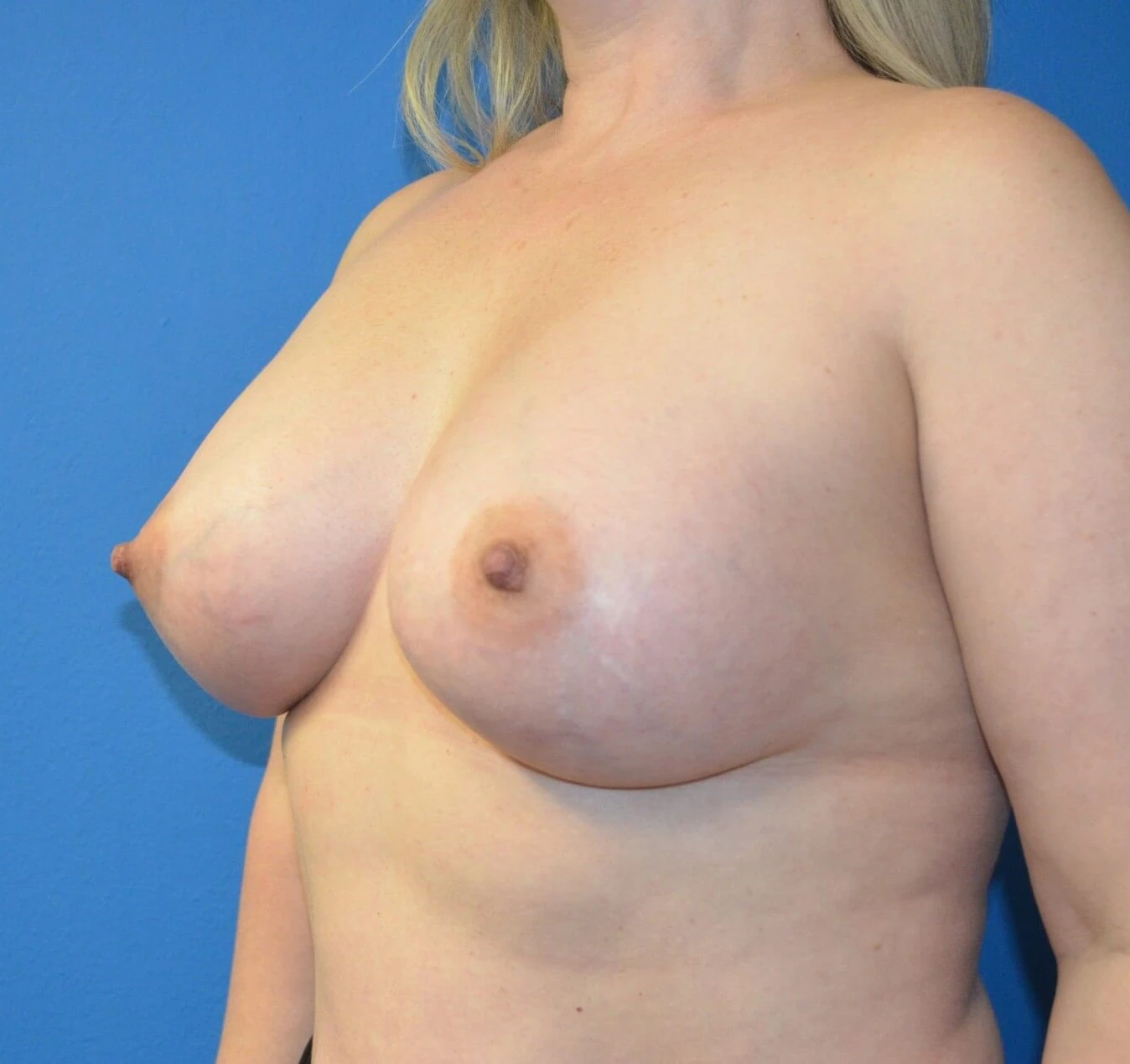
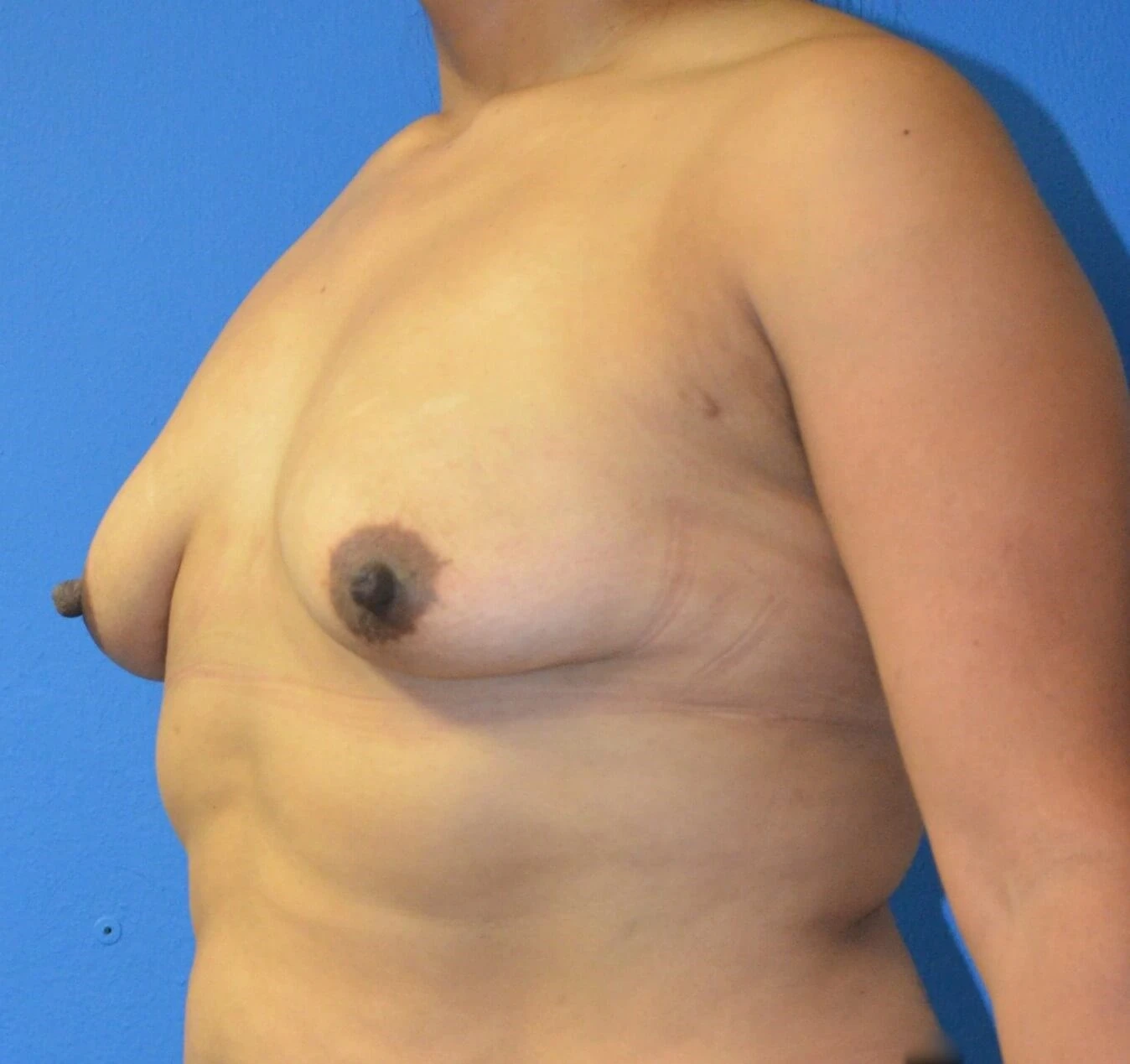
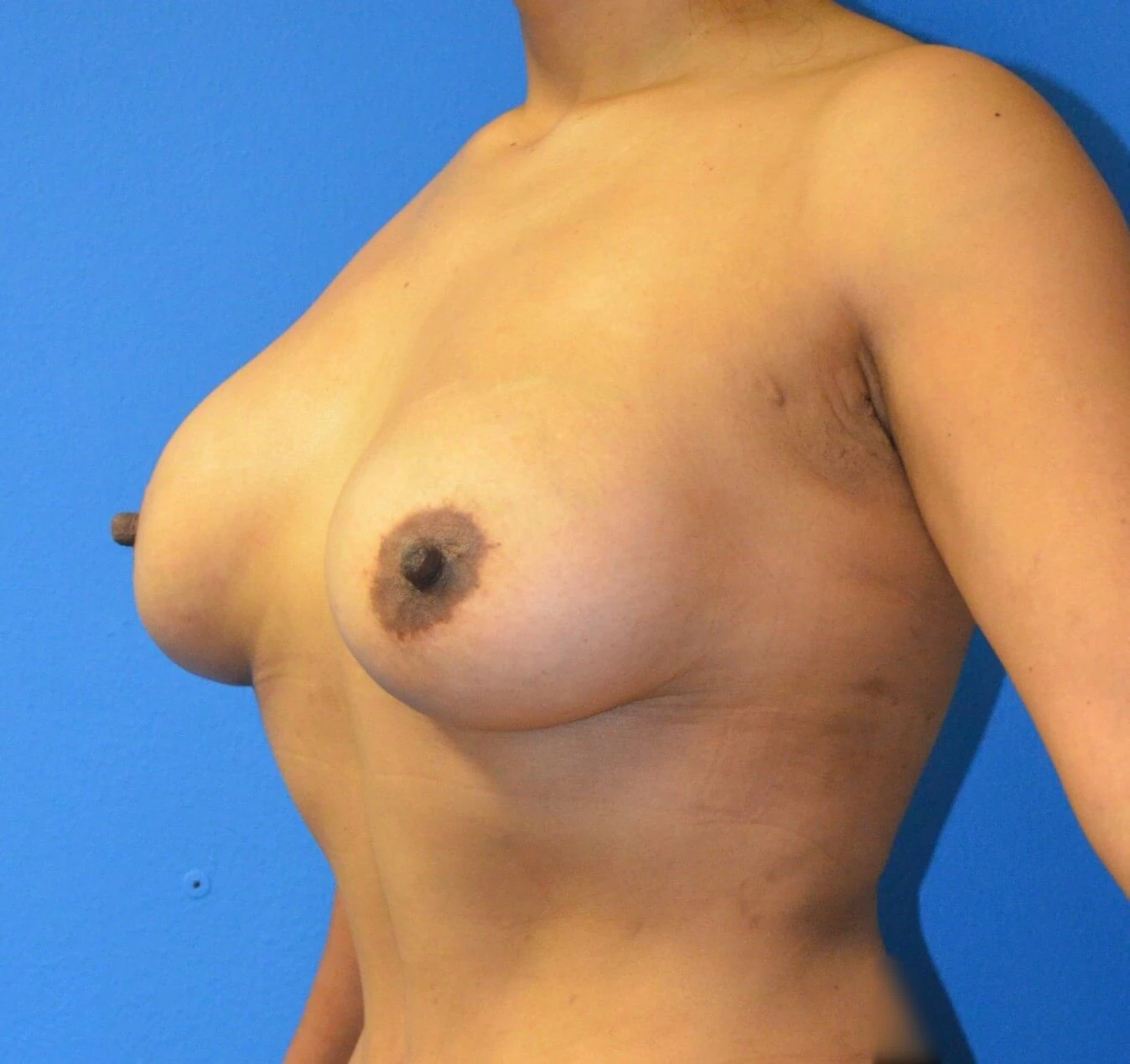
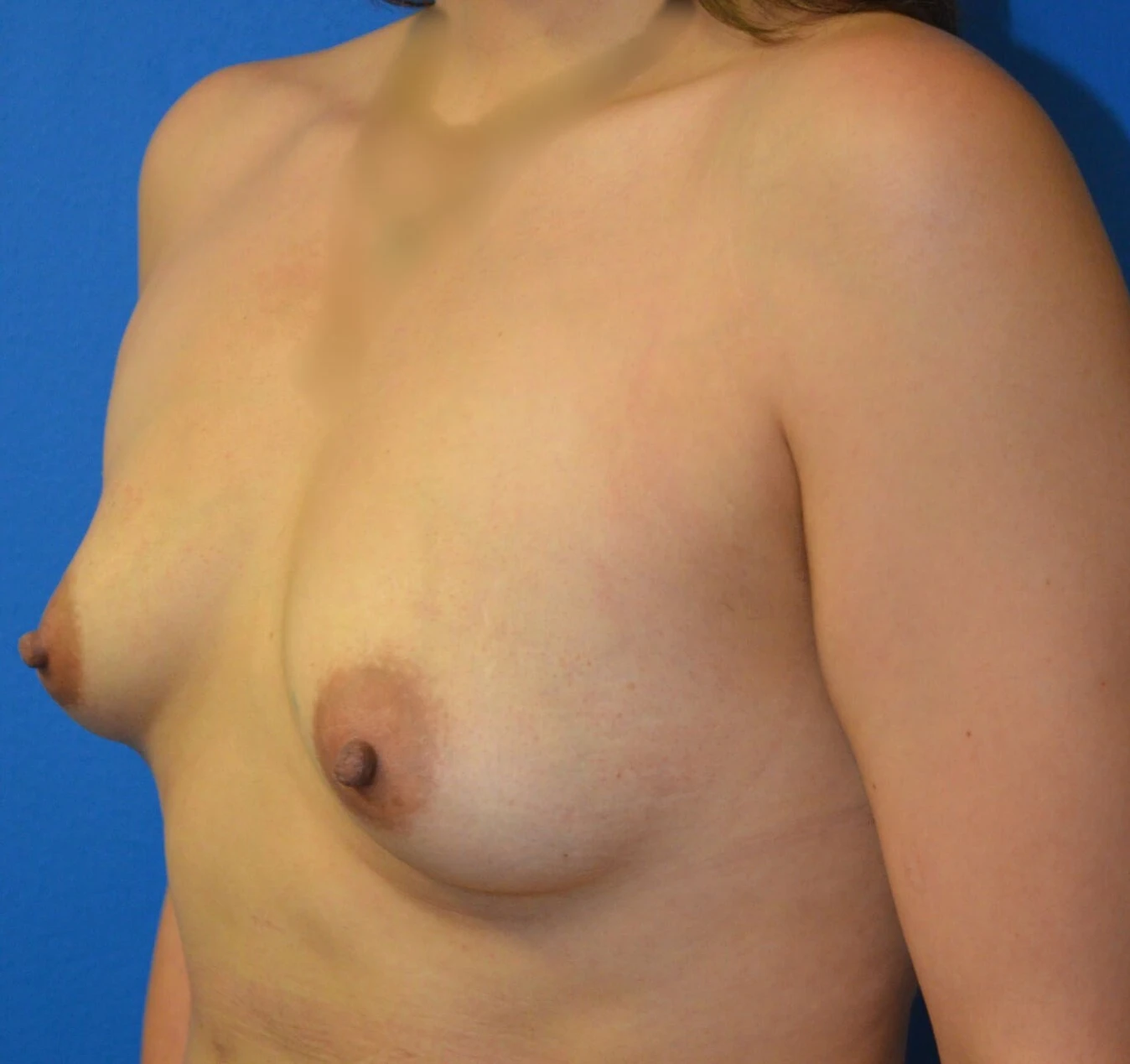
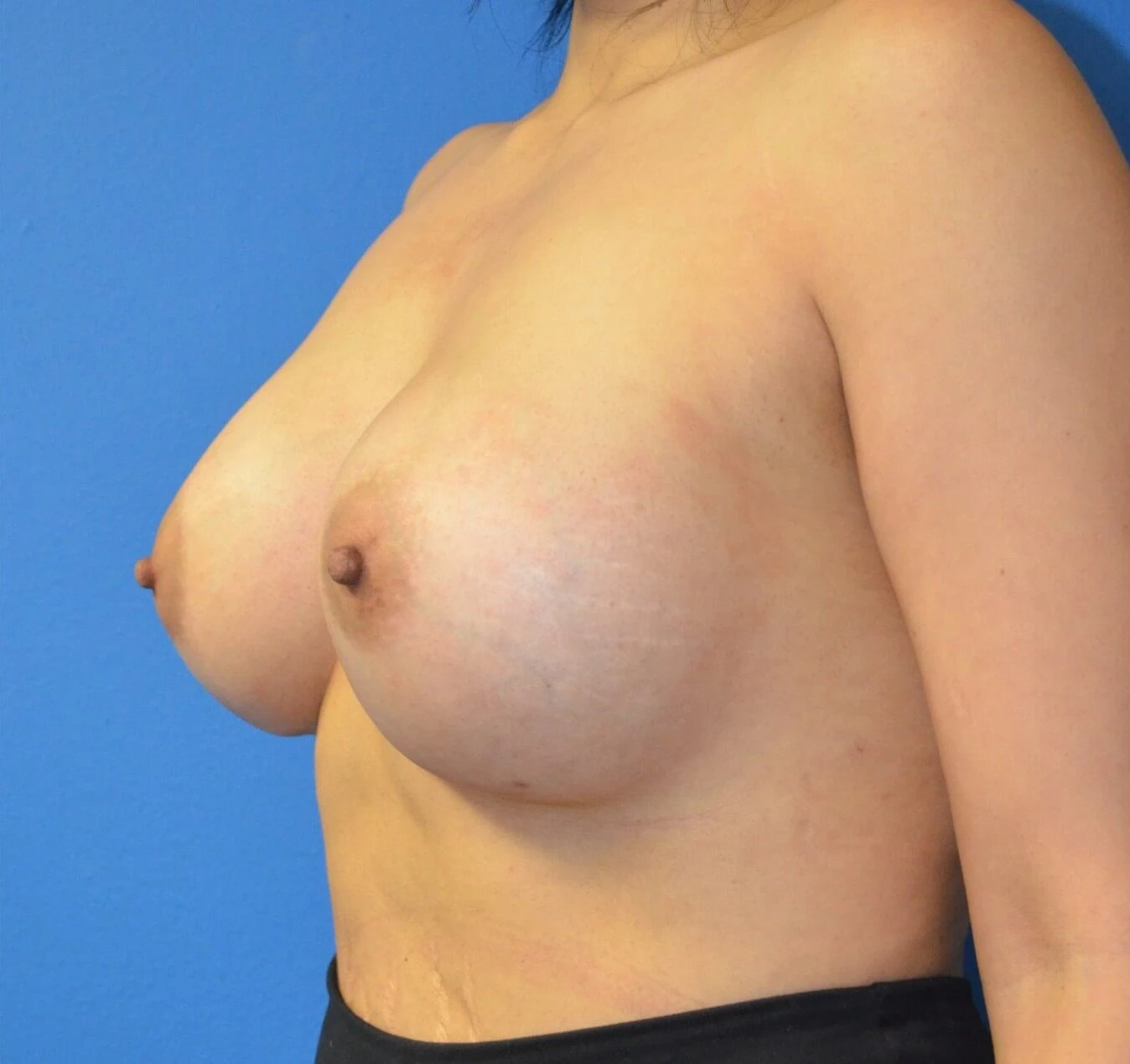
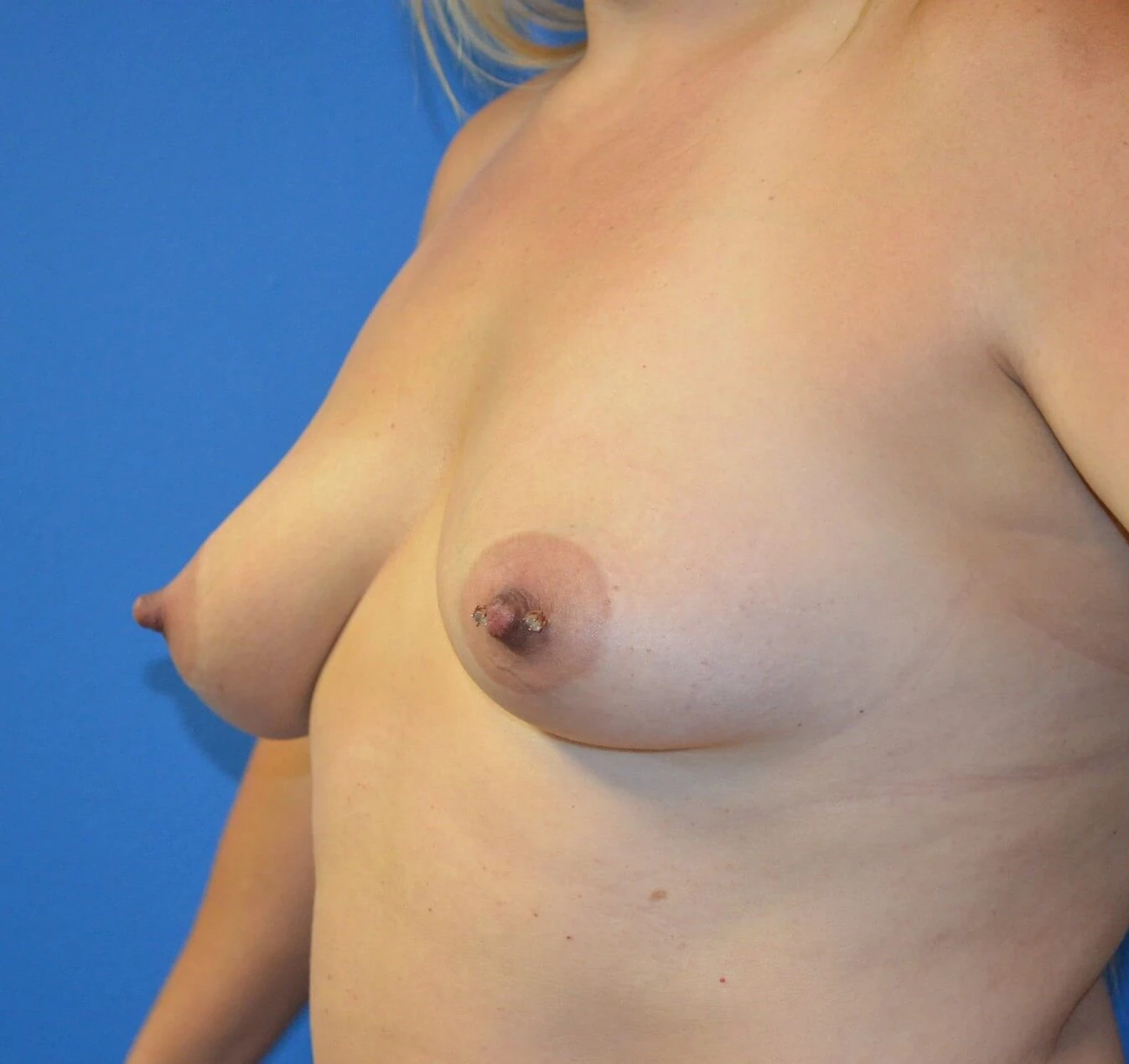
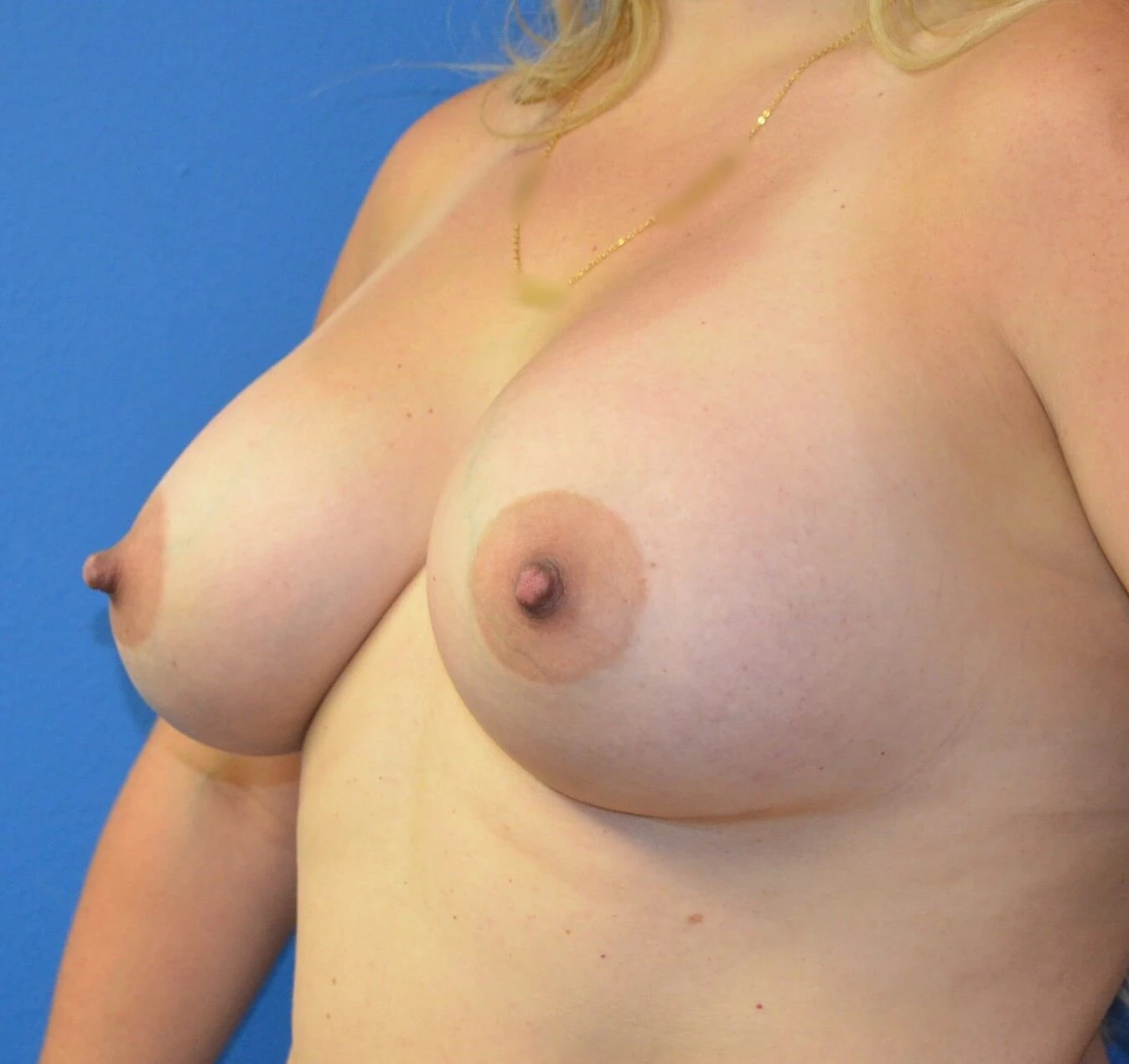
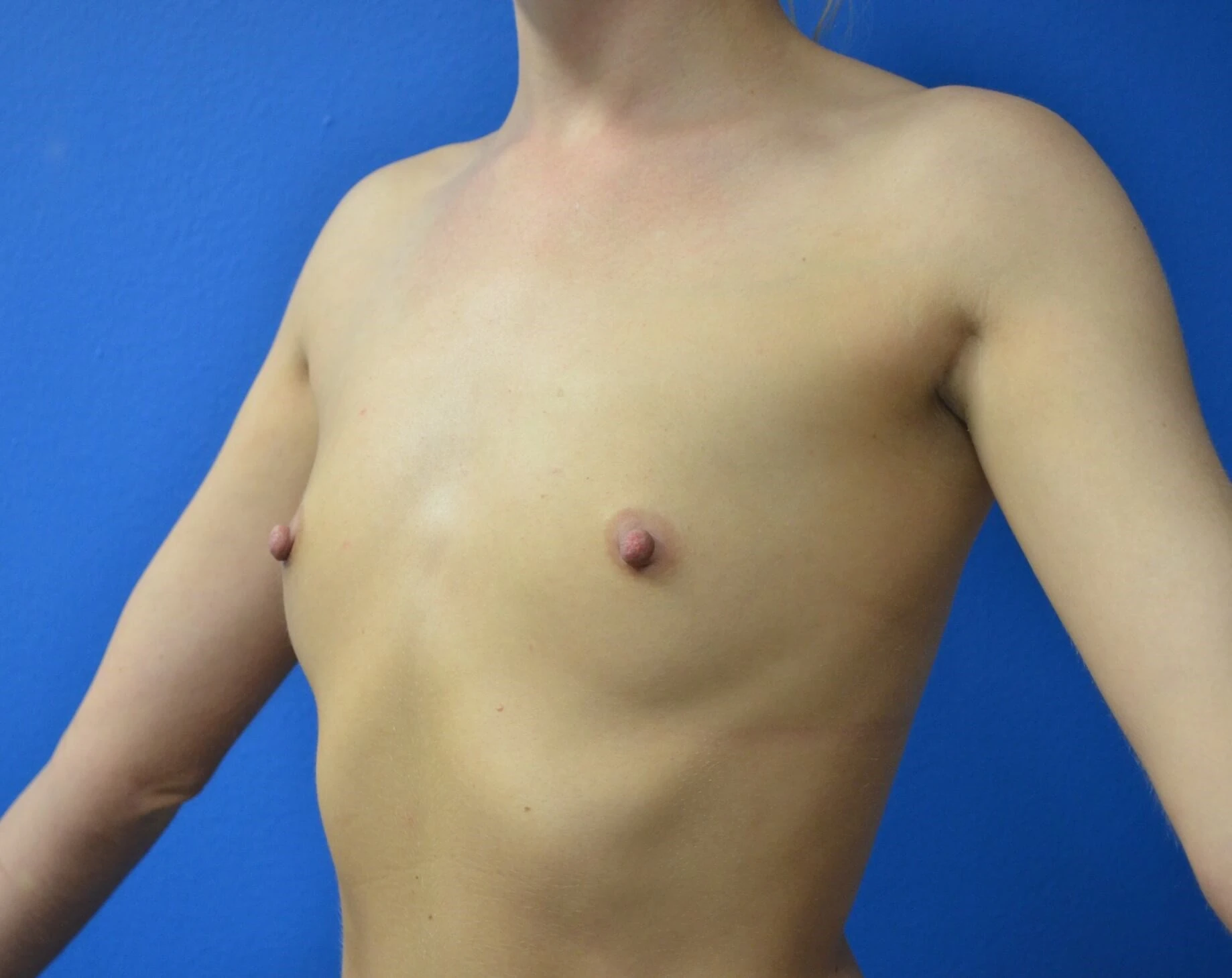
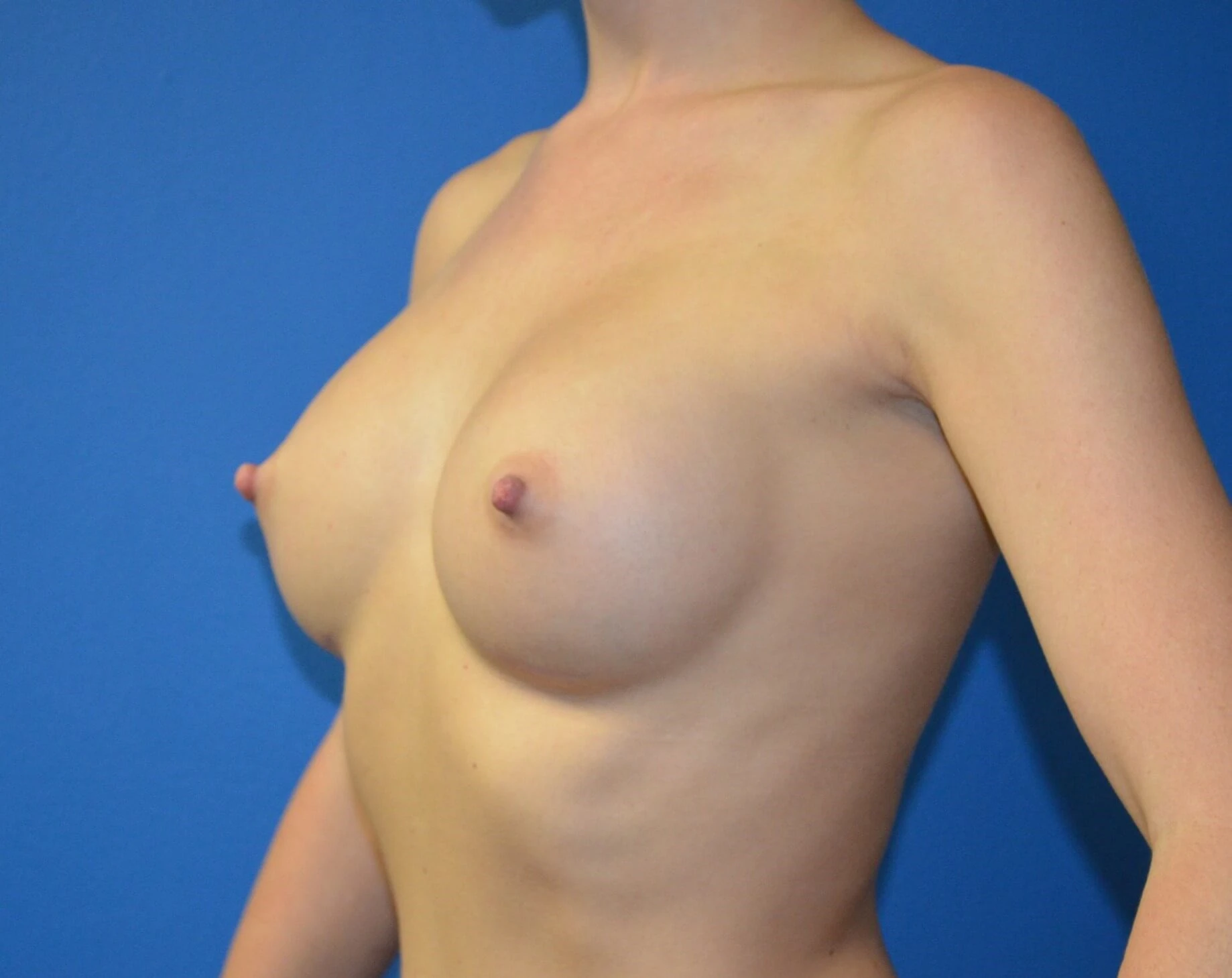
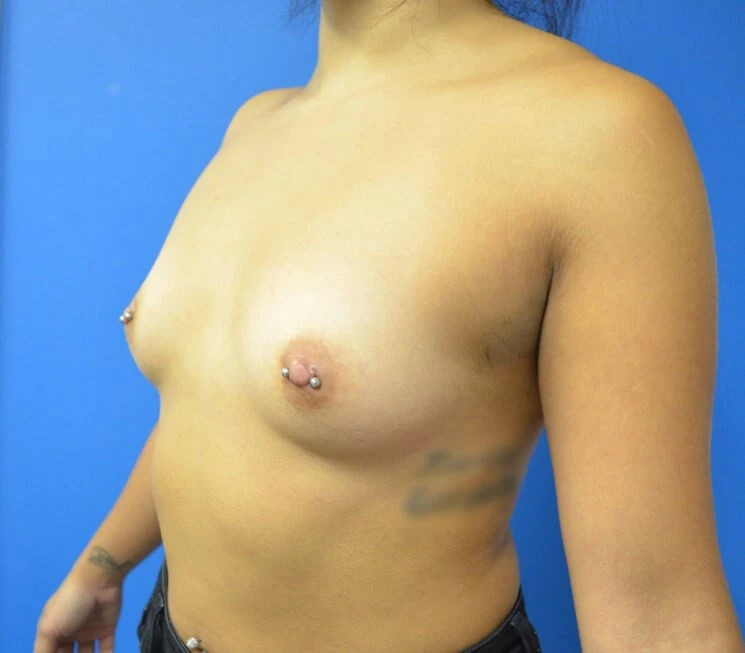
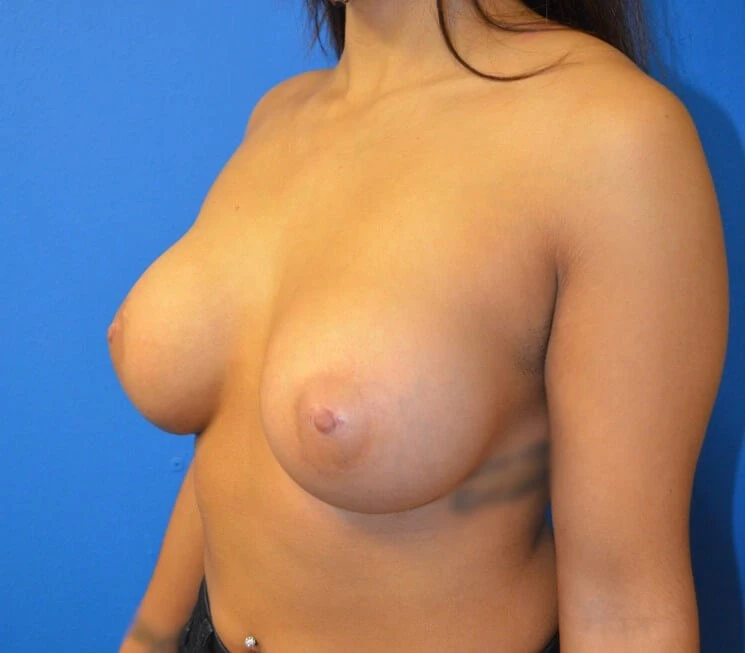
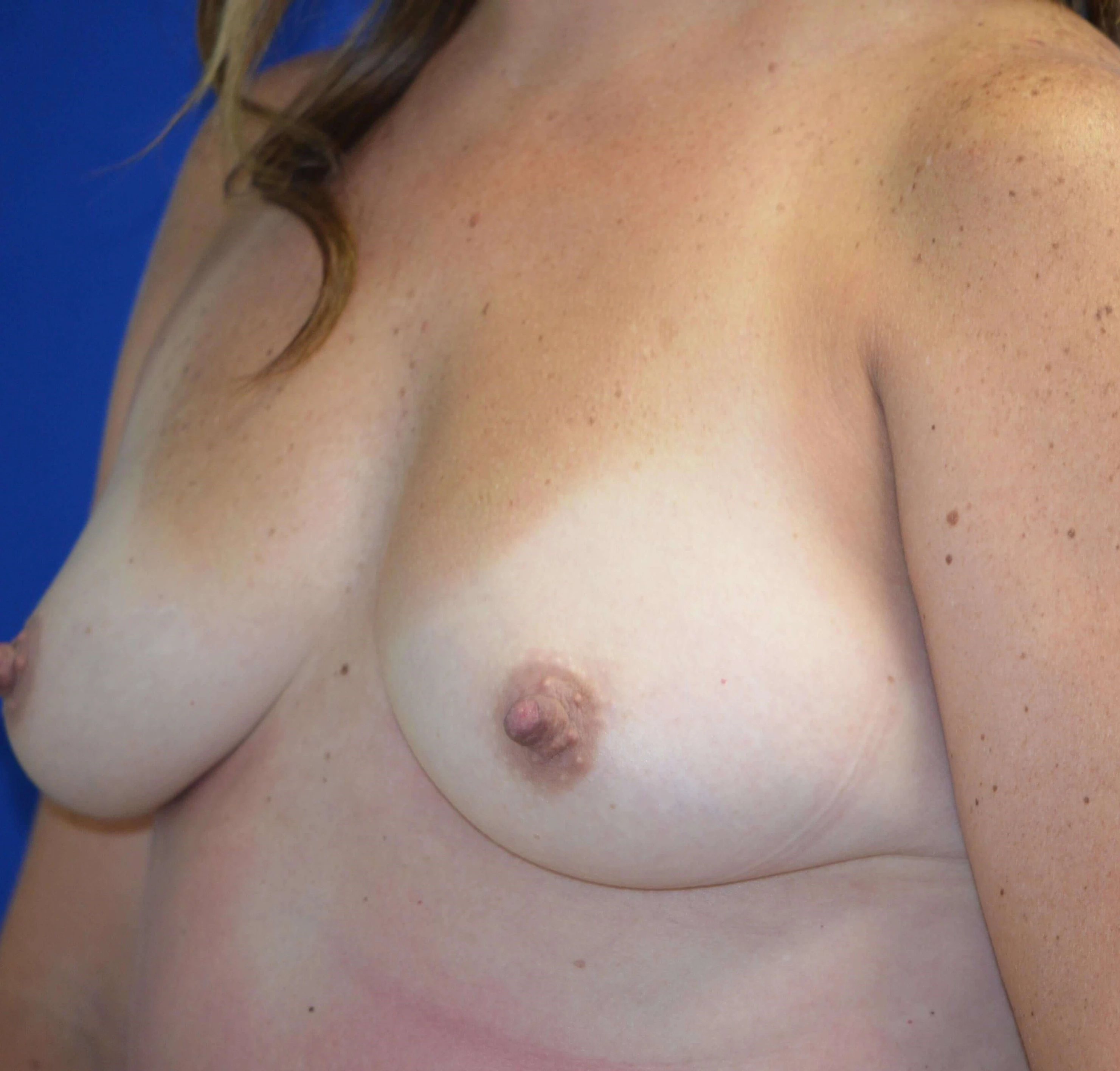
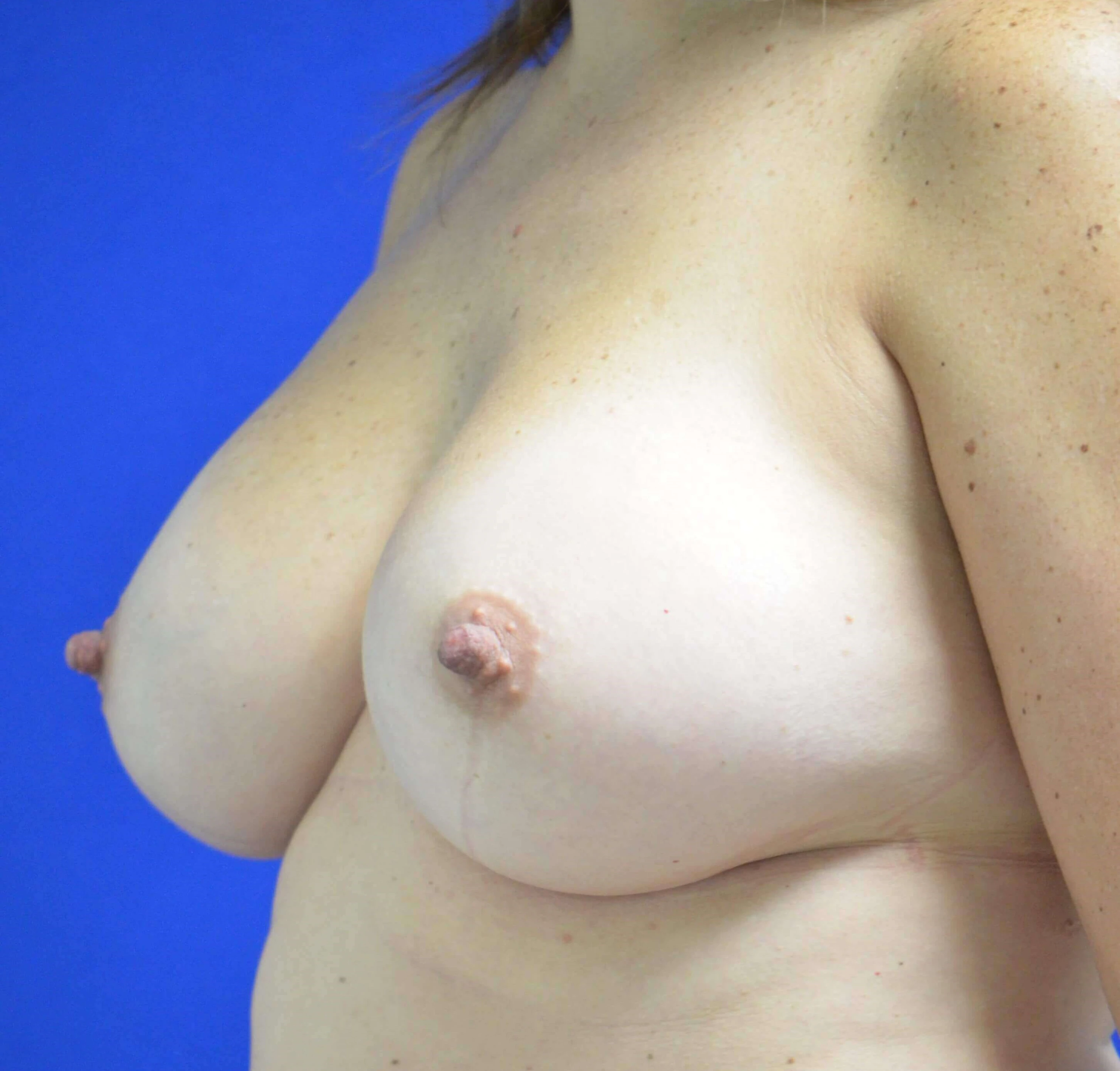
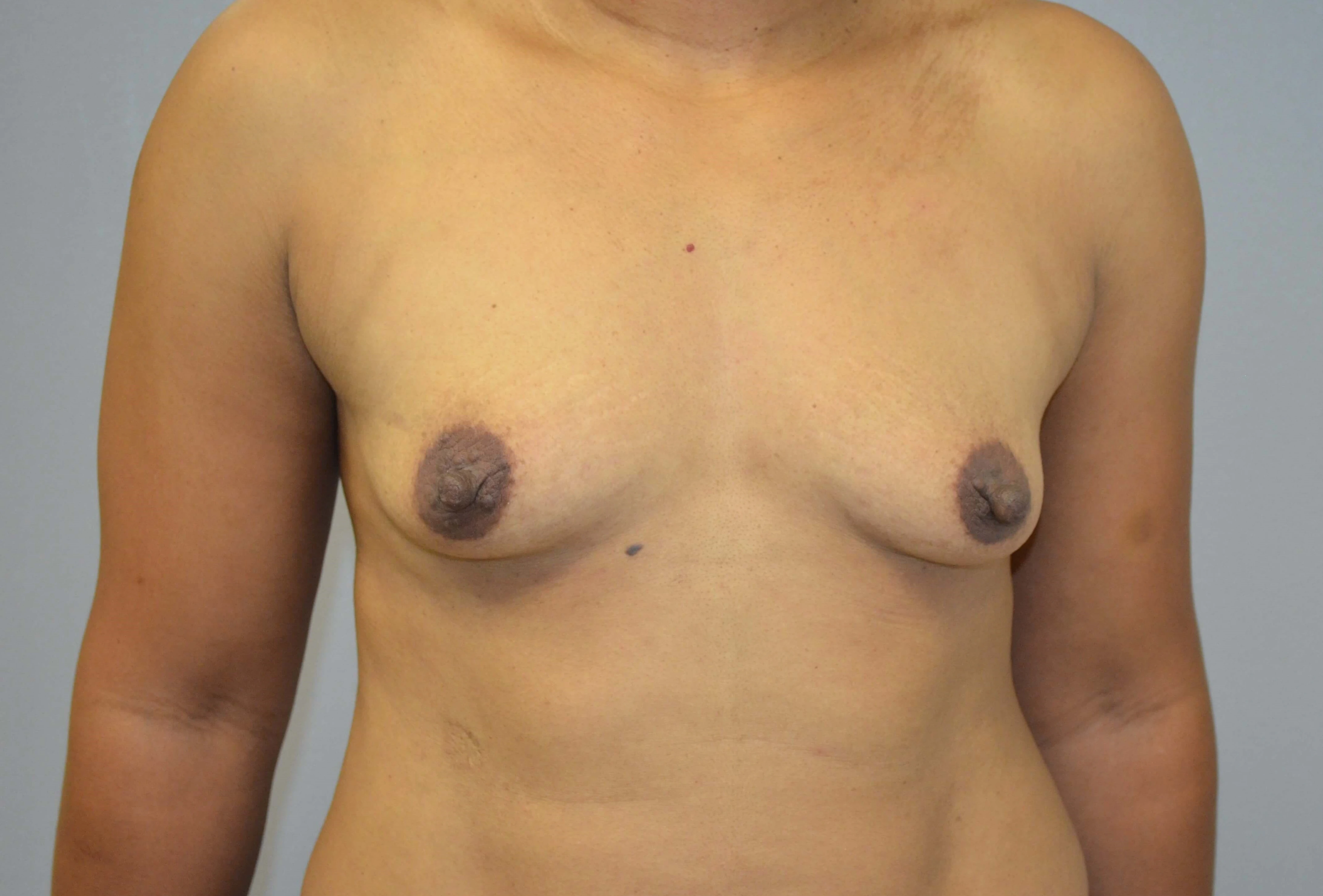
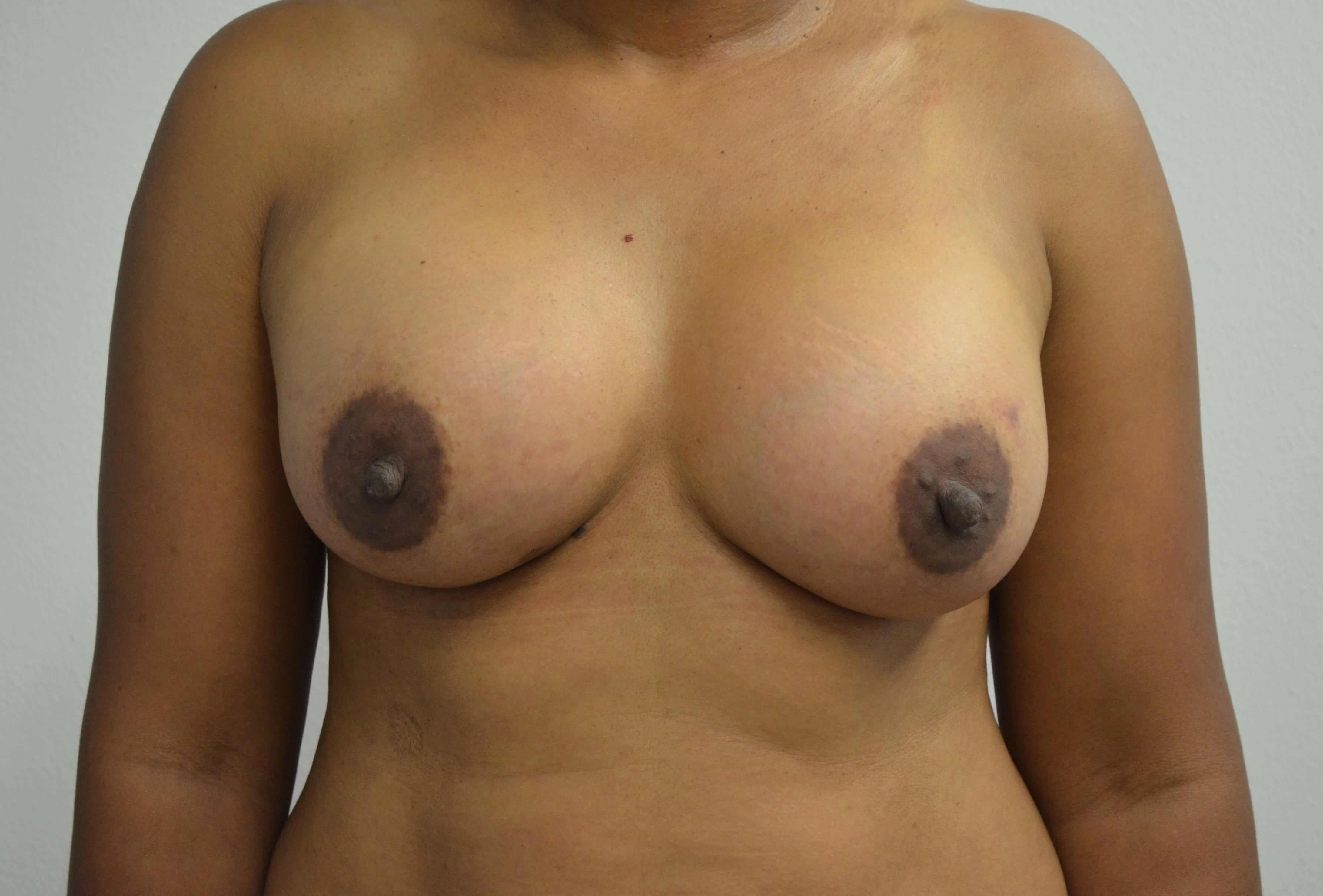
Breast Augmentation Before & After
All photos are of Dr. Levesque's own patients, presented with permission. Hover each card to see the after.
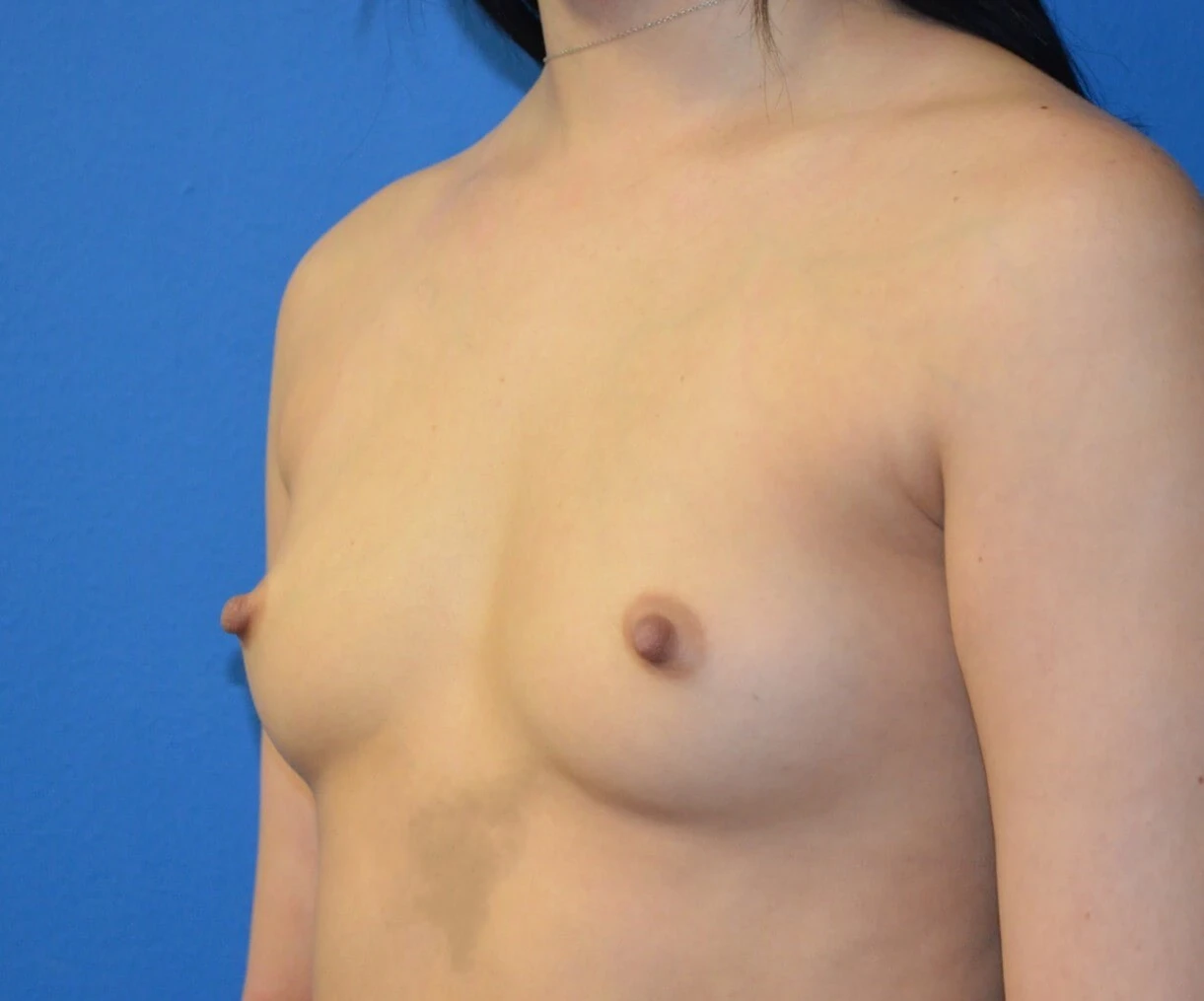
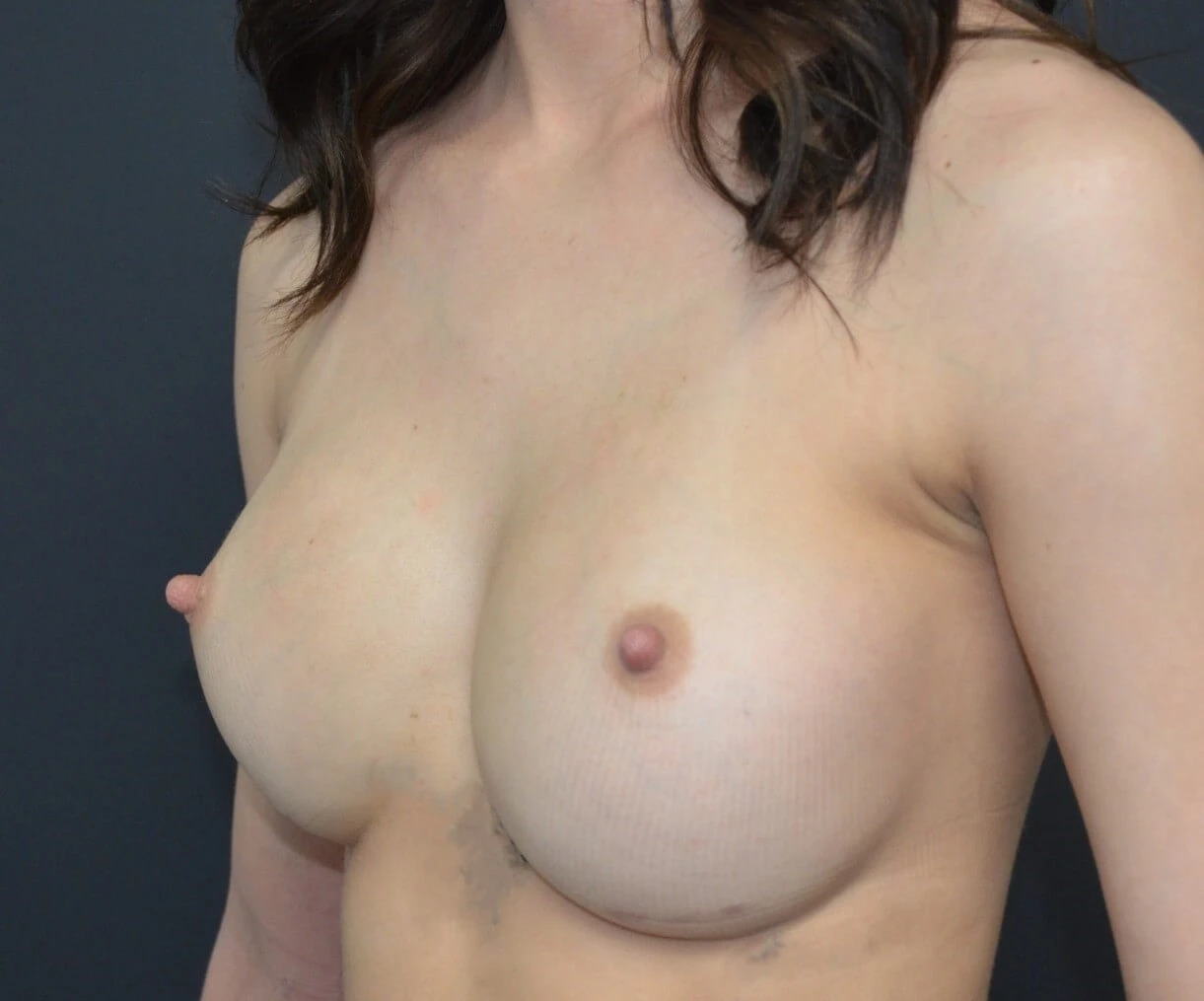
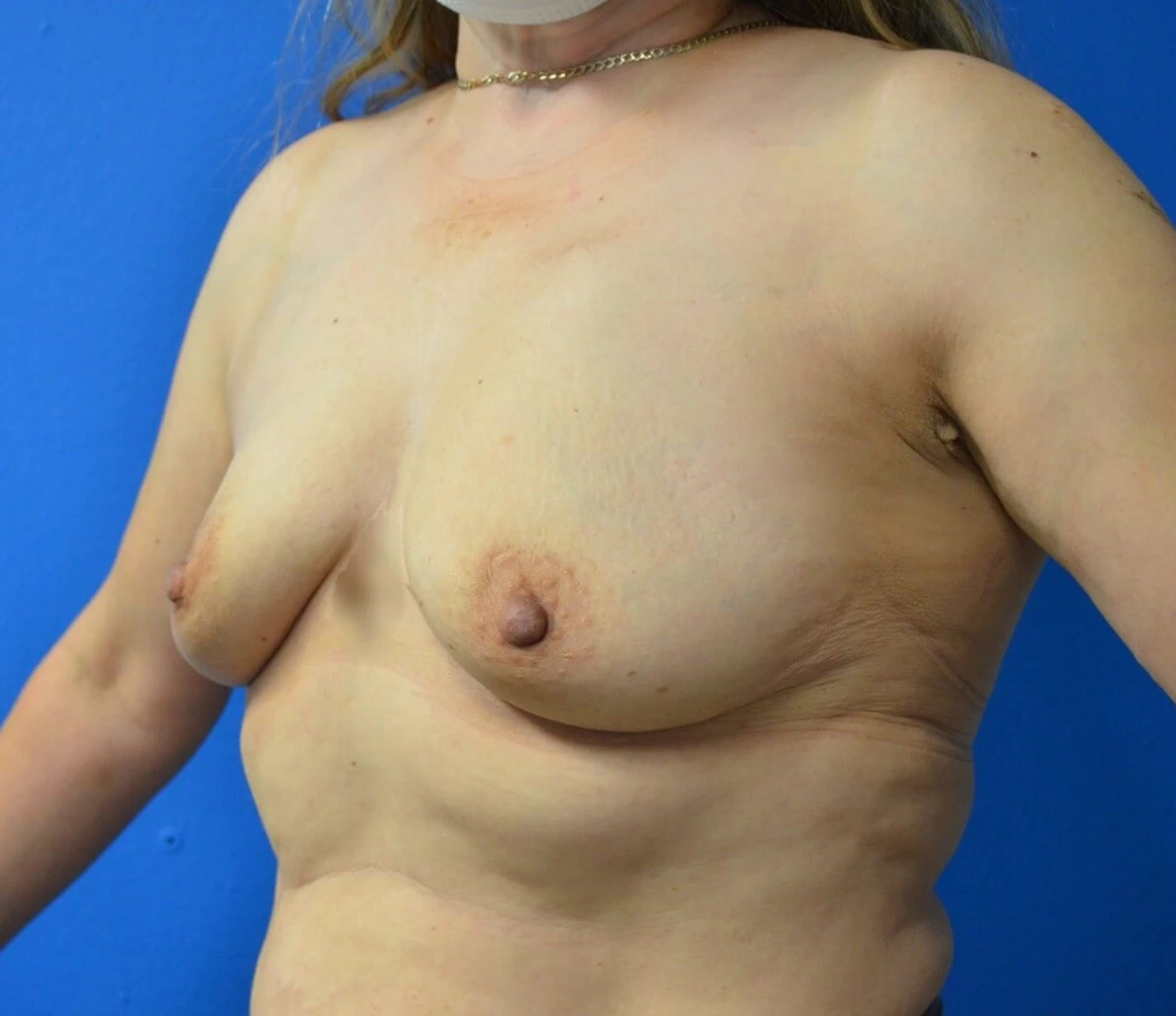
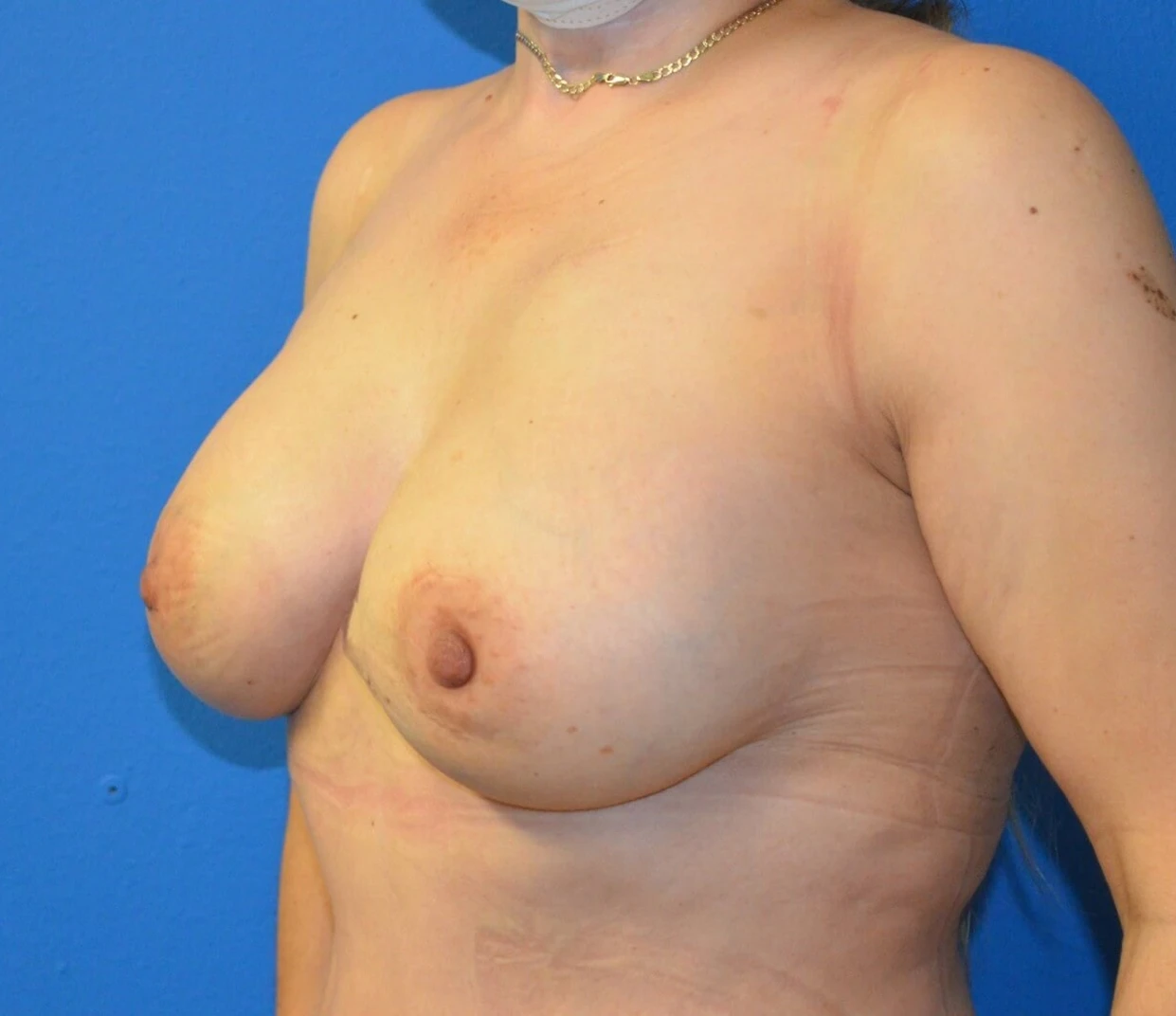
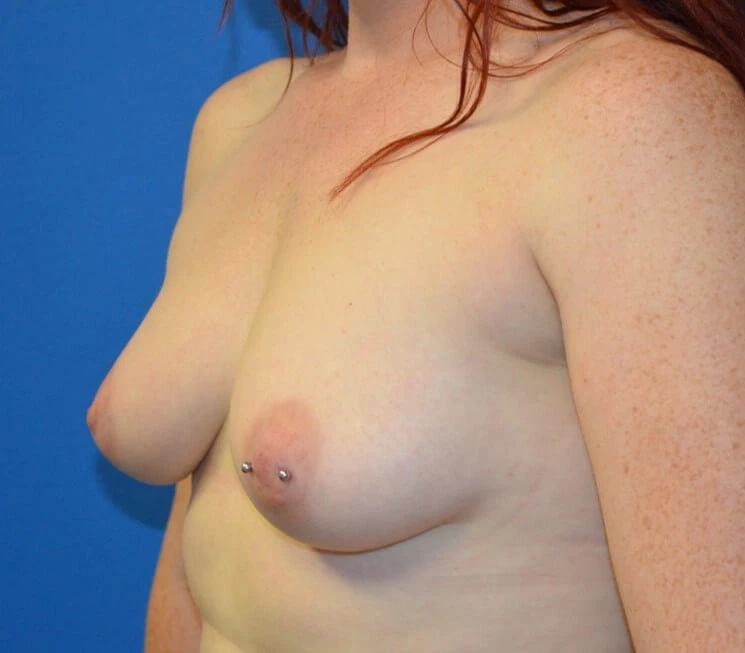
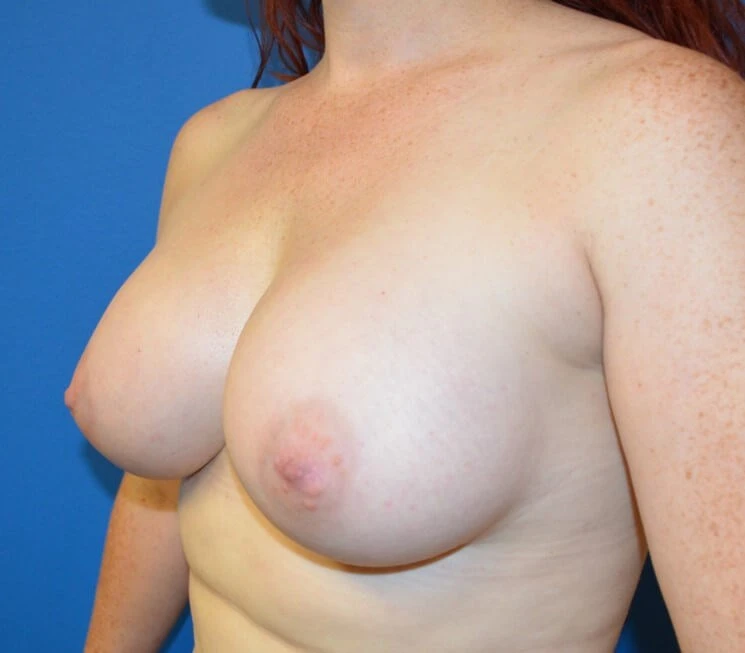
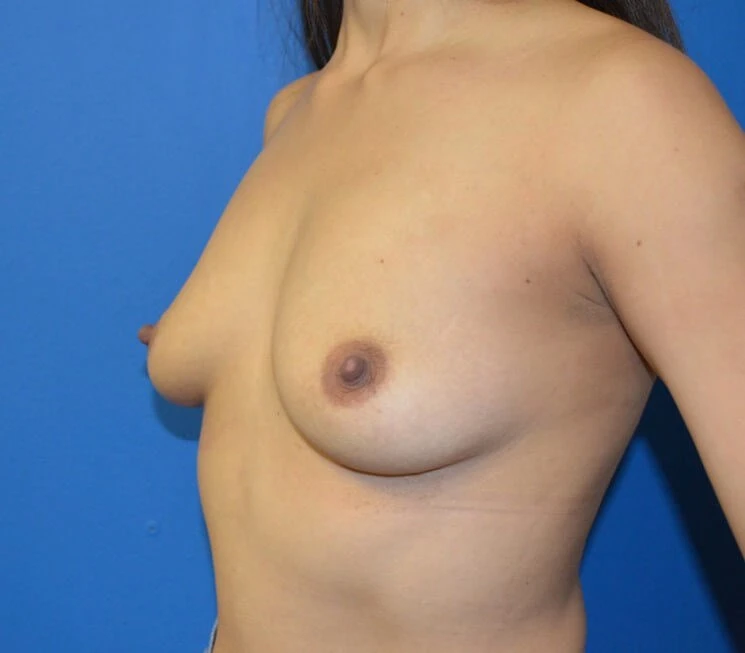
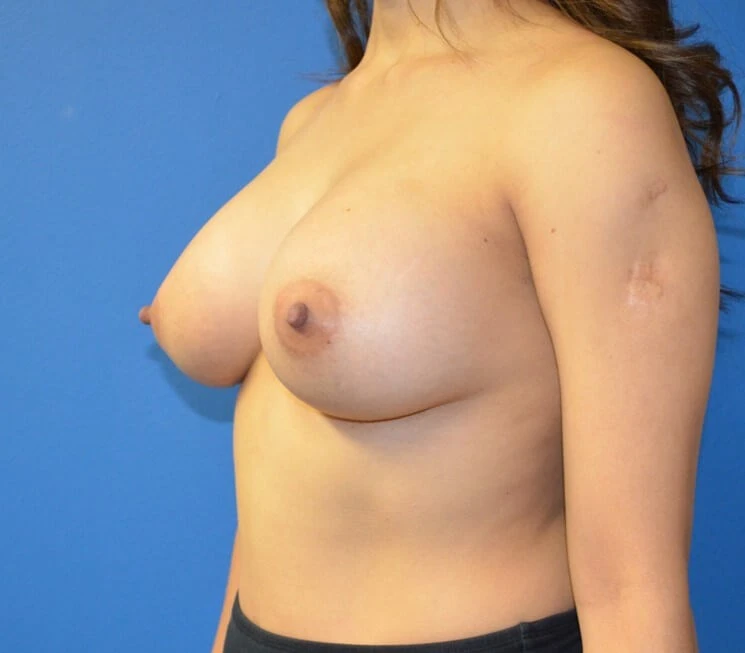
FDA-Approved Implant Manufacturers
Dr. Levesque works with the leading FDA-approved silicone gel implant manufacturers. Each brand has its own gel cohesivity, shell surface, and warranty program. At your consultation, Dr. Levesque recommends the option best matched to your anatomy, feel preference, and goals.

Published Complication Rates
Every manufacturer must track outcomes in FDA studies and publish them. Below are each maker's headline figures for breast augmentation, drawn from their FDA Core / IDE studies. Please read the note beneath the table before comparing numbers — the studies are not directly comparable.
| Implant | Published follow-up | Capsular contracture (Baker III/IV) |
Implant rupture | Any reoperation |
|---|---|---|---|---|
| Motiva3-year IDE, primary augmentation | 3 years | 0.5% | 0.6% | Long-term data still maturing |
| Natrelle (round)10-year Core, primary augmentation | 10 years | 18.9% | 9.3% (MRI) | 36.1% |
| Mentor MemoryGel10-year Core, primary augmentation | 10 years | 12.1% | 24.2% (MRI) | 25.5% |
| Sientra10-year Core, all cohorts | 10 years | 13.5% | 8.6% | 31.5% |
Please read: why you can't compare these numbers side-by-side
Follow-up length differs. Motiva was FDA-approved in 2024 and so far reports only 3-year data, while Natrelle, Mentor, and Sientra report 10-year data. Complications accumulate over time, so a newer implant's shorter-term numbers will always look lower — that is not the same as being safer.
Rupture depends on how hard you look. Rupture rates come largely from MRI screening, and each study used a different MRI schedule and had different patient compliance. Mentor's higher rupture figure mostly reflects more aggressive silent-rupture detection, not a weaker shell — most of those ruptures were “silent” and never required surgery.
Cohorts and definitions vary. These are separate studies with different patient groups and reporting methods. They are useful for understanding the types and rough scale of risks, not for ranking one brand against another. Dr. Levesque is happy to walk through what these figures mean for your specific situation. See our patient safety standards for how risk is minimized.
Sources: Motiva U.S. IDE 3-yr data (FDA approval, 2024); Natrelle round Core Study 10-yr (Murphy, PRS 2014); Mentor MemoryGel 10-yr Core (Hammond, PRS 2021); Sientra 10-yr Core (Stevens, PRS 2018). Figures are Kaplan-Meier cumulative estimates; cohort noted per row. Mentor’s 24.2% is MRI-detected (suspected + confirmed) rupture; its surgically-confirmed rupture rate was 9.8%.
Deep dives: Breast implant illness · Capsular contracture · BIA-ALCL & implant-associated malignancies.
Saline Implant Options
Silicone gel is the most popular choice, but saline is an excellent option for many patients — and it is FDA-approved for augmentation from age 18. Saline’s defining safety feature is simple: if the shell ever leaks, the implant visibly deflates and the sterile salt water is harmlessly absorbed by the body, so a rupture is rarely “silent.” Dr. Levesque offers three saline options.

| Saline implant | Published follow-up | Capsular contracture (Baker III/IV) | Rupture / deflation |
|---|---|---|---|
| IDEAL IMPLANT (structured saline)6-year Core study, primary augmentation | 6 years | 5.7% | 2.1% |
| Round saline (Mentor & Natrelle)FDA labeling / multicenter outcomes data | Varies by study | Standard round saline is FDA-approved for augmentation at 18+. The main long-term event studied is deflation (a visible leak; the saline is safely absorbed). Brand-specific Core figures are in each manufacturer’s FDA labeling and reviewed at consultation. | |
Reading these numbers
IDEAL IMPLANT’s figures come from its 6-year Core study, so they are not directly comparable to the 10-year silicone figures above — complications accumulate over time, and these are separate studies with different patients and methods. They are useful for understanding the type and rough scale of risk, not for ranking one device against another.
Sources: Hammond DC et al. IDEAL IMPLANT Structured Breast Implants: Core Study Results at 6 Years (PubMed). Saline durability/deflation context: Saline-filled breast implants — Plastic Surgery Educational Foundation multicenter outcomes study (PubMed). Baker III/IV figures are Kaplan-Meier cumulative estimates for the primary-augmentation cohort.
Implant Placement (Pocket) Options
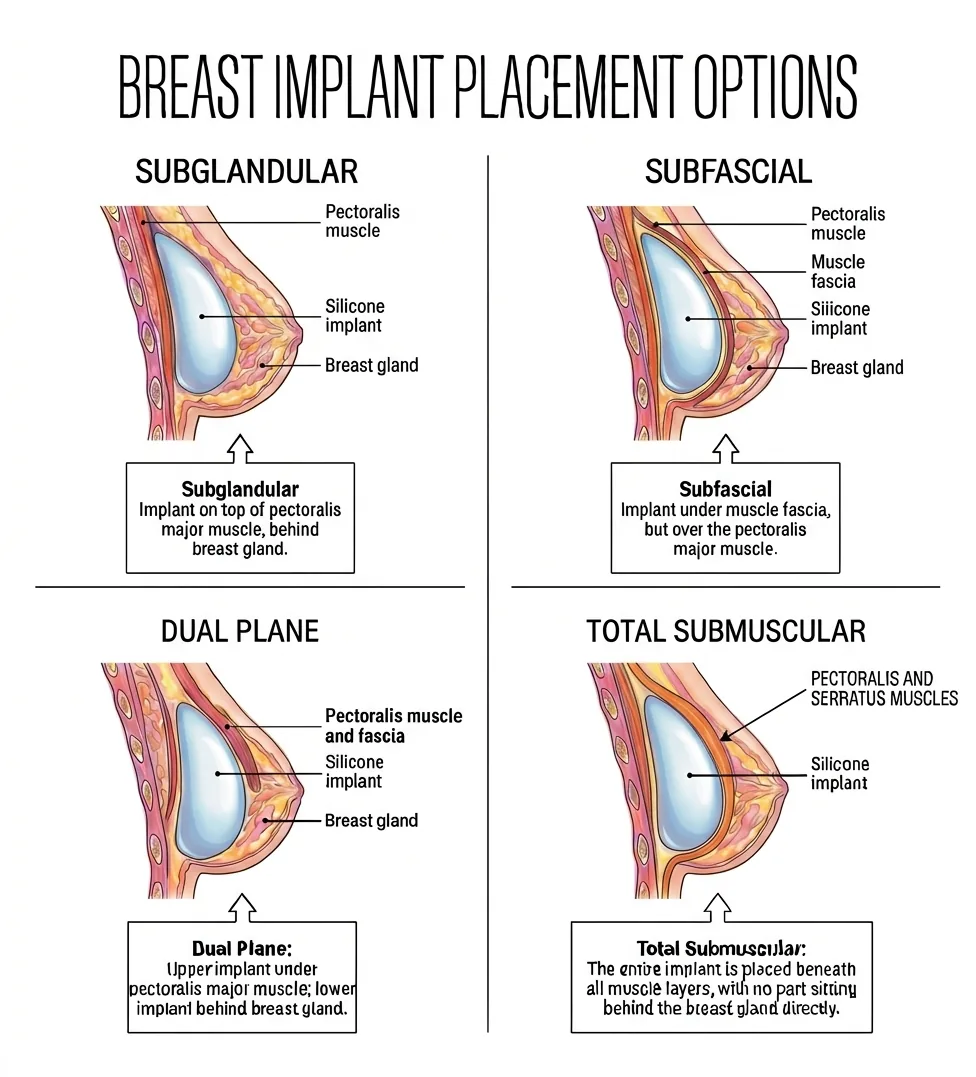
“Placement” describes where the implant sits relative to the chest (pectoralis) muscle. The right choice depends on your tissue thickness, implant type, activity level, and goals.
Subglandular
The implant sits directly behind the breast gland, on top of the chest muscle. It is the least invasive pocket and often the quickest recovery.
- +Faster, more comfortable early recovery
- +No “animation” distortion when flexing (good for athletes)
- −More visible edges/rippling in thin patients
- −Historically higher capsular contracture; can affect mammograms
Subfascial
The implant sits above the muscle but beneath the thin, tough fascia covering it — a middle ground that adds a layer of coverage without dividing the muscle.
- +A little more soft-tissue coverage than subglandular
- +No animation distortion; muscle left intact
- −Coverage still limited in very thin patients
- −Best suited to selected anatomies
Partial Submuscular (Dual-Plane)
The upper implant sits under the chest muscle while the lower portion sits behind the gland. This is the placement Dr. Levesque most commonly recommends.
- +Natural upper-pole slope; better implant camouflage
- +Lower rippling and capsular-contracture risk; clearer mammograms
- −Slightly more early discomfort
- −Possible movement with strong flexing (“animation”)
Total Submuscular
The implant sits completely beneath the chest muscles, with no portion behind the gland alone. Dr. Levesque rarely uses this for cosmetic augmentation — it is traditionally a breast reconstruction technique, and more recently some surgeons use it for very high implant positioning performed at the same time as a breast lift.
- +Maximum soft-tissue coverage over the implant
- +Useful in reconstruction and select high-placement lift cases
- −More post-op discomfort and a longer recovery
- −Greater animation distortion; rarely chosen for routine augmentation
Incision Options
The incision determines where your (typically well-hidden) scar sits. Dr. Levesque reviews the trade-offs of each and helps you choose based on your implant, anatomy, and preferences.
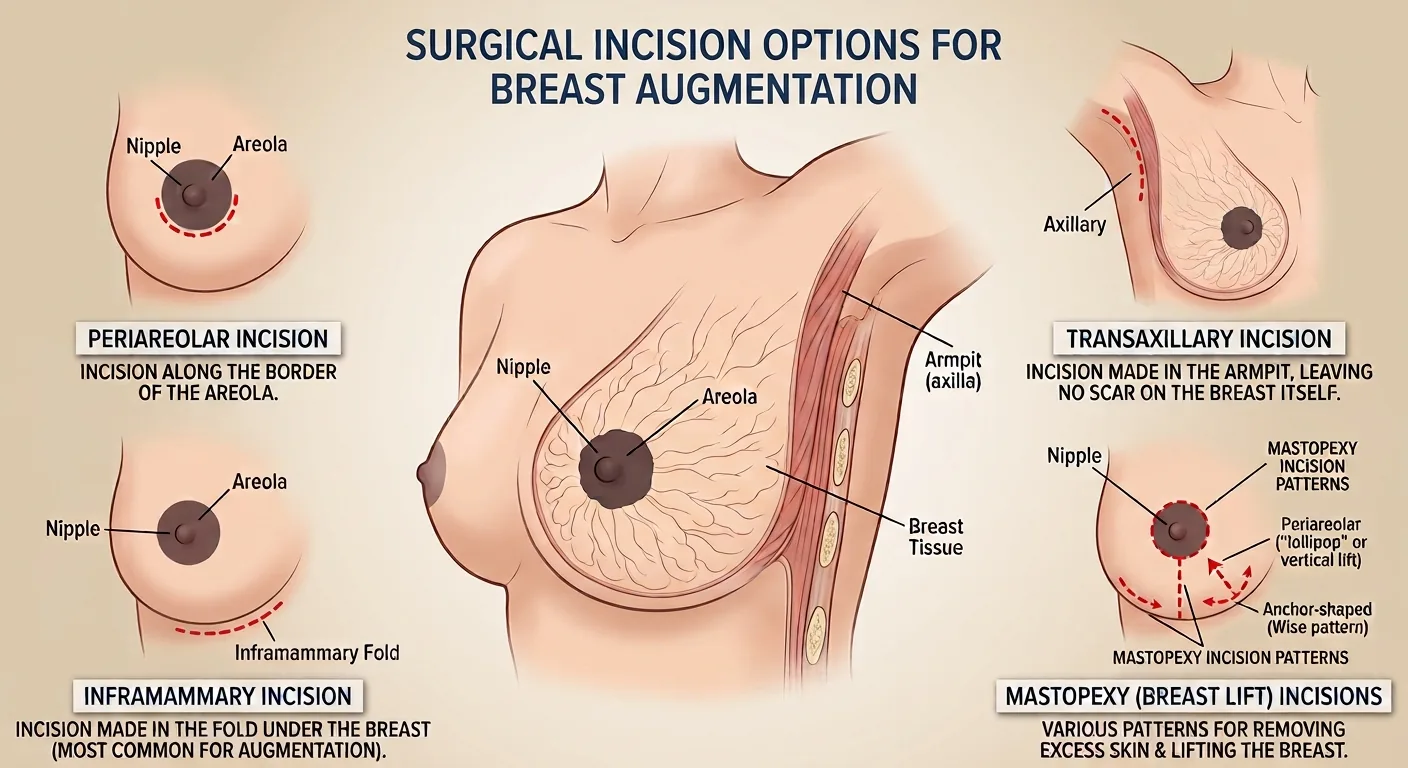
Inframammary (IMF)
A short incision hidden in the crease beneath the breast. The most commonly used approach in the U.S.
- +Best direct visibility and precise pocket control
- +Works with all implant types; among the lowest reported contamination/contracture
- −A fine scar in the fold (usually well concealed)
Periareolar
An incision along the lower edge of the areola, where the color change helps camouflage the scar.
- +Scar blends at the pigment border
- +Convenient if a lift is done at the same time
- −Small potential effect on nipple sensation/breastfeeding
- −Less suited to larger implants; slightly higher reported contracture
Transaxillary
The implant is placed through an incision in the armpit, usually with an endoscope — leaving no scar on the breast itself.
- +No scar on the breast
- +Scar hidden in a natural armpit crease
- −Revisions may need a separate incision
- −Not ideal for every implant type or anatomy
Am I a Candidate?
Here's a general guide — Dr. Levesque will assess your candidacy personally at consultation.
Good Candidates Typically Have:
- Desire for increased breast size and improved shape
- Asymmetric breasts where one side is noticeably smaller
- Volume loss after pregnancy, breastfeeding, or weight loss
- Good overall health with stable weight for 6+ months
- Non-smoker or willing to quit ≥4 weeks before surgery
- Realistic expectations about implant longevity and feel
Factors That May Affect Candidacy:
- Active smoking — increases infection and healing risk
- Pregnancy or breastfeeding currently or planned imminently
- Significant breast sagging (ptosis) — may need combined lift
- Autoimmune conditions — discuss with Dr. Levesque at consultation
What Does Breast Augmentation Cost?
Breast augmentation cost at Levesque Plastic Surgery depends on implant type (silicone vs. saline), implant size and profile, and whether a breast lift is combined.
Silicone implants are slightly more expensive than saline due to implant cost. The total fee covers surgeon, facility, anesthesia, and implants.
Dr. Levesque provides a transparent quote at consultation. Financing through CareCredit, Alphaeon, Cherry, and PatientFi is available — many patients achieve their goals with affordable monthly payments.
Financing Partners



What Patients Say
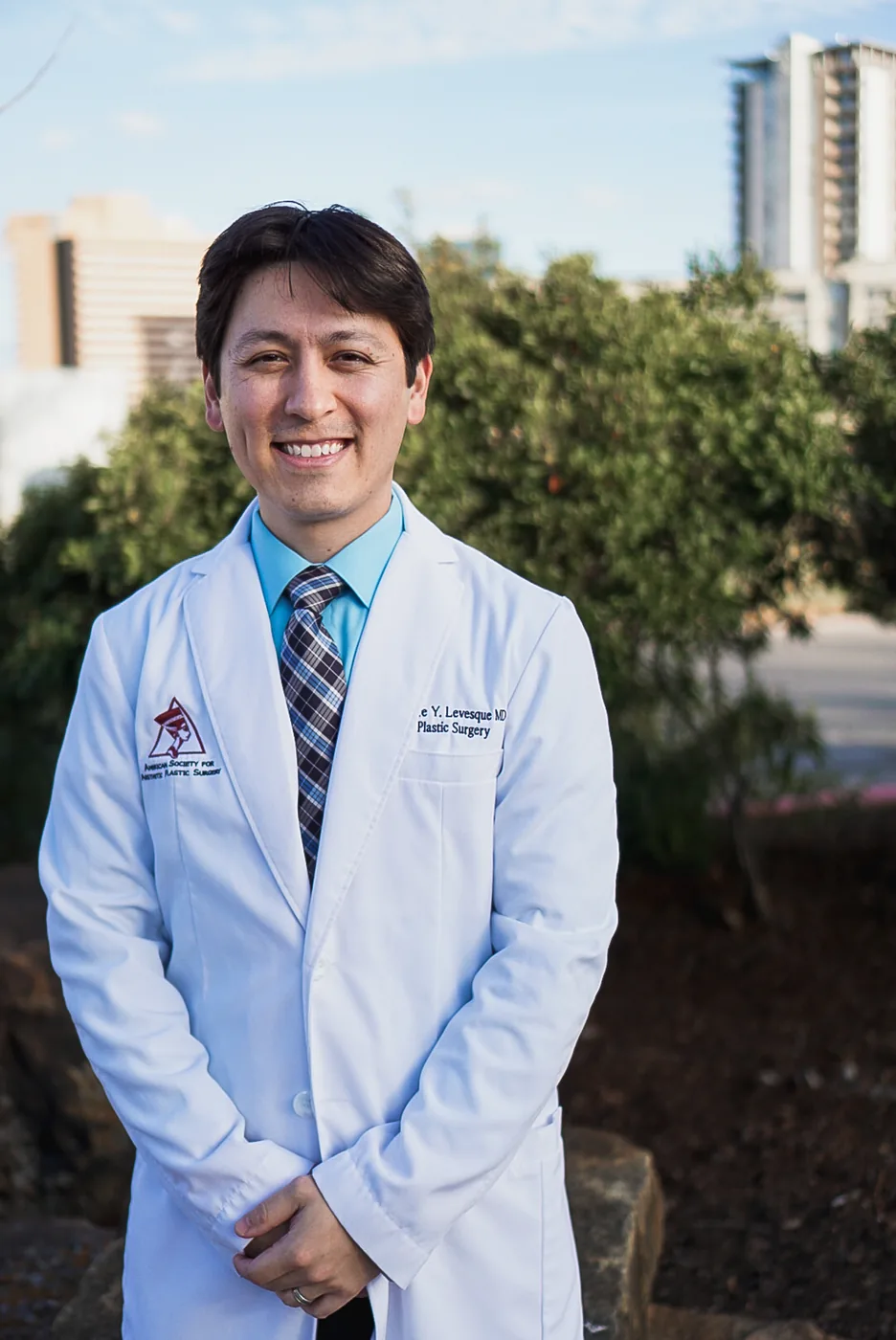

Dr. Andre Y. Levesque, MD
Dr. Levesque's breast augmentation philosophy is proportionality. He helps patients identify a size that enhances their frame without looking overdone — using measurements, sizers, and digital imaging to align on a goal before surgery. His systematic approach reduces size regret significantly.
His most rewarding breast augmentation outcomes are consistently the ones where the result looks completely natural — where no one can tell the patient had surgery, they just know she looks great.
Schedule with Dr. LevesqueRelated Procedures & Reading
Breast augmentation is often one part of a broader plan. Explore related procedures Dr. Levesque performs and in-depth guides on the details.




More related procedures: Augmentation + Lift · Breast Fat Transfer · Mommy Makeover
Concerned about safety? Review our patient safety standards and accredited surgical facilities, or see pricing & financing.
Breast Augmentation FAQ
Request a Consultation
Consultations are with Dr. Levesque, personally. Fill out the form below and our team will contact you within one business day.